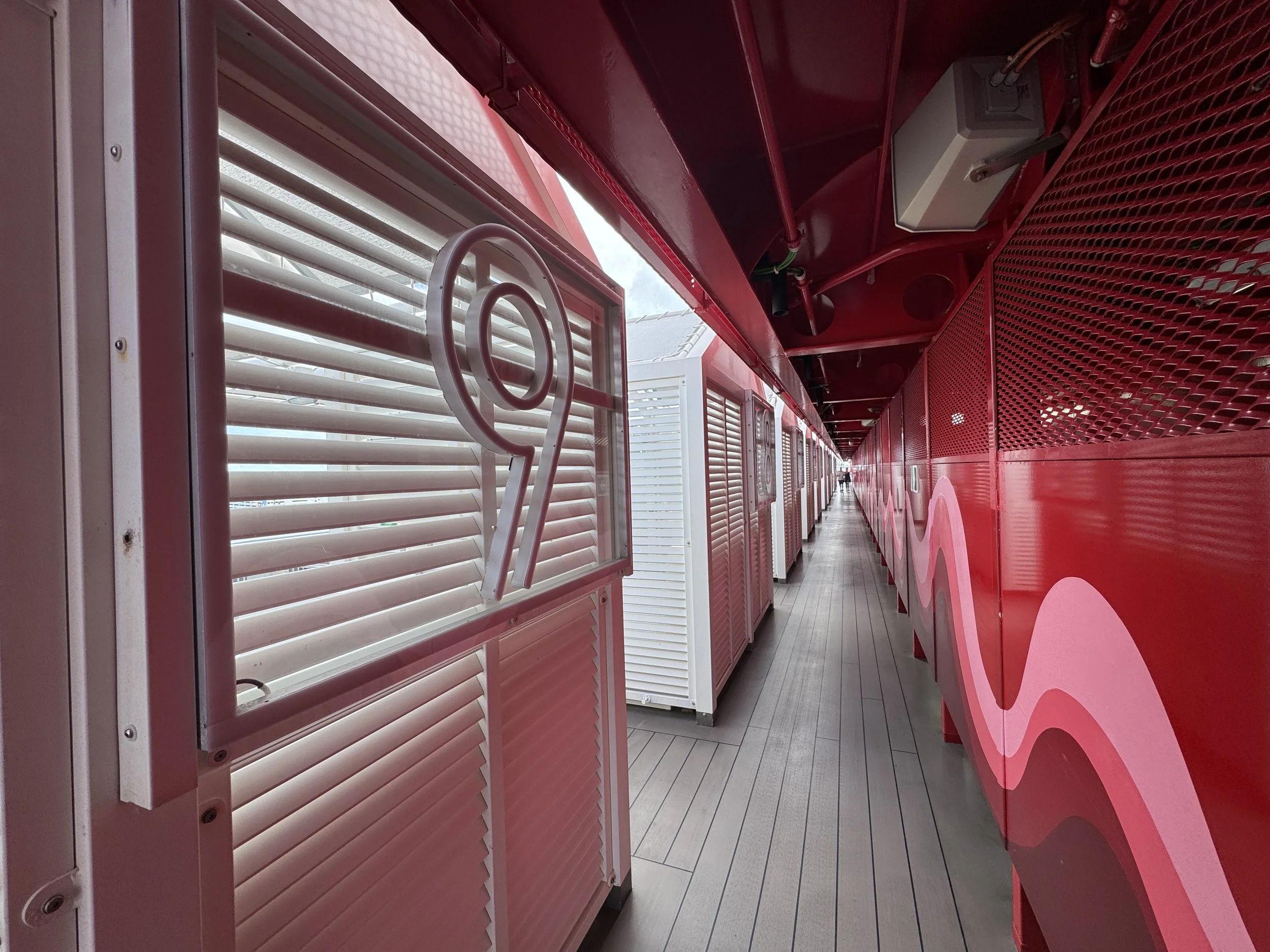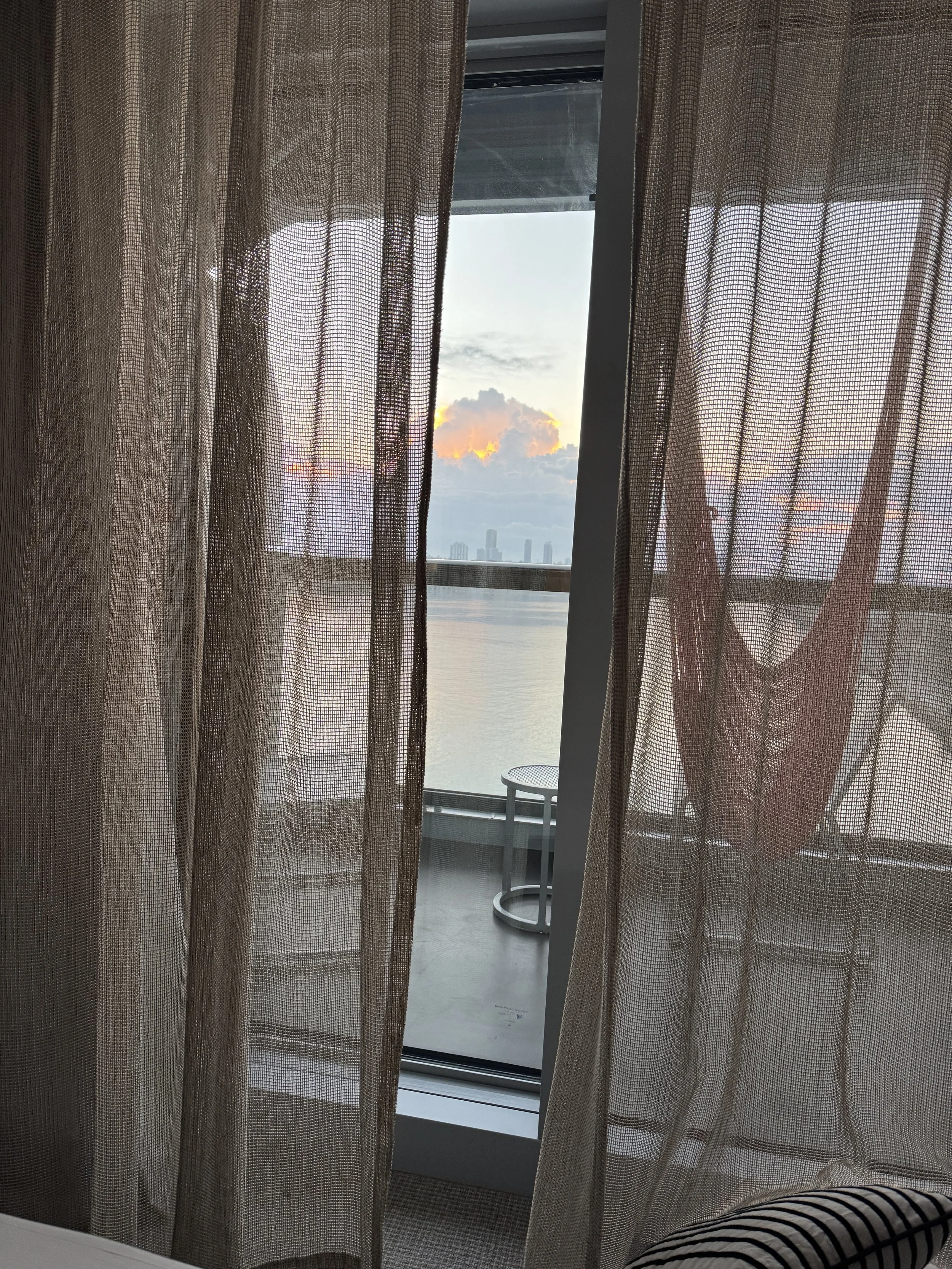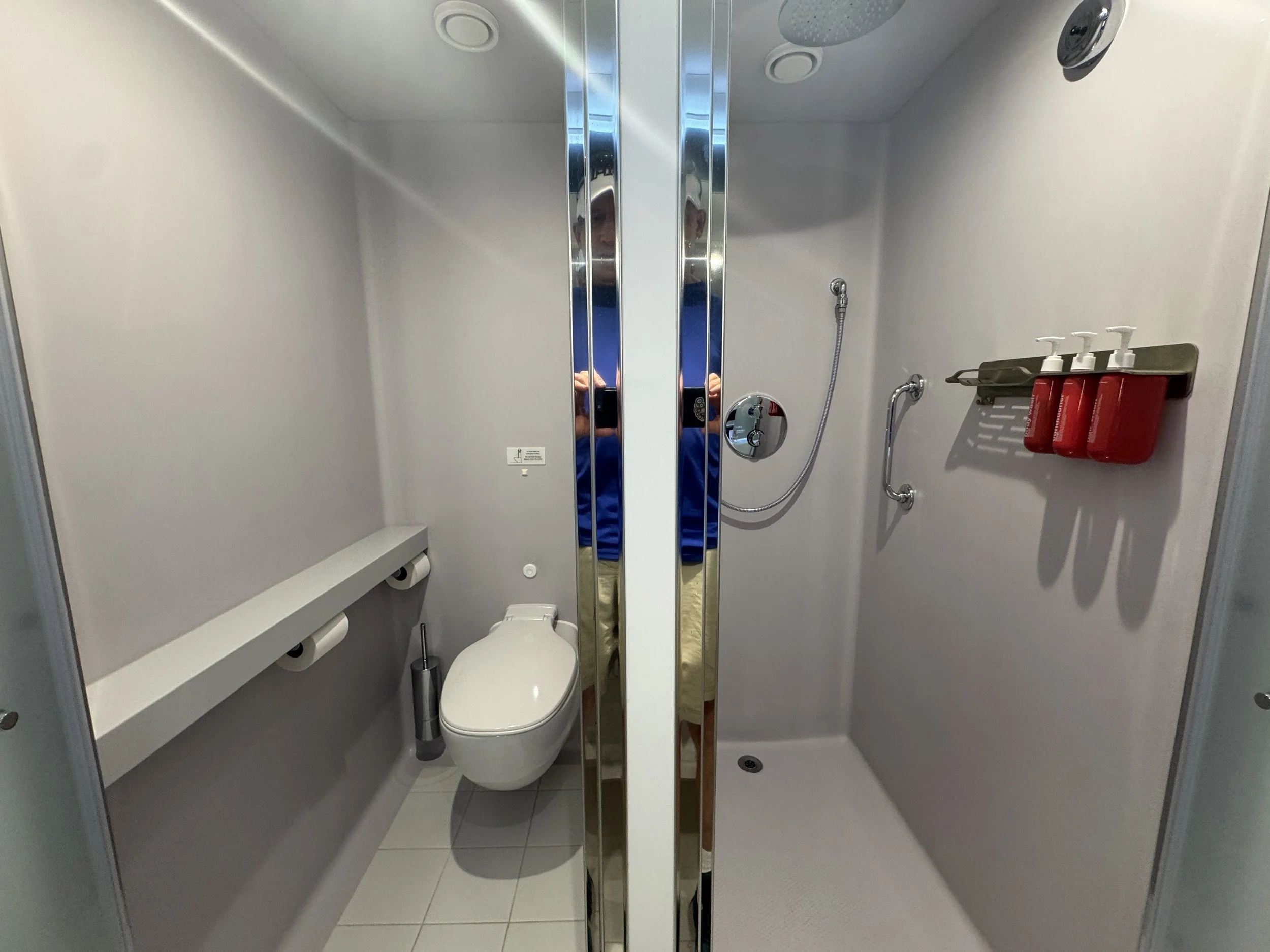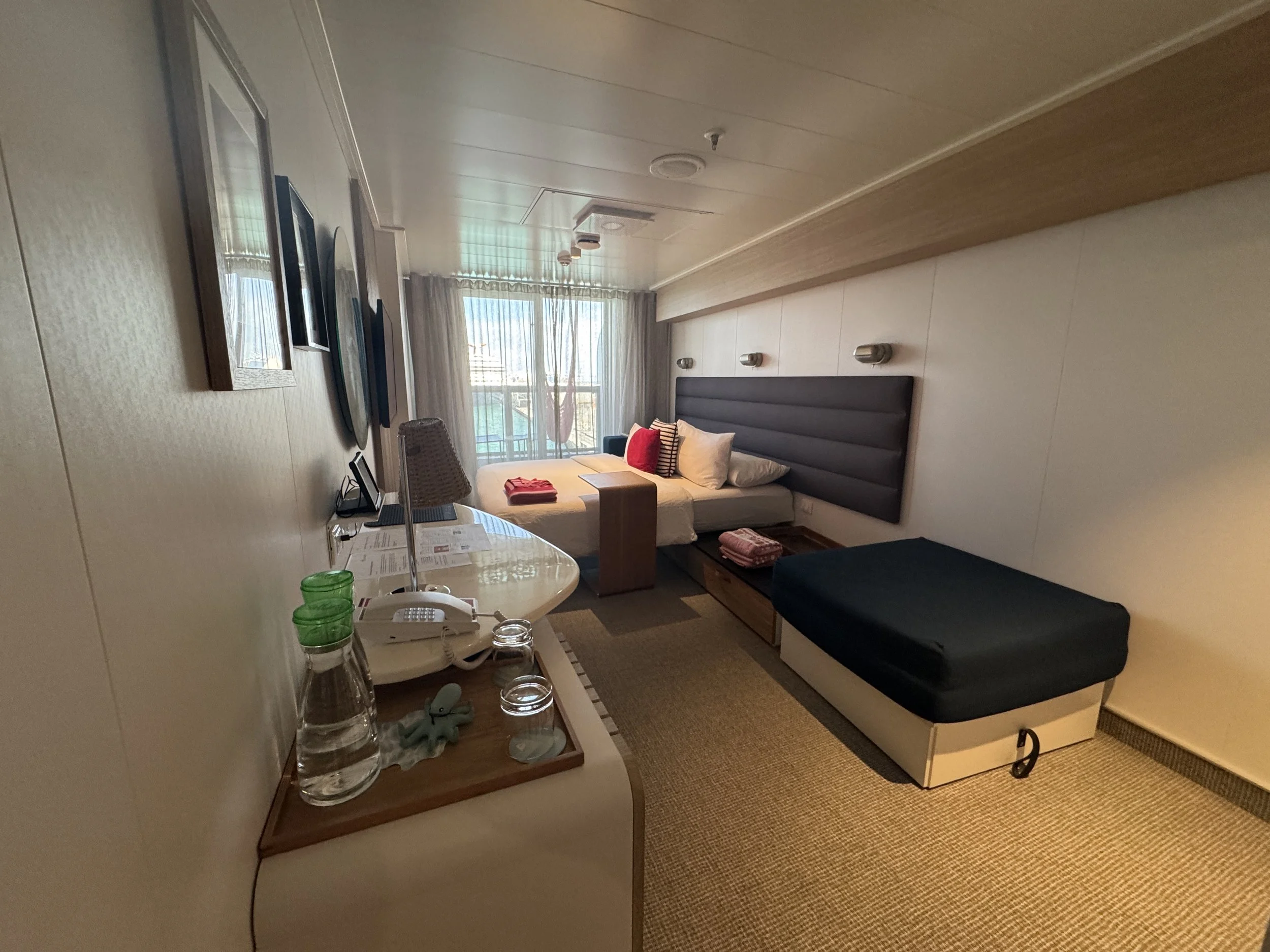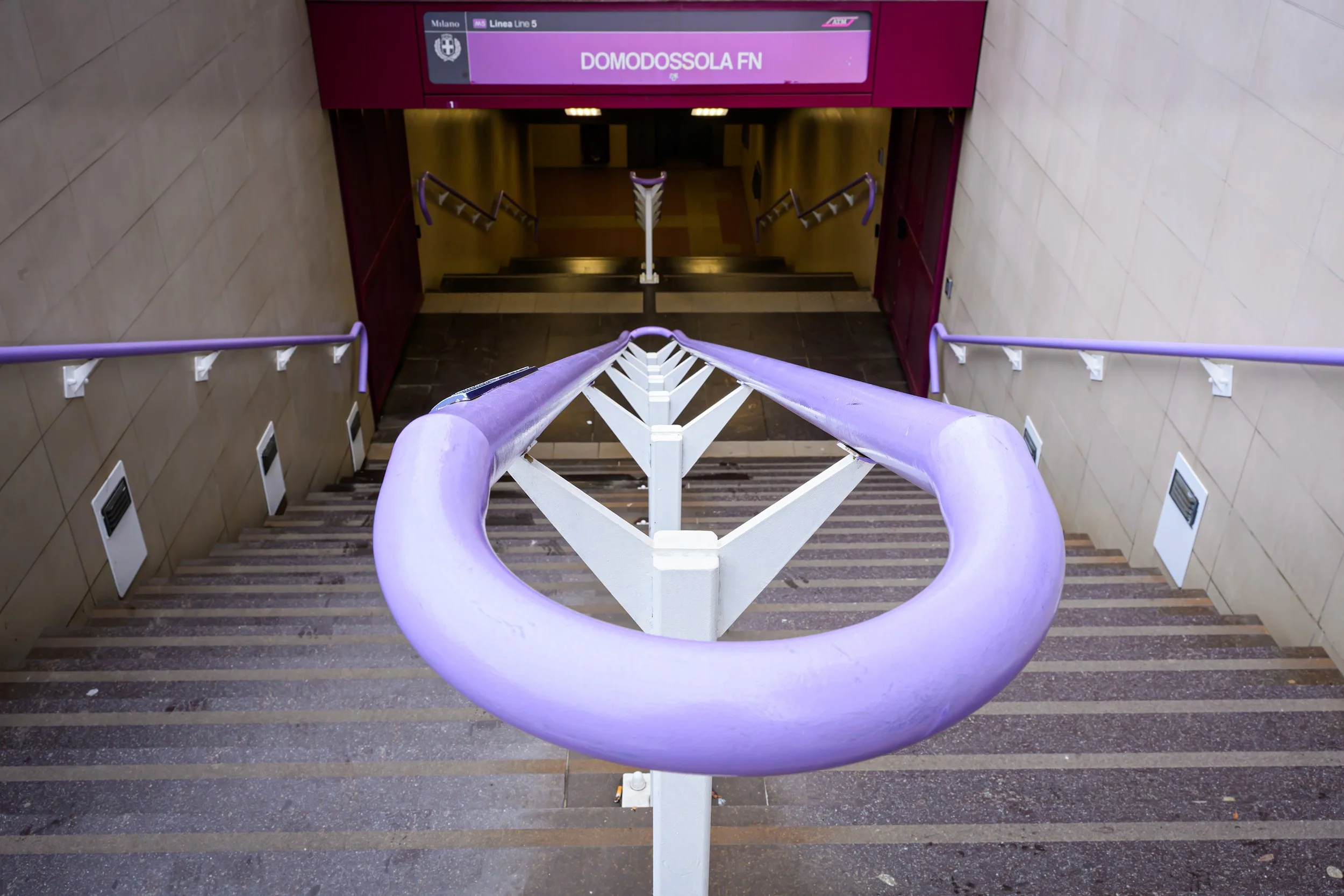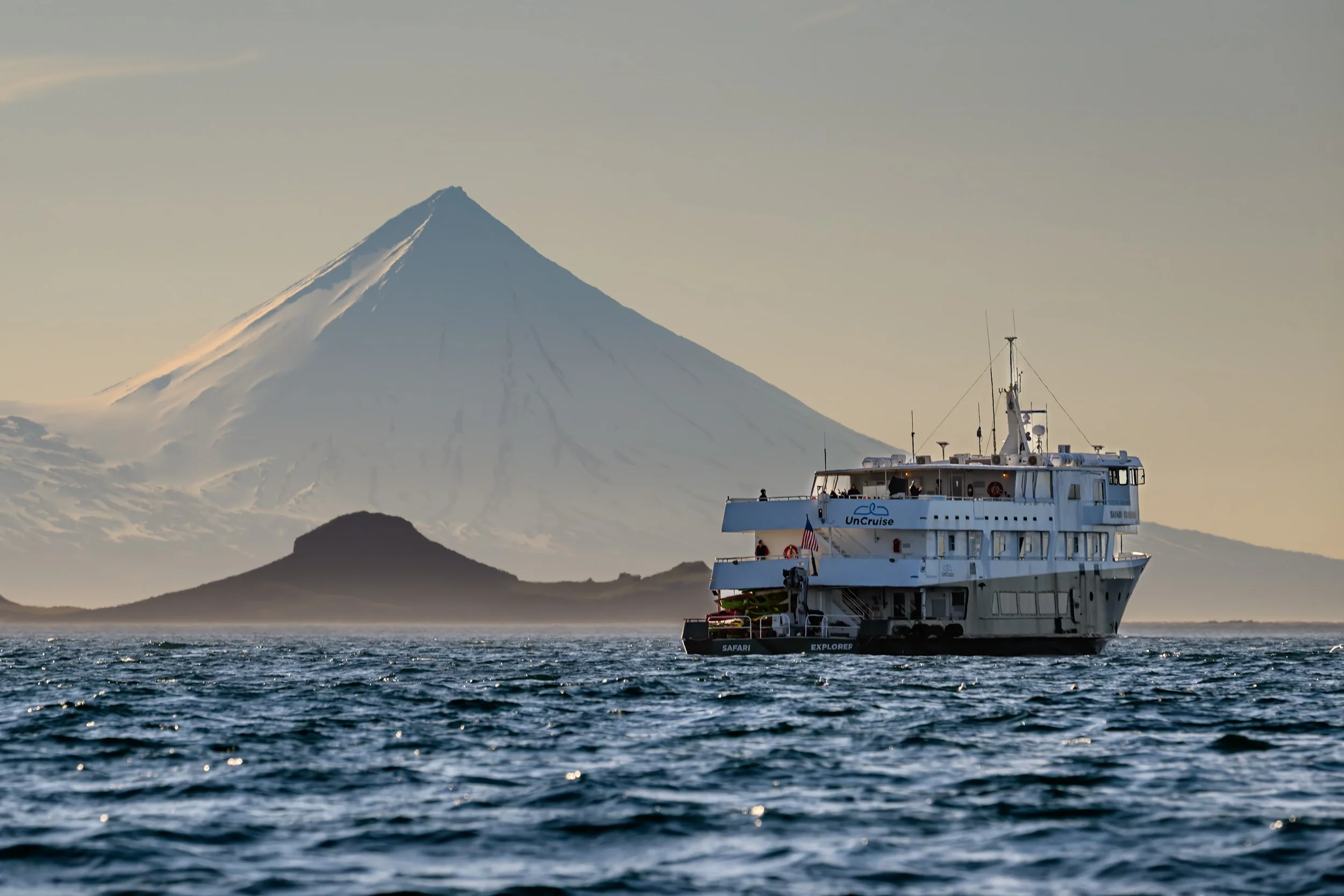
From the glaciers of Kenai Fjords, to the bears of Katmai and Kodiak, from the whales frolicking in front of active volcanos to the treeless tundra and commercial fishing boats from TV’s “Deadliest Catch”- we explore AK on board Uncruise Safari Explorer, an expedition cruise out at the edge of a continent!
(I wrote that…not AI! All of our content is created by real people for real people!)
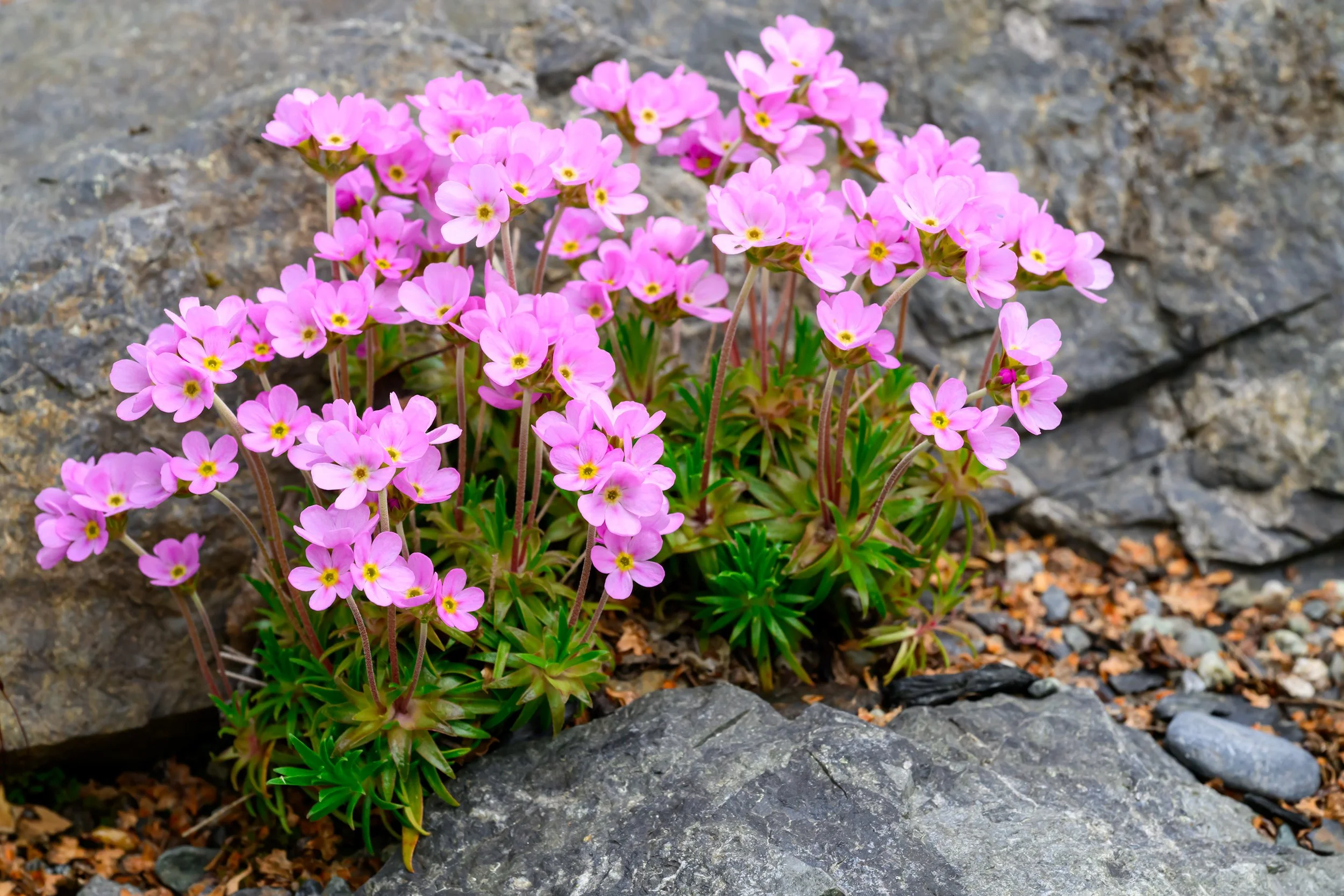
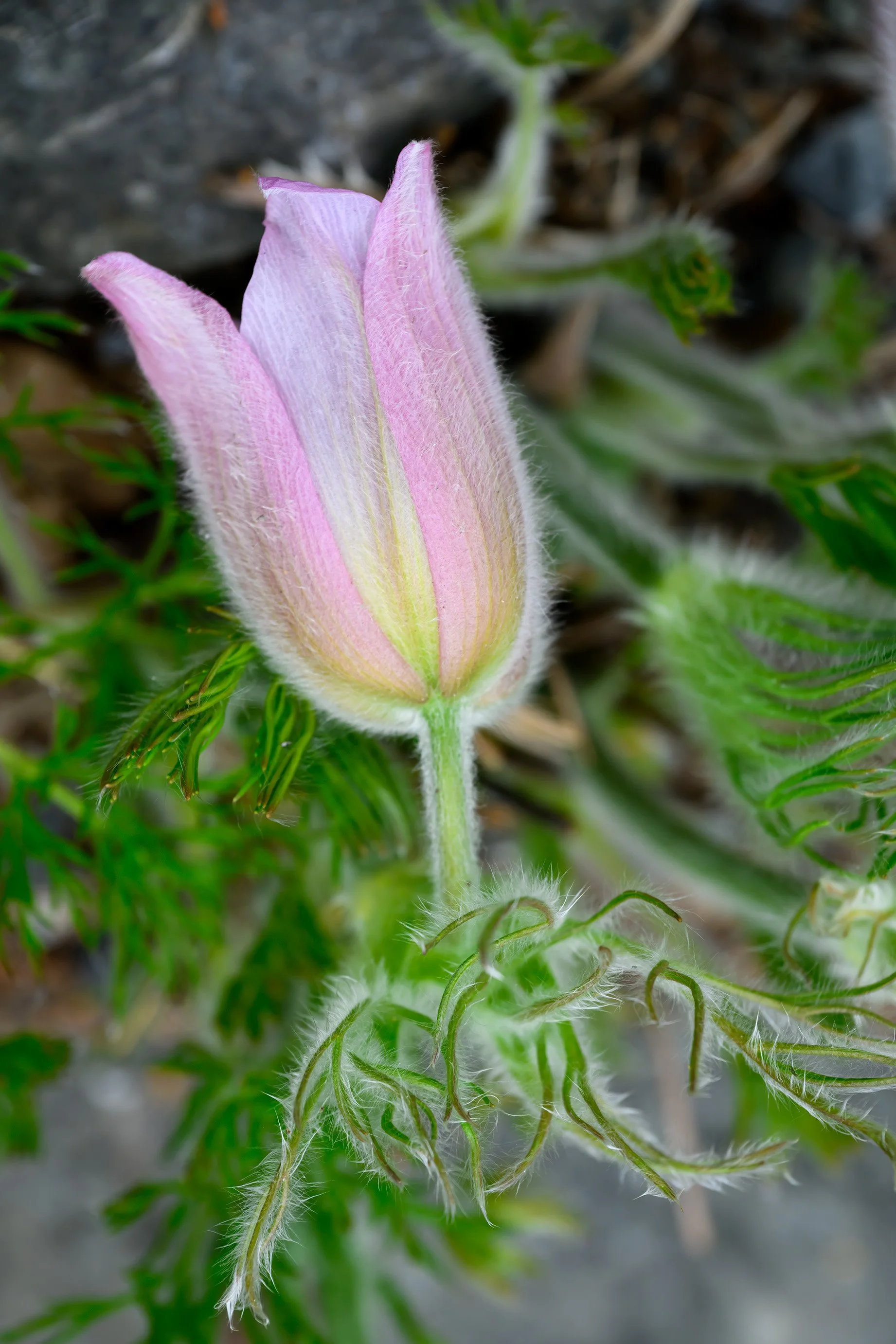
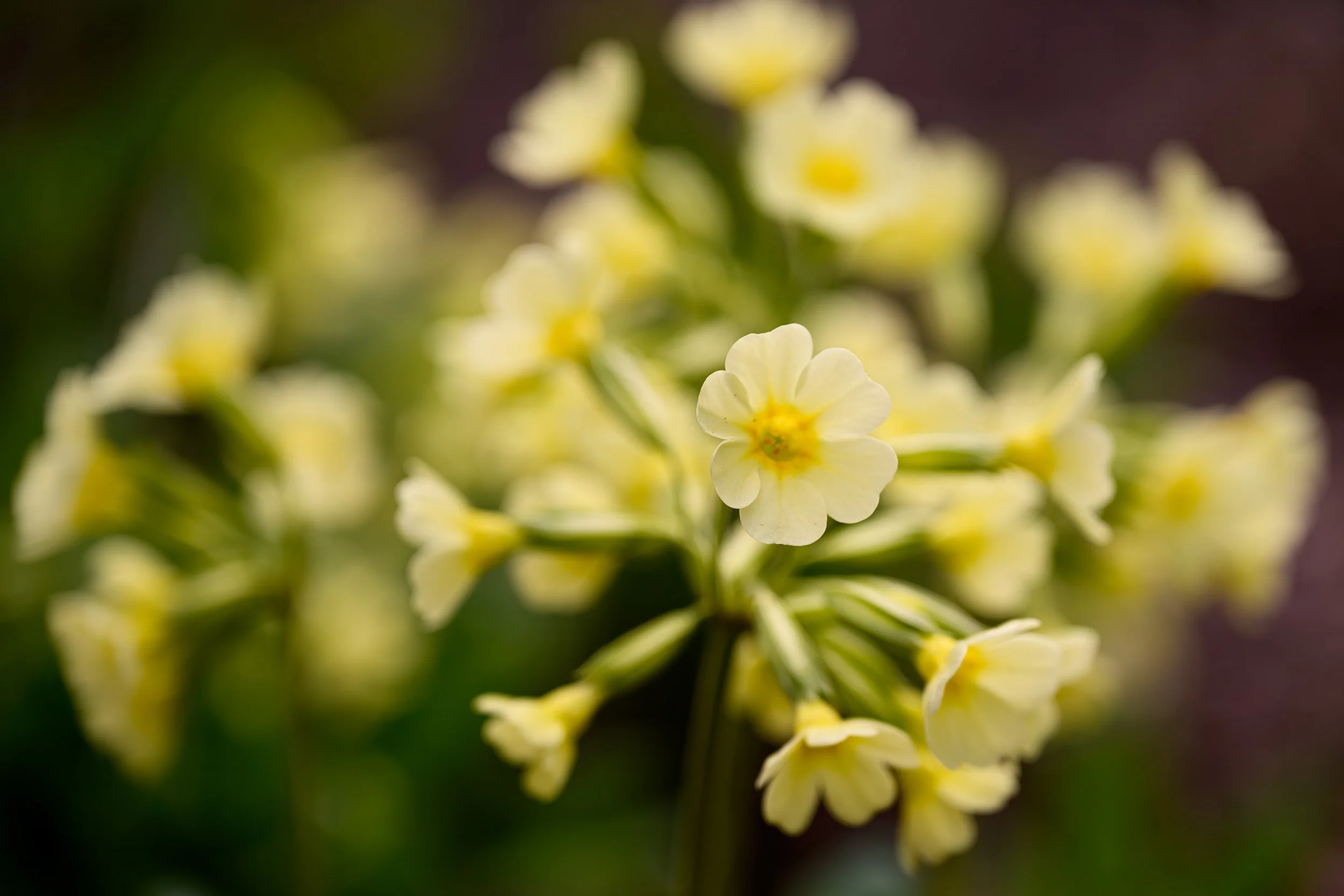
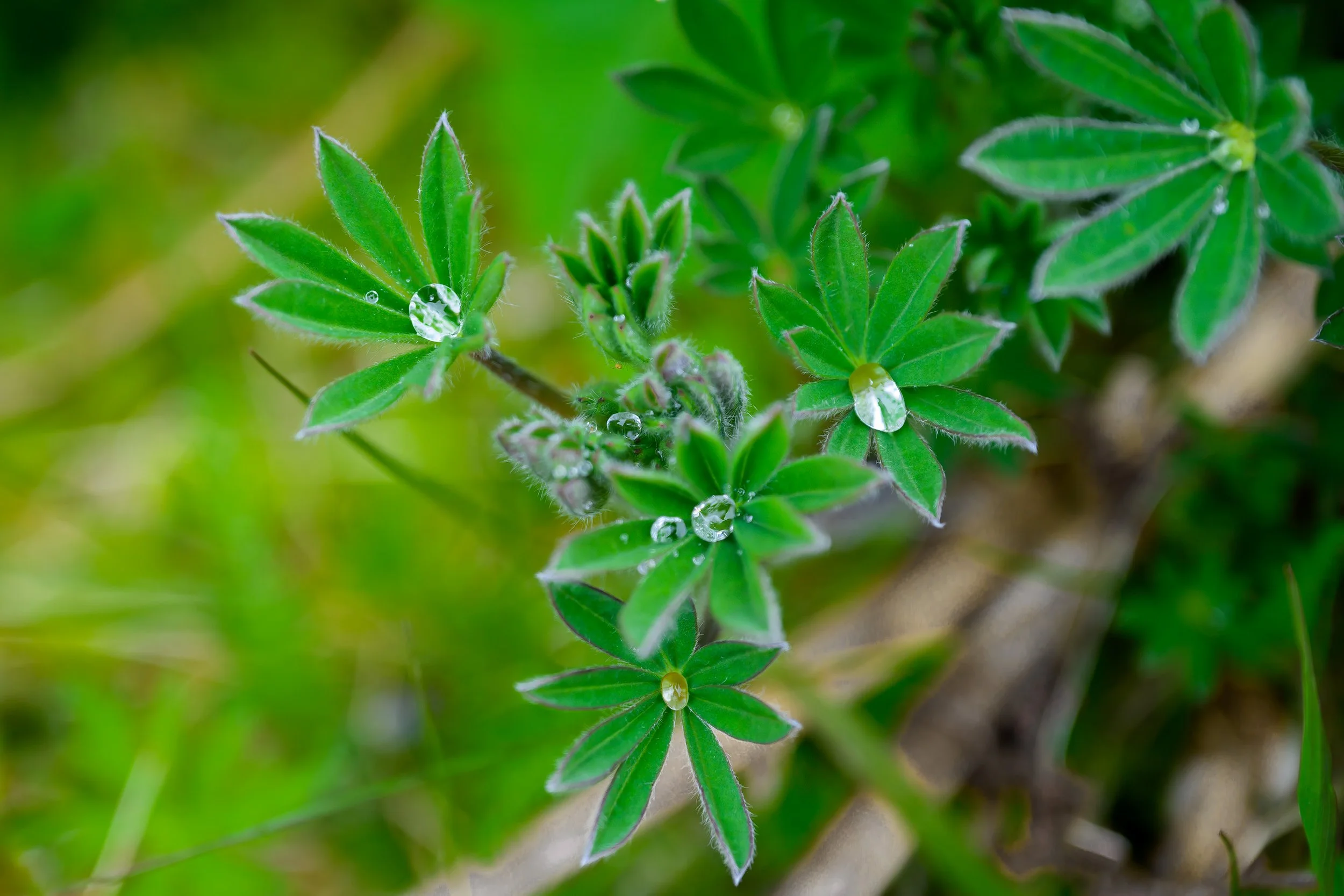
Wild Flowers of Anchorage AK
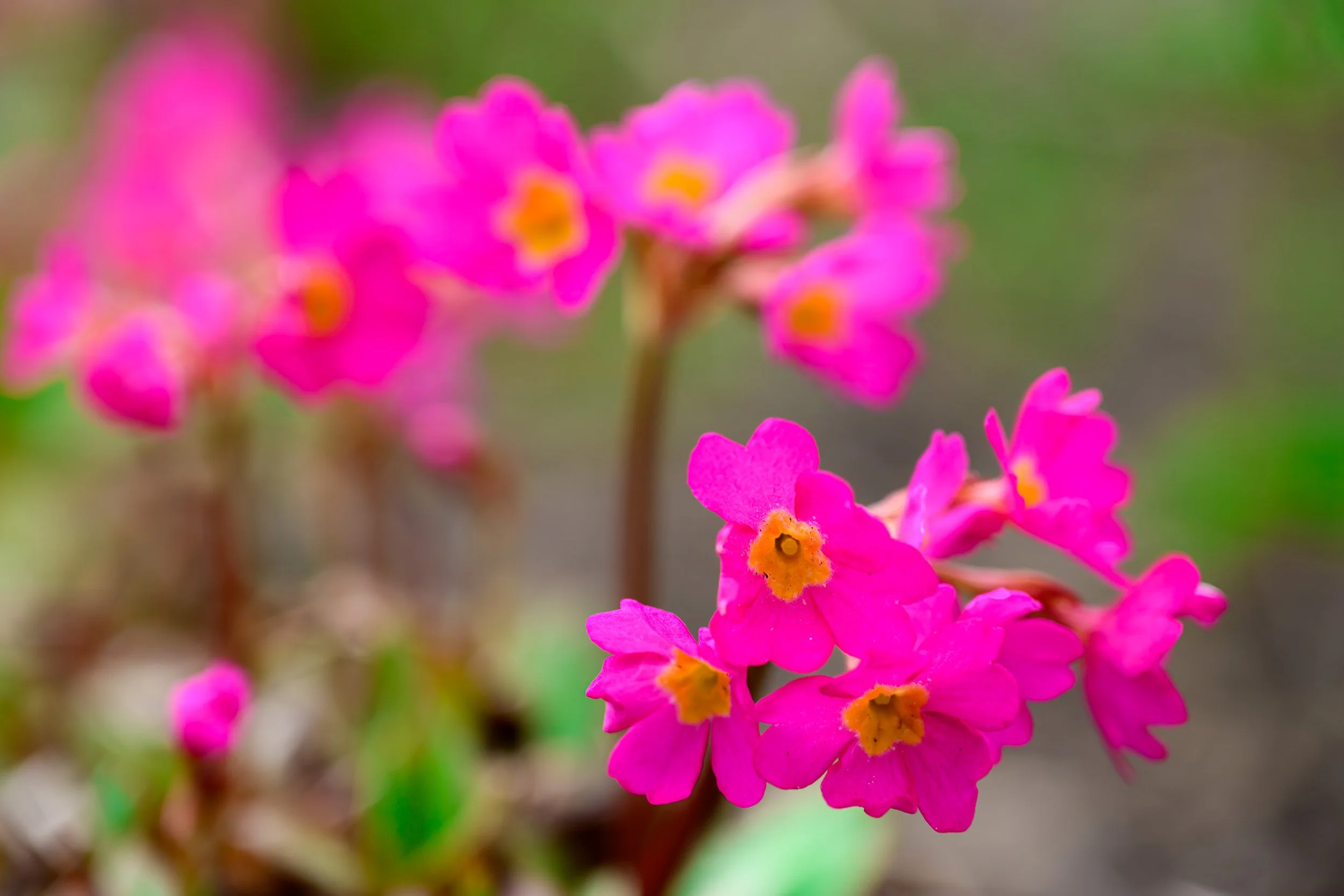
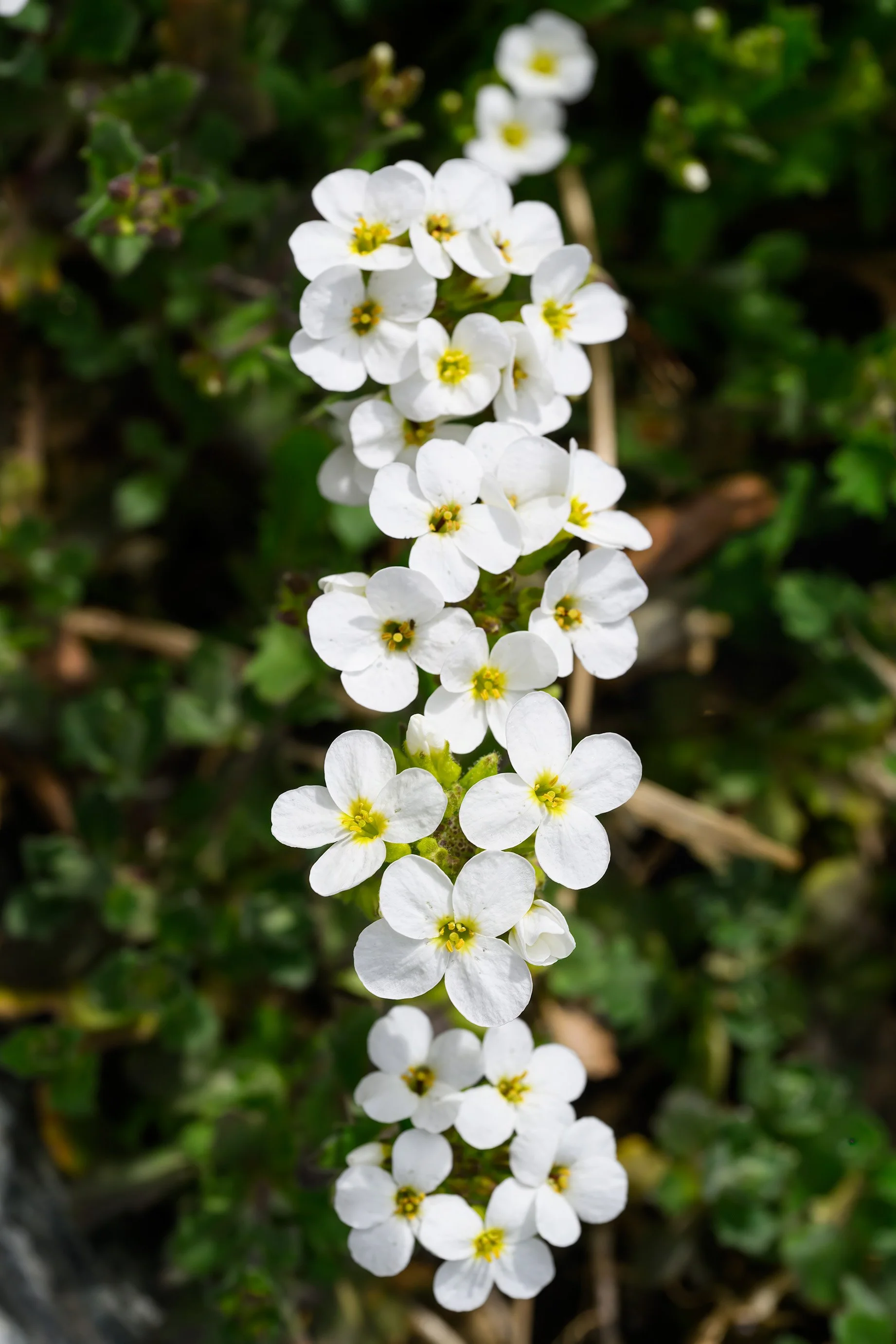
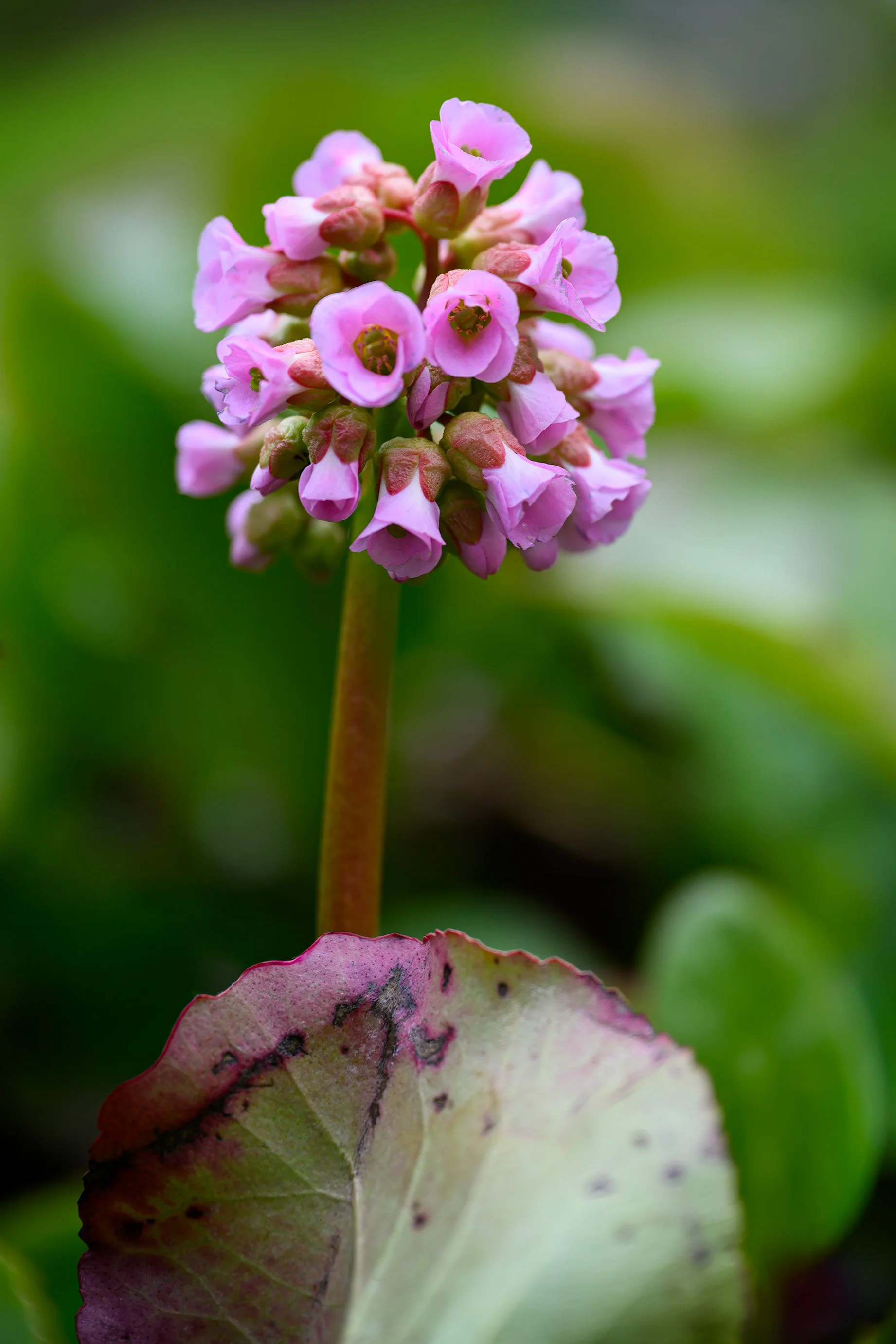
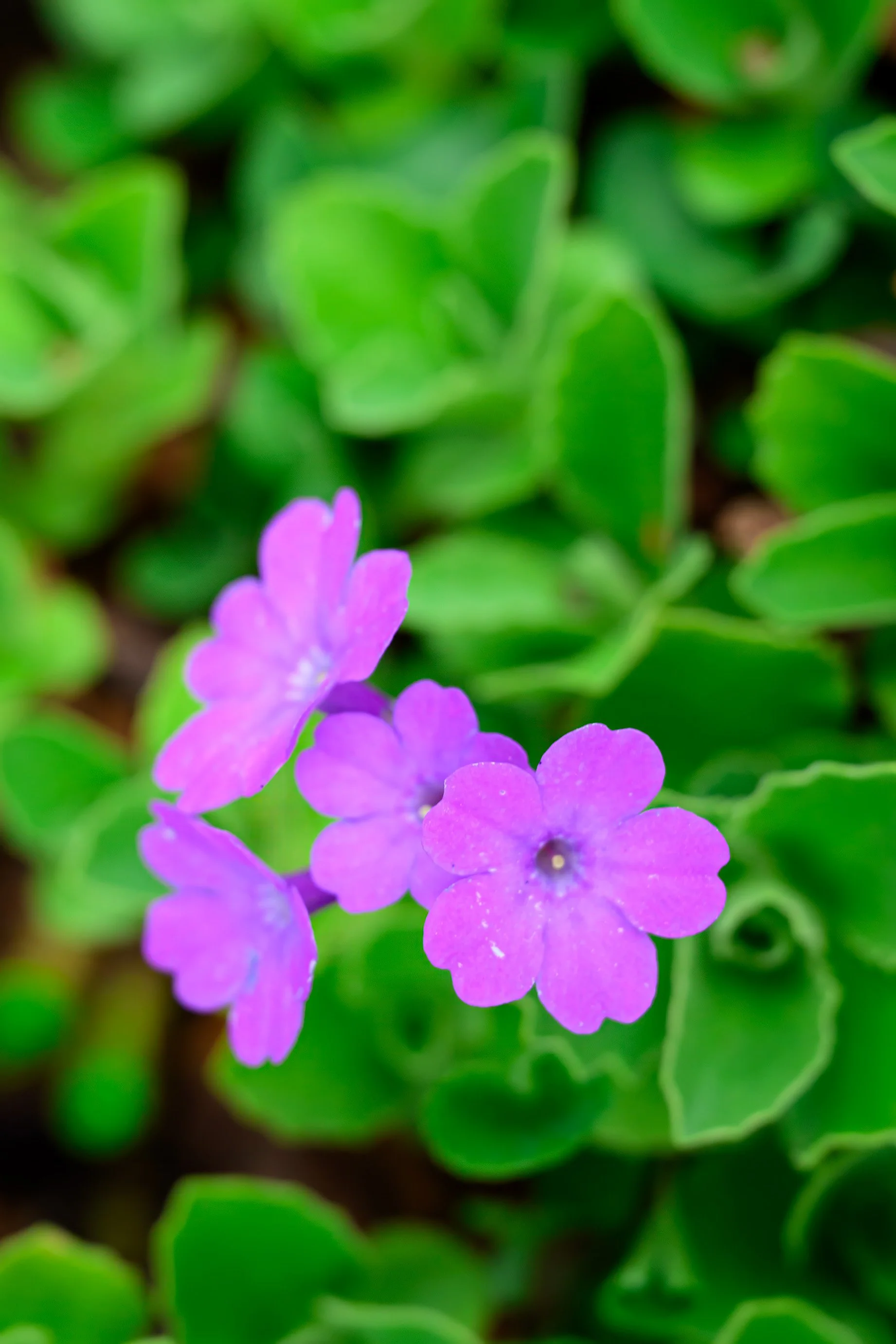
Short …but spectacular. We arrived in Anchorage in late May, Early May is the “start” of the tourist season, cruise ships and whales return (sometimes with disastrous results) The sun is up till almost midnight. Everything eats and everything grows. It’s the start of summer in Alaska and it’s short but sweet. The wild flowers were just starting to blossom when we arrived in Anchorage. It happens fast, a massive patch of unattended dandelions that we noticed in front of our hotel were budded during a 10 PM walk “sunset” walk and were in full bloom the next morning at 10 AM! One was even ready to blow and make wish!
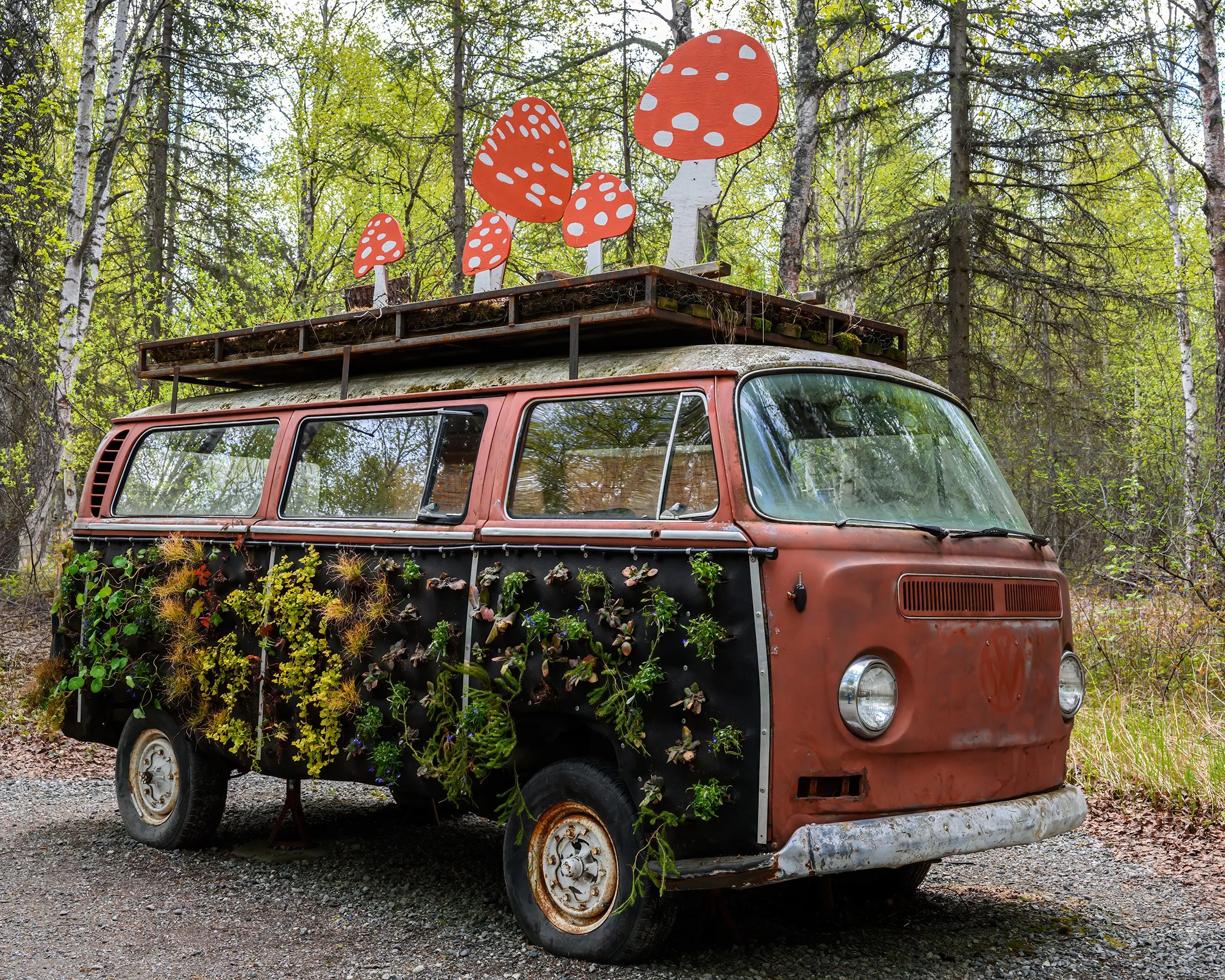
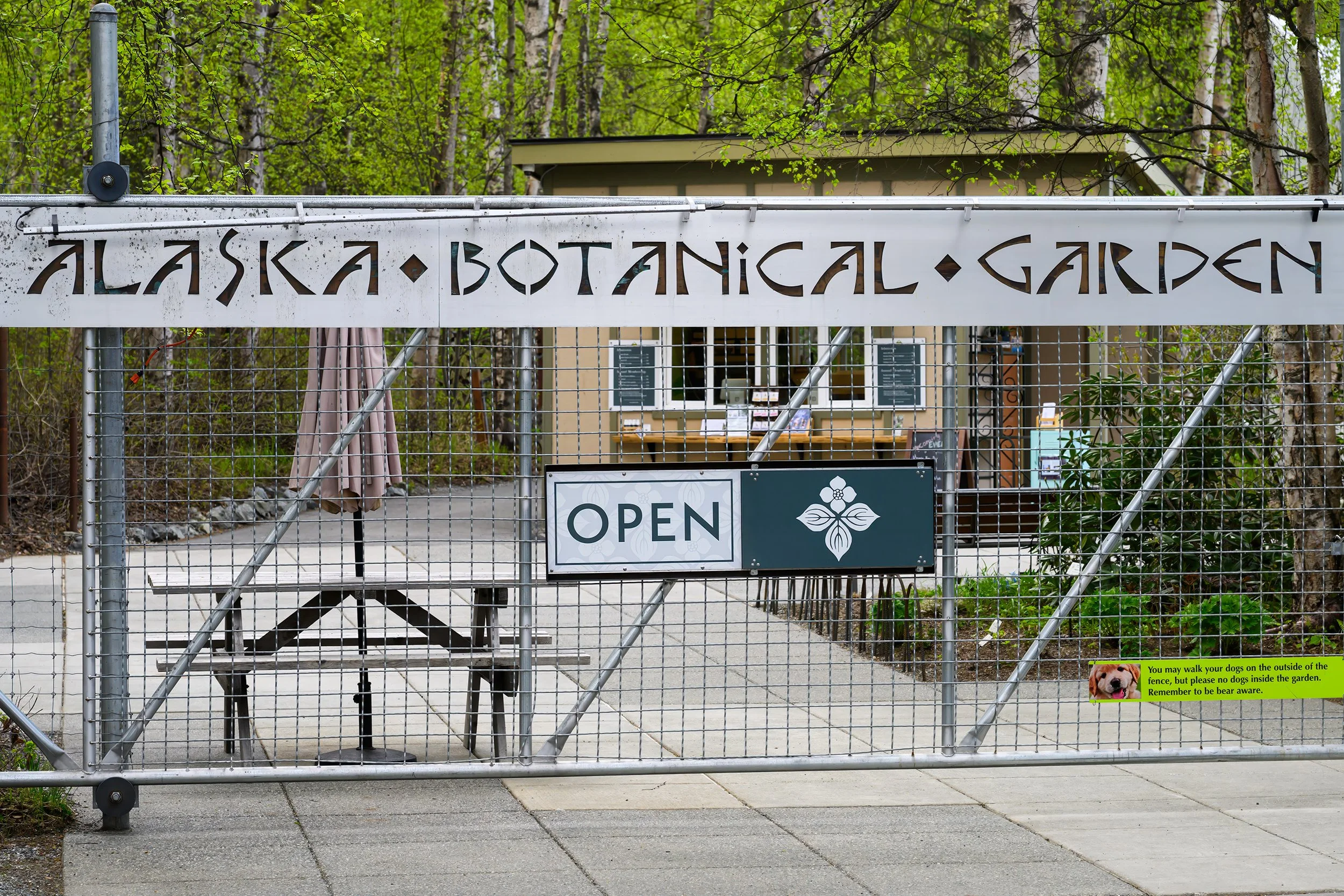
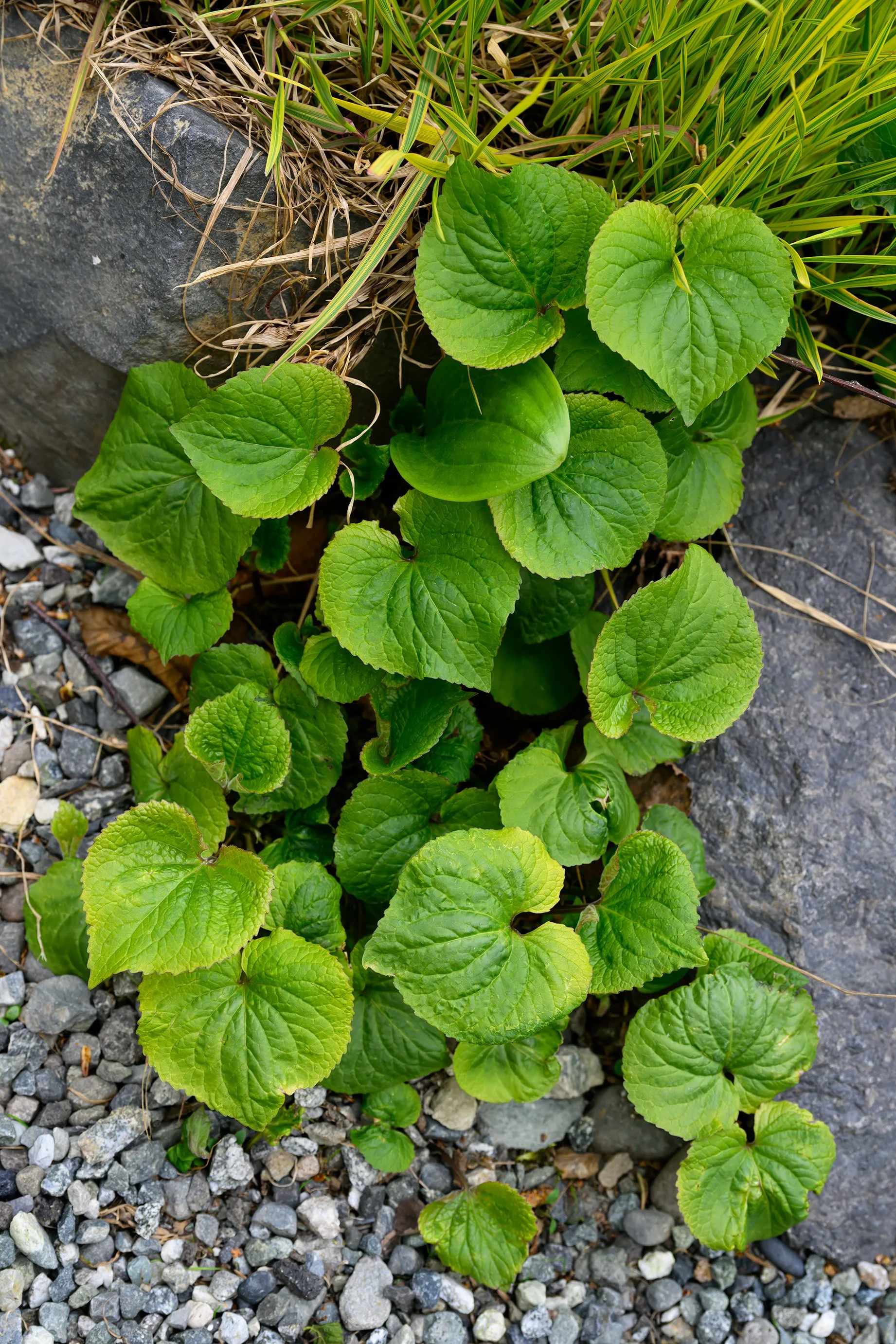
With a short time to visit Anchorage, we decided to see the Alaska Botanical Gardens to see what was blooming. The friendly volunteers were apologetic that the big showy flowers were not yet in bloom, but the subtle carpets of delicate alpine flowers were just starting, the leading edge of a show that will be glorious but won’t last.
Kenai Fjords National Park
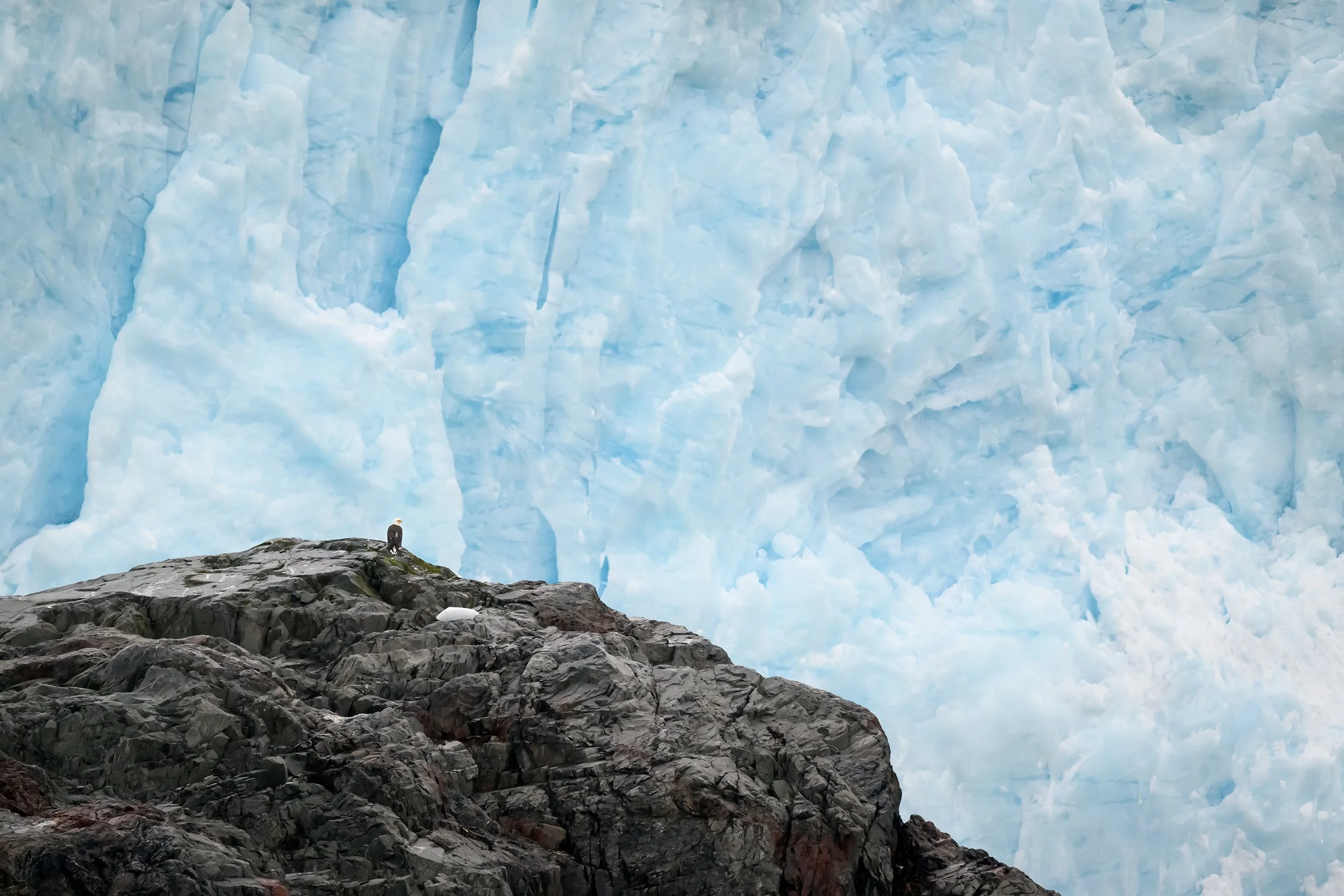
a bald eagle is dwarfed by the Holgate Glacier
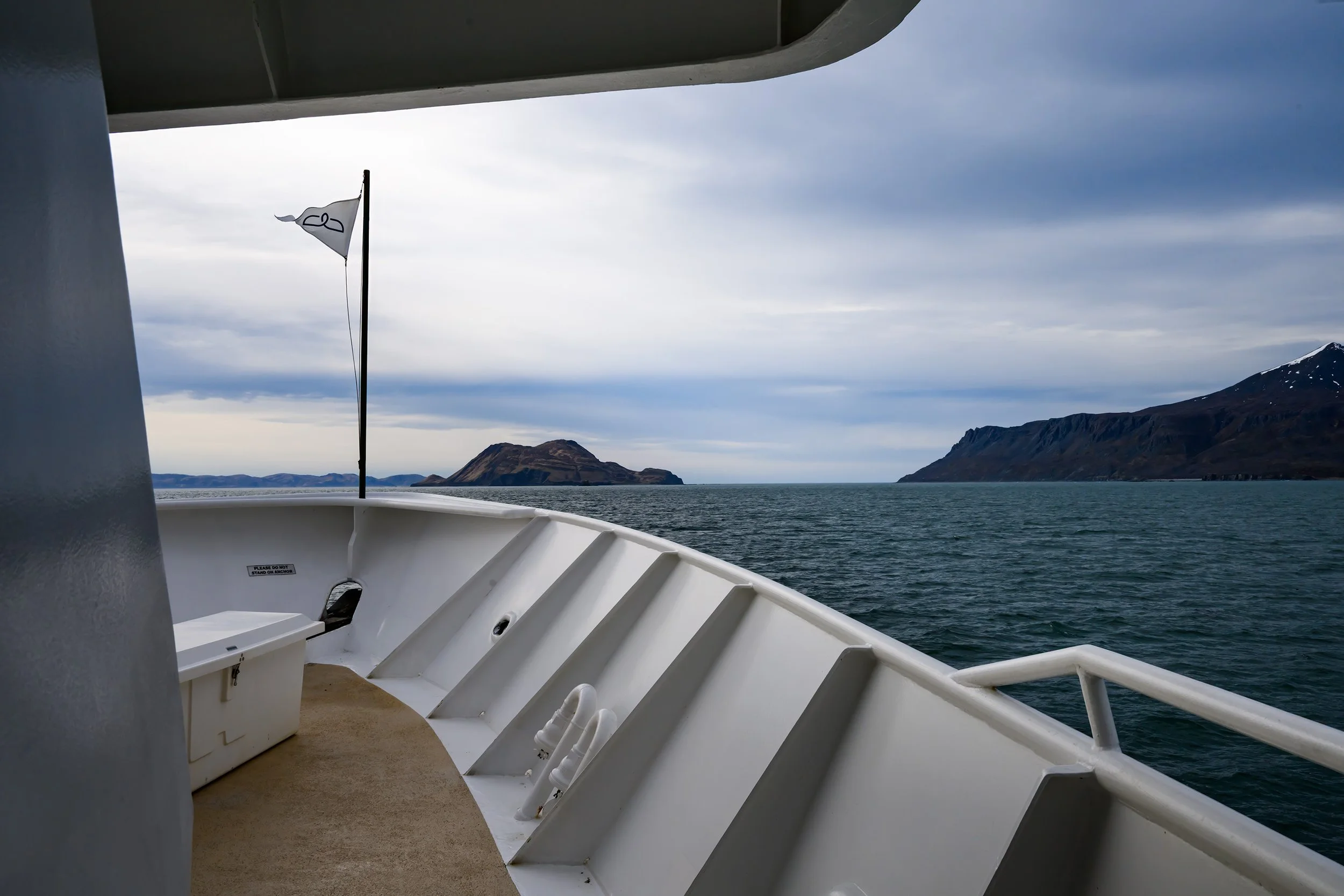
How is an expedition cruise different from other AK cruises? The Alaskan Peninsula stretches out and divides the Gulf of Alaska from the Bering Sea. People often cruise on larger ships along the Inside Passage. We’ve taken one of those along with hundreds or thousands of other passengers, most of our tours were short in order to accommodate demand. Many tours use buses, or on the water, large ferry style boats.
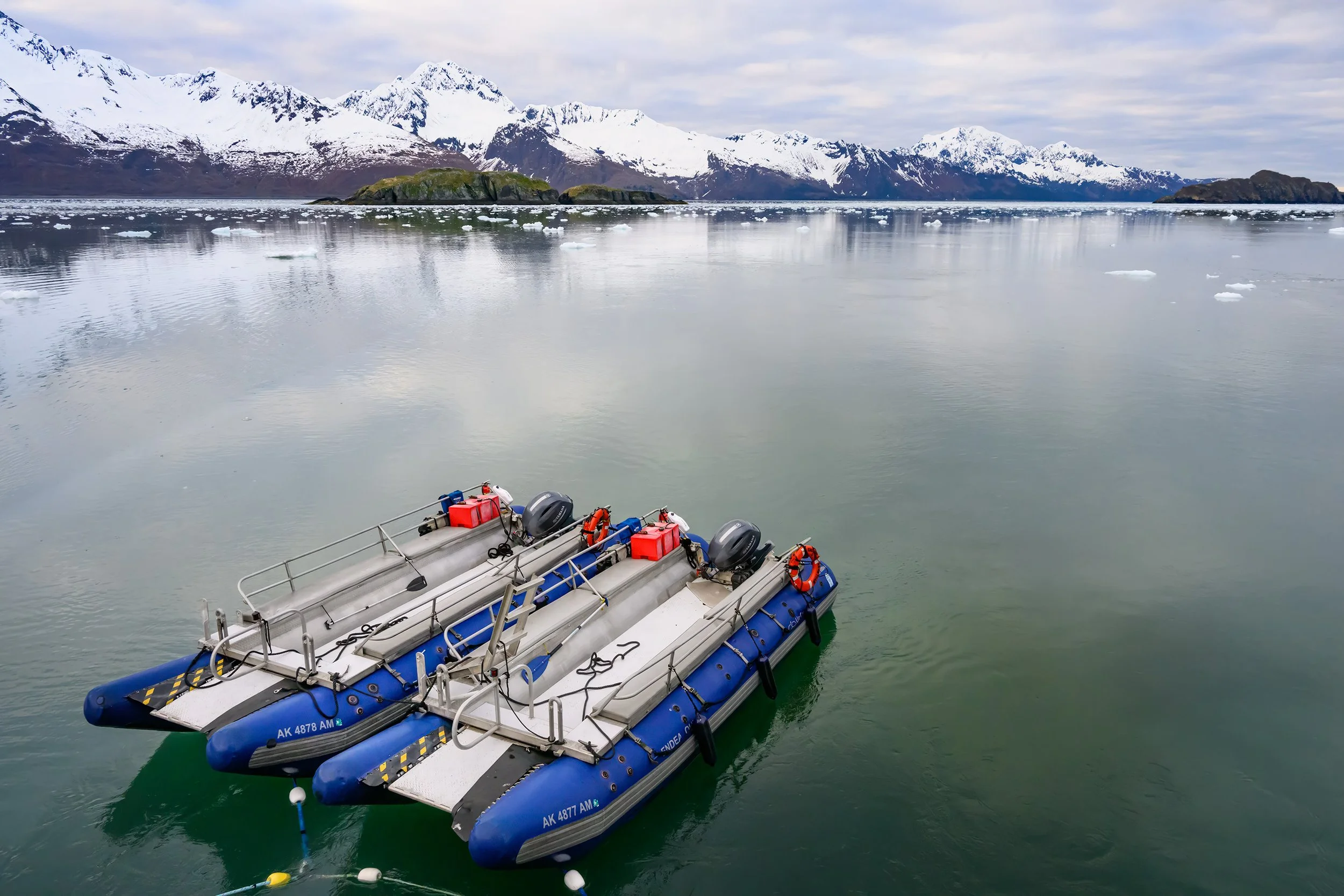
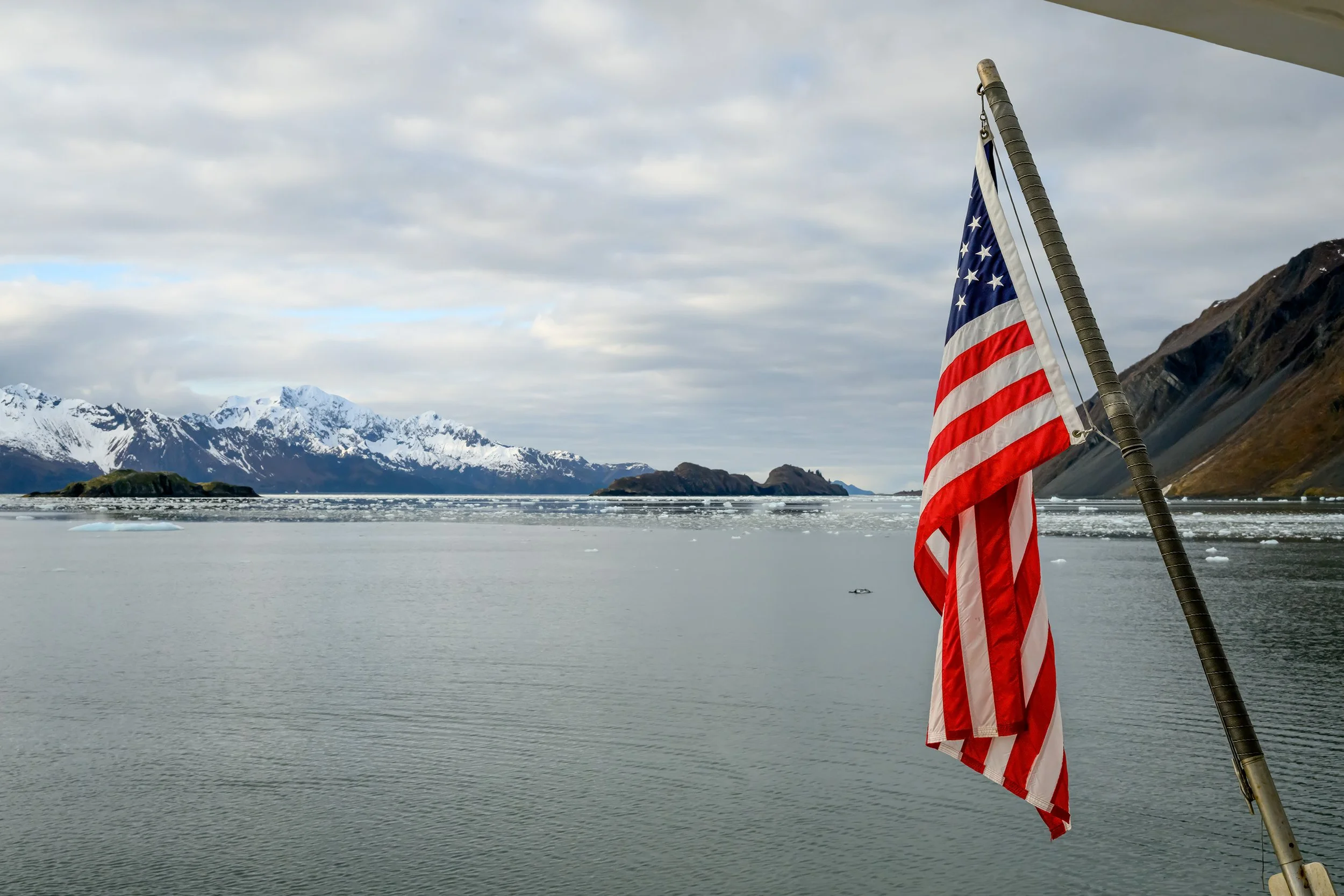
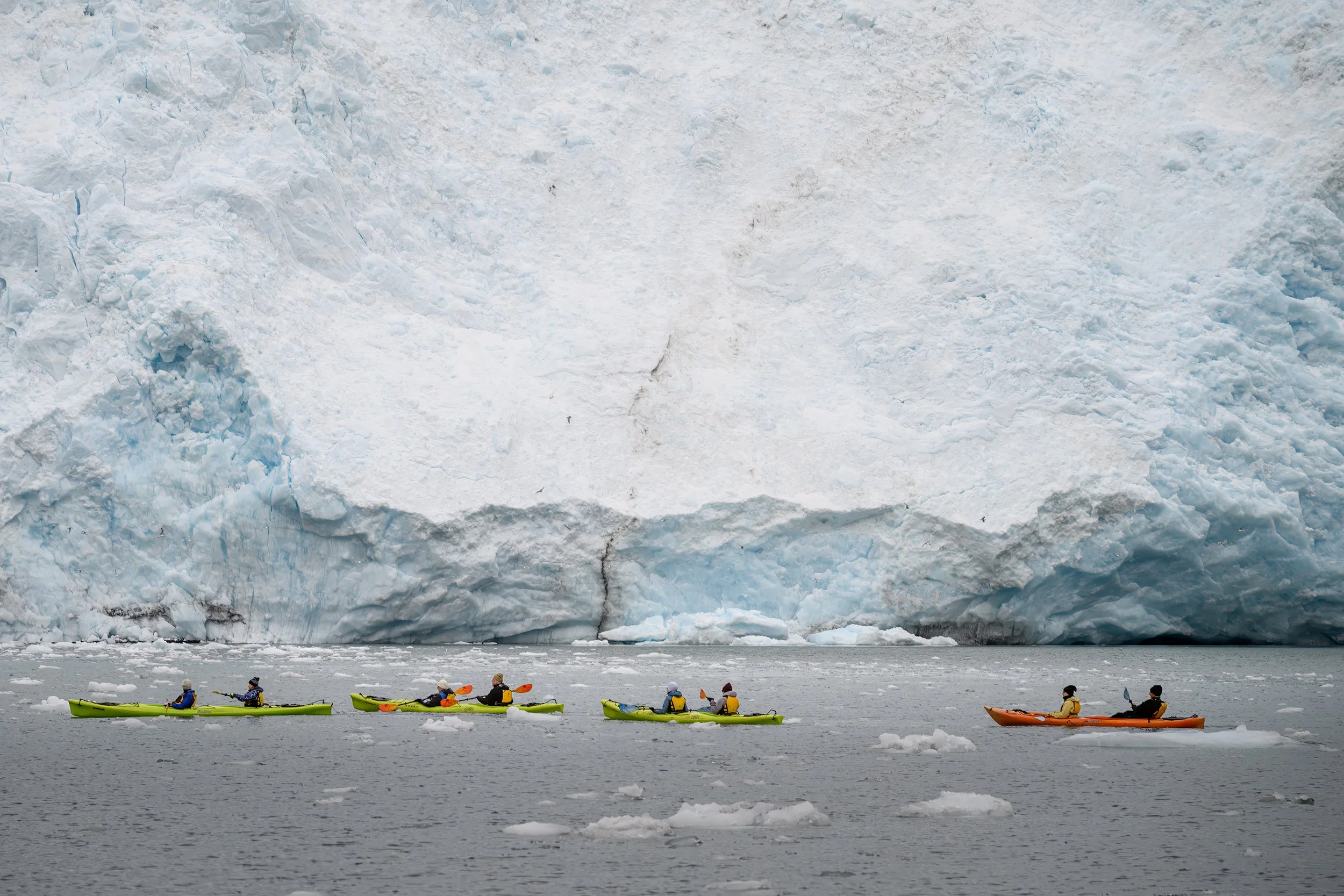
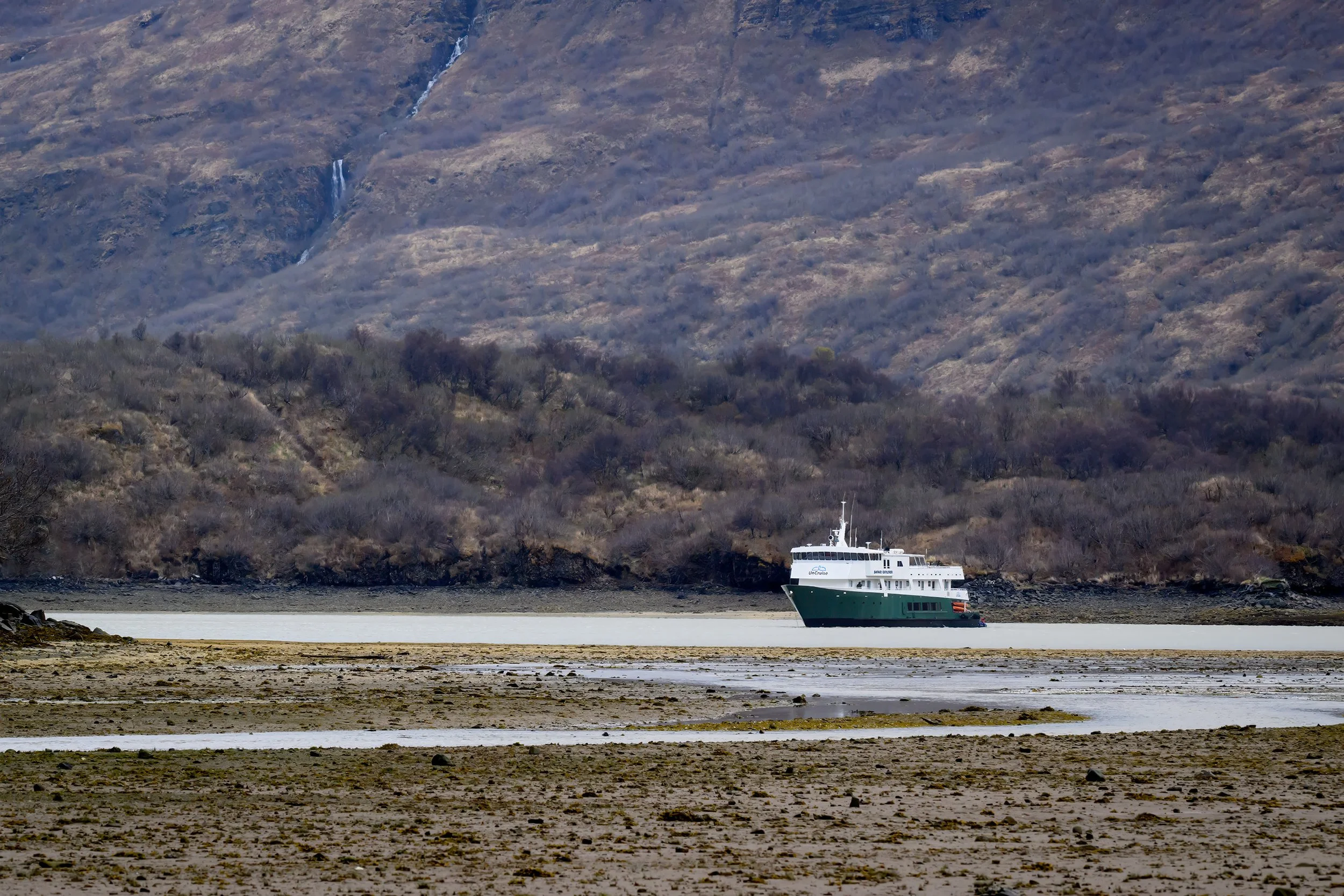
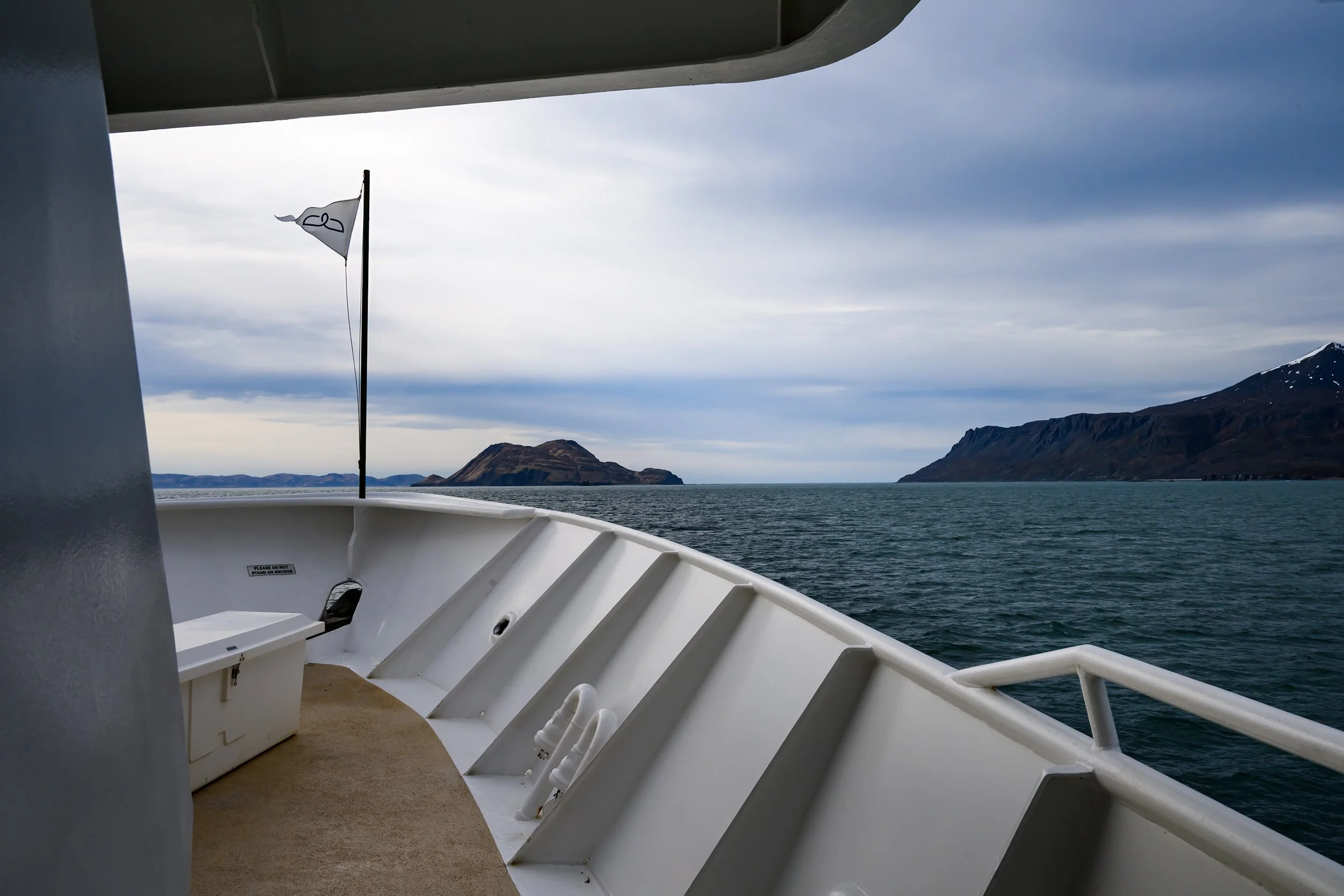
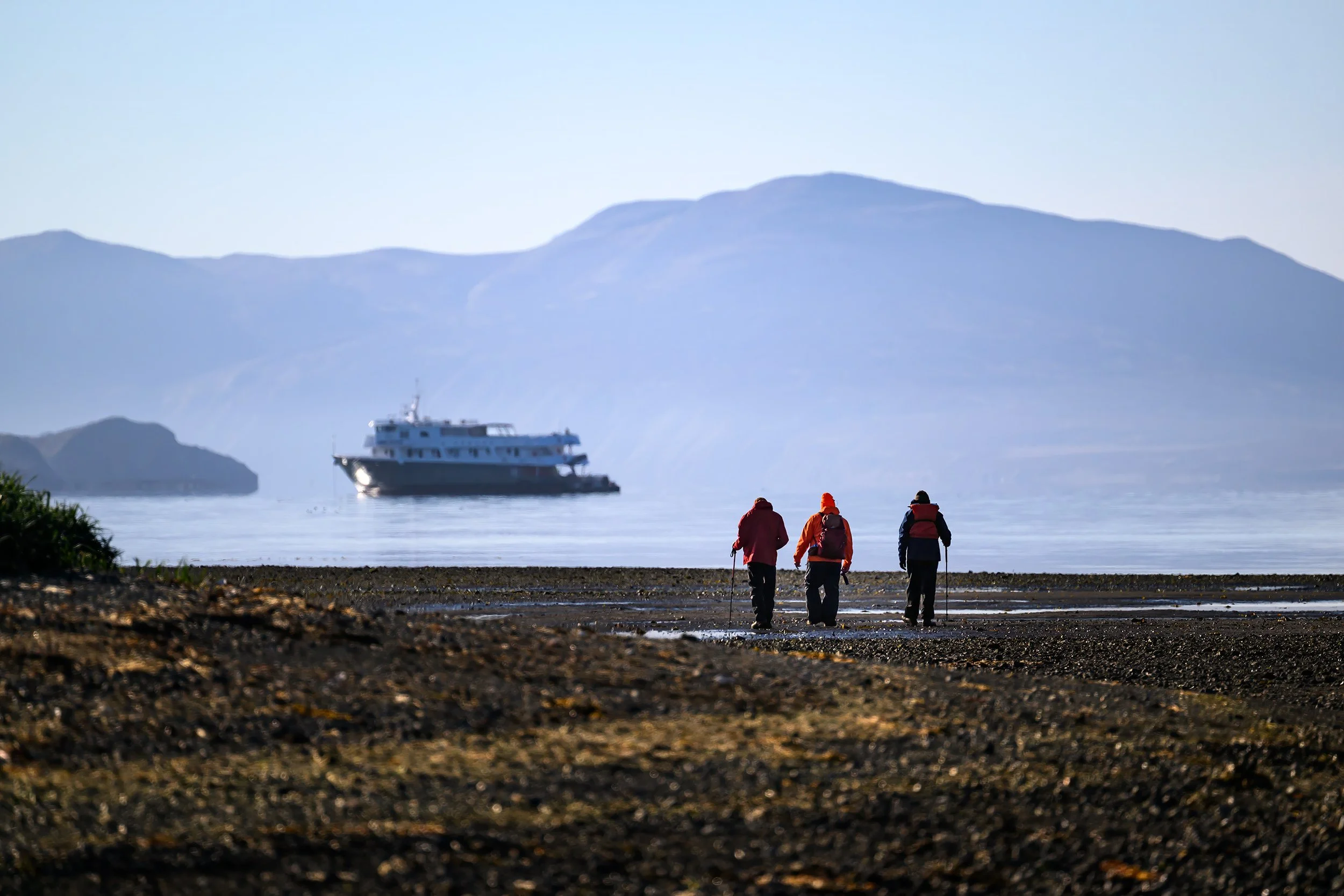
Our expedition ship had 28 passengers, 2 skiffs, and about dozen kayaks for us to use to explore ashore. We explored beyond the Inside Passage, and started where most commercial cruise lines end. We rarely went to a “port”; often had to get our feet wet (or wear our AK sneakers aka rubber boots) to wade ashore. Most places we went, there were more bears than people.
Skiffs, kaykaks, muddy boot …these are the things we experienced on an expedition cruise
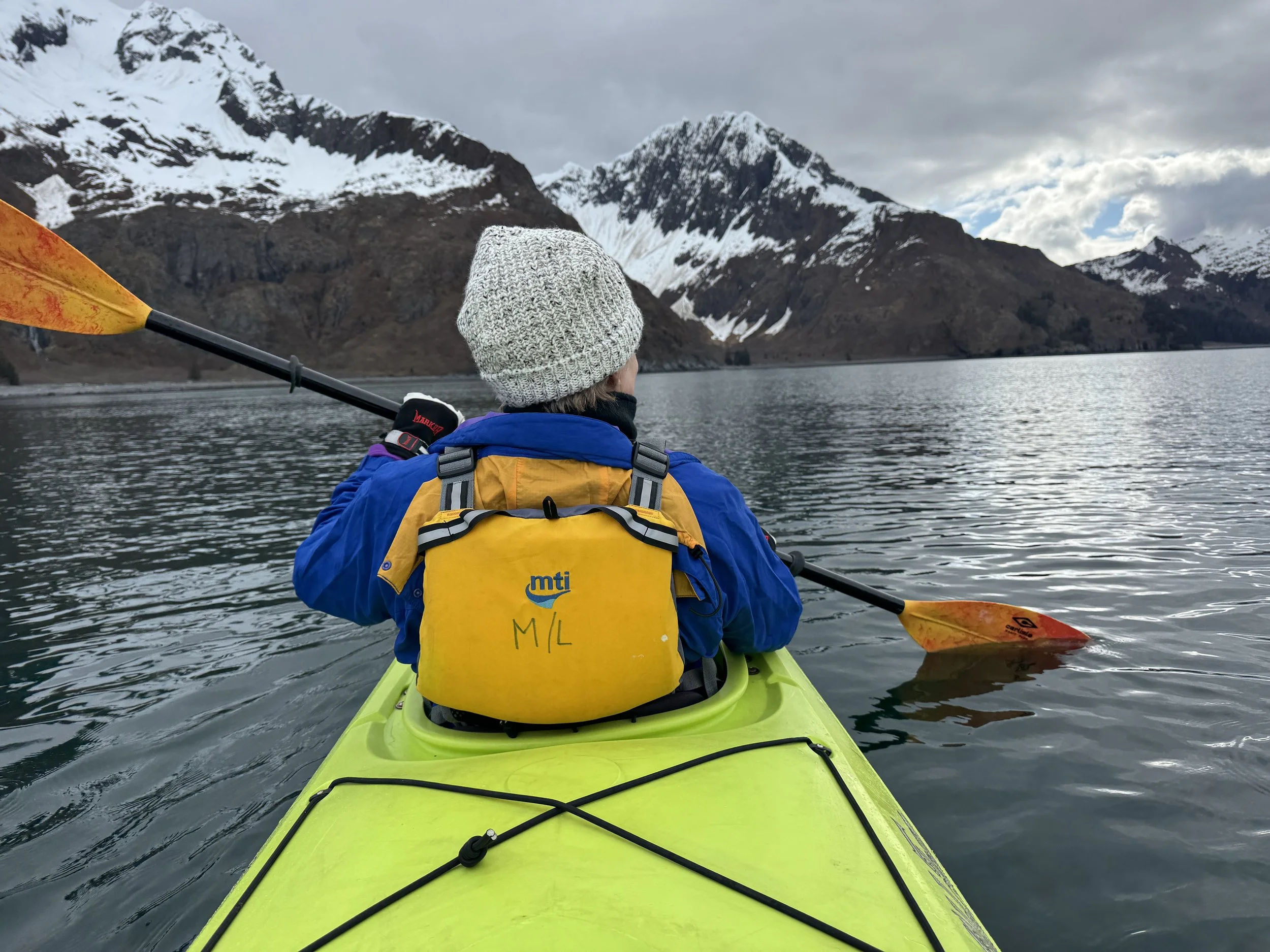
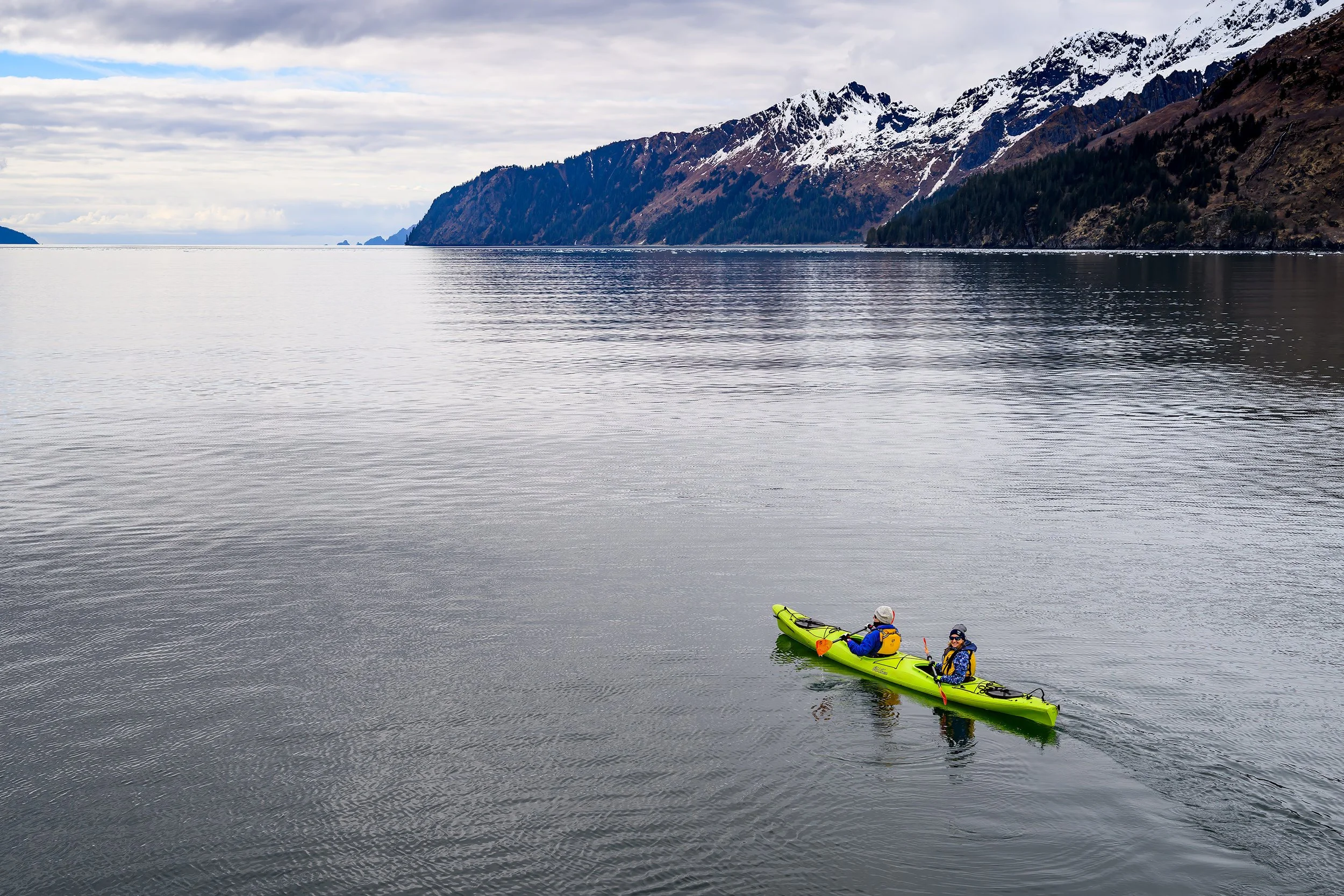
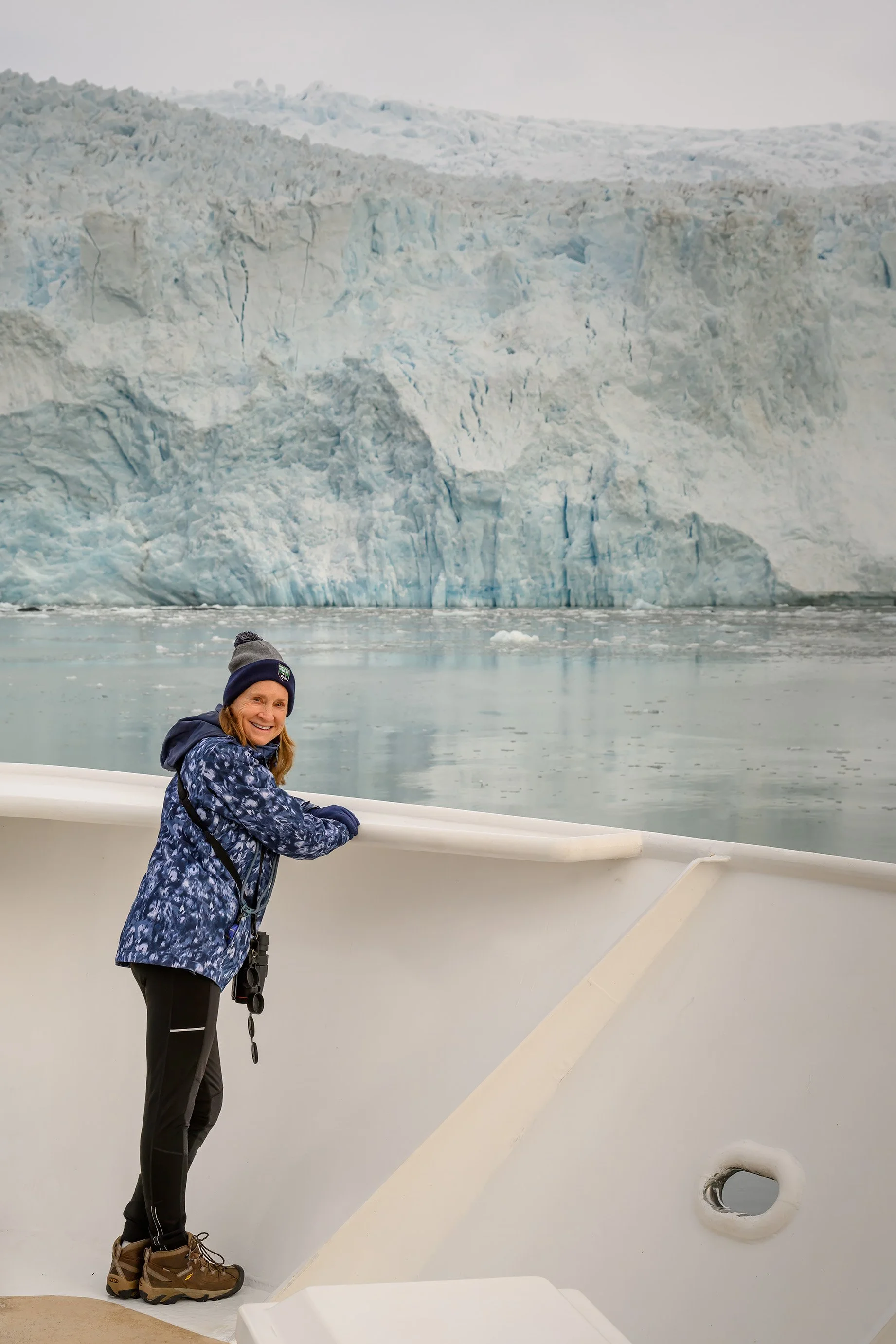
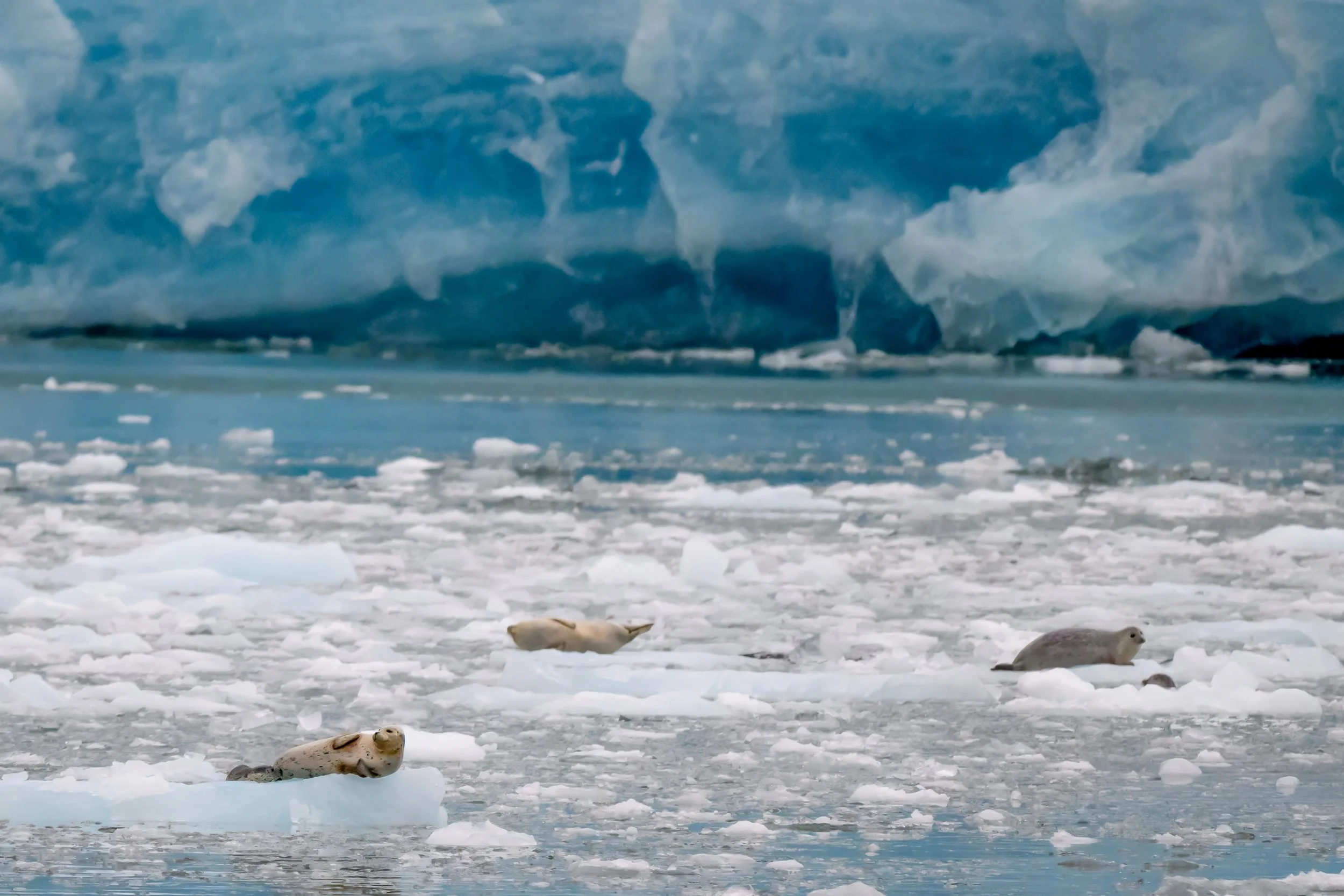
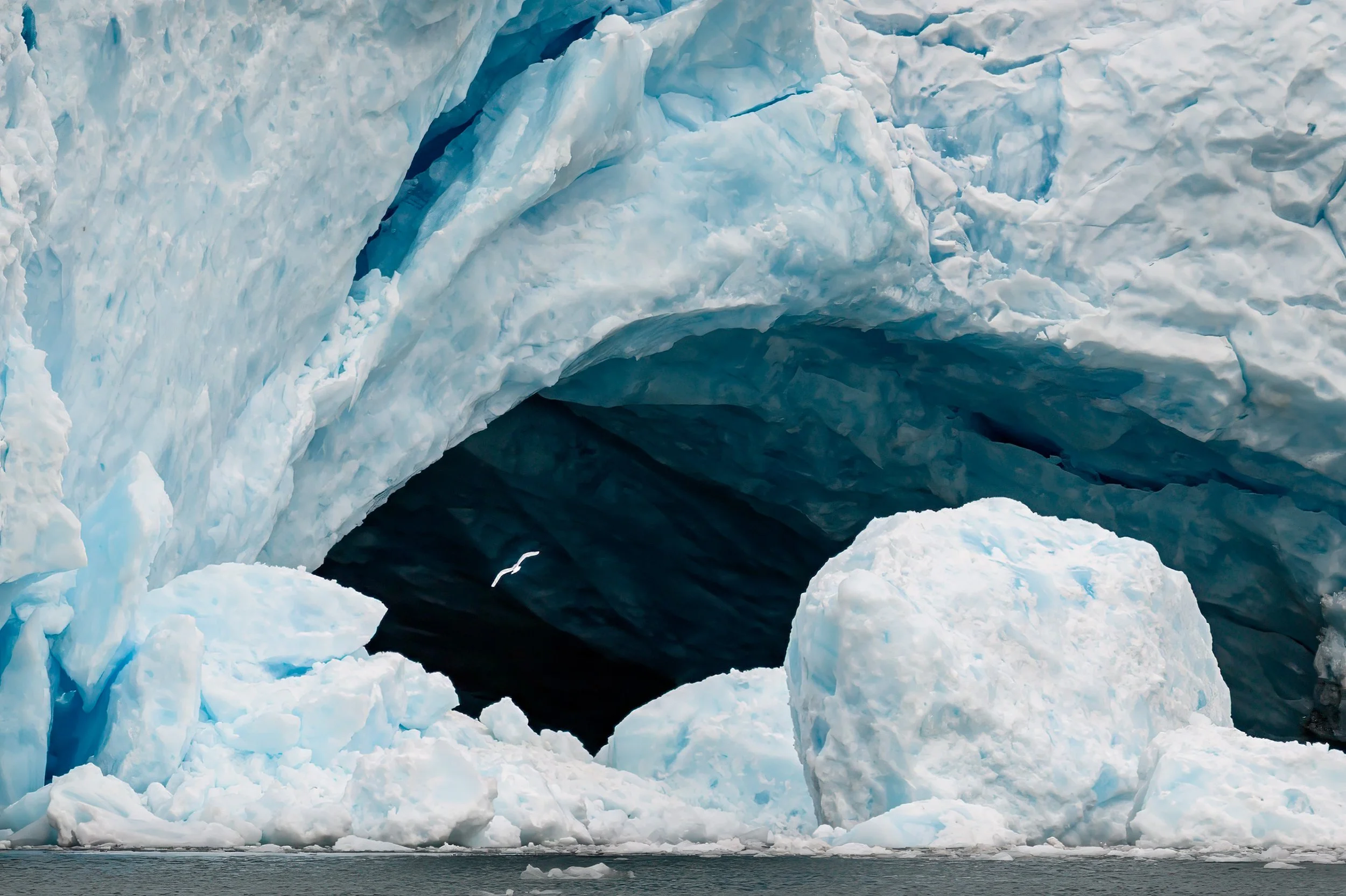
One of the jewels of Alaska, the Kenai Fjords National Park is more than 600 thousand acres, where the Harding Ice field is a relic of the ice age, and home to many glaciers including the Holgate Tidal glacier. People travel to AK to see glaciers, and particularly dramatic are tidewater glaciers, which flow into the ocean and create dramatic ice falls into the ocean. The cruisers on larger ships arrived in ferry style boats with dozens of fellow passengers and an onboard tour guide making announcements over a PA system. While we spent half day exploring the Holgate glacier in our kayaks or skiffs with a team of naturalist guides, those larger ship tours sailed up near the face of the glacier for 10-15 minutes and then returned to accommodate the next group of passengers. And that’s the best way I can differentiate an expedition cruise from a traditional cruise…you’ll get your feet wet, you won’t see many other folks and you’ll get to spend hours immersed in the nature you came for.
Kodiak Island Alaska Maritime National Wildlife Refuge
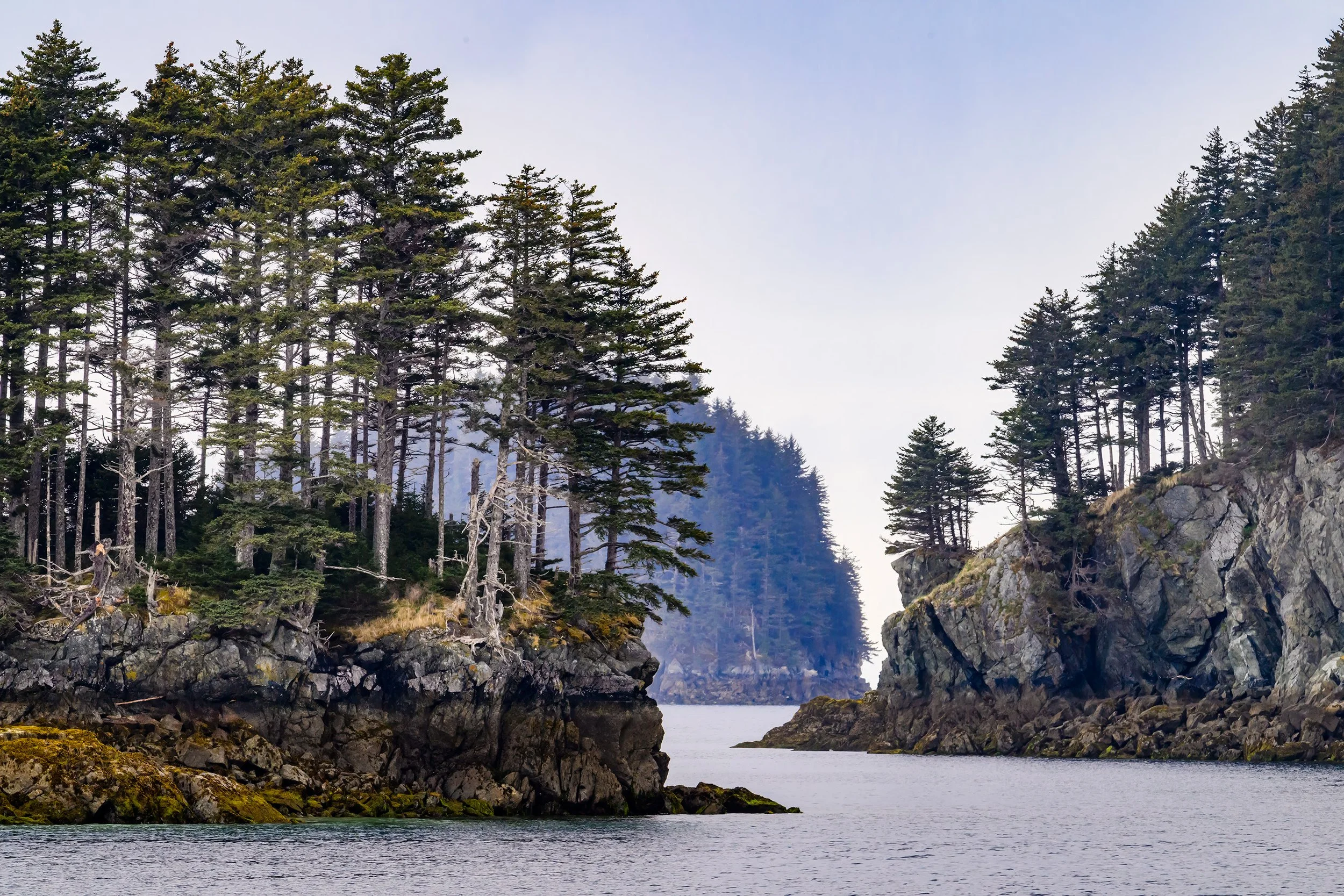
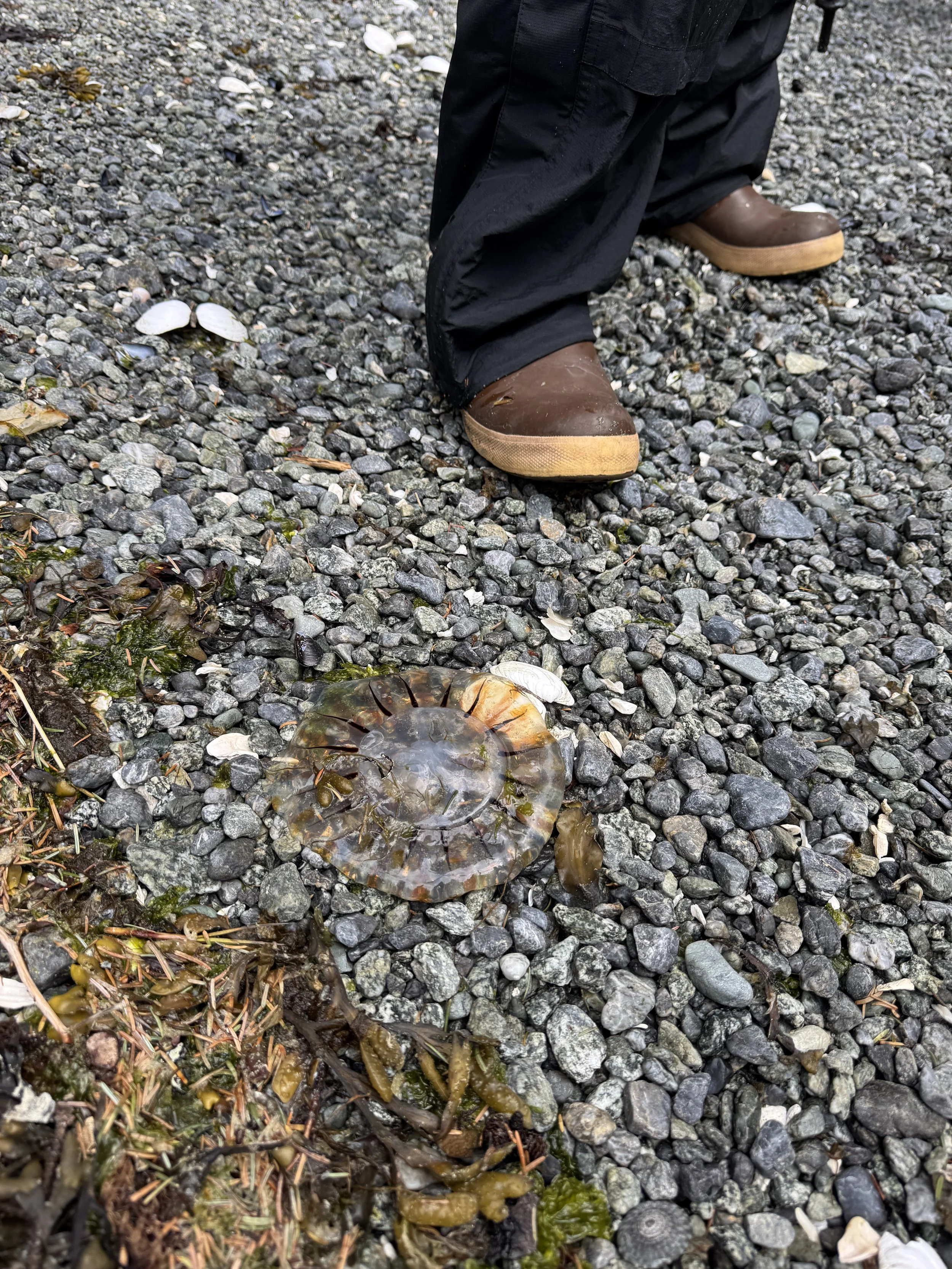
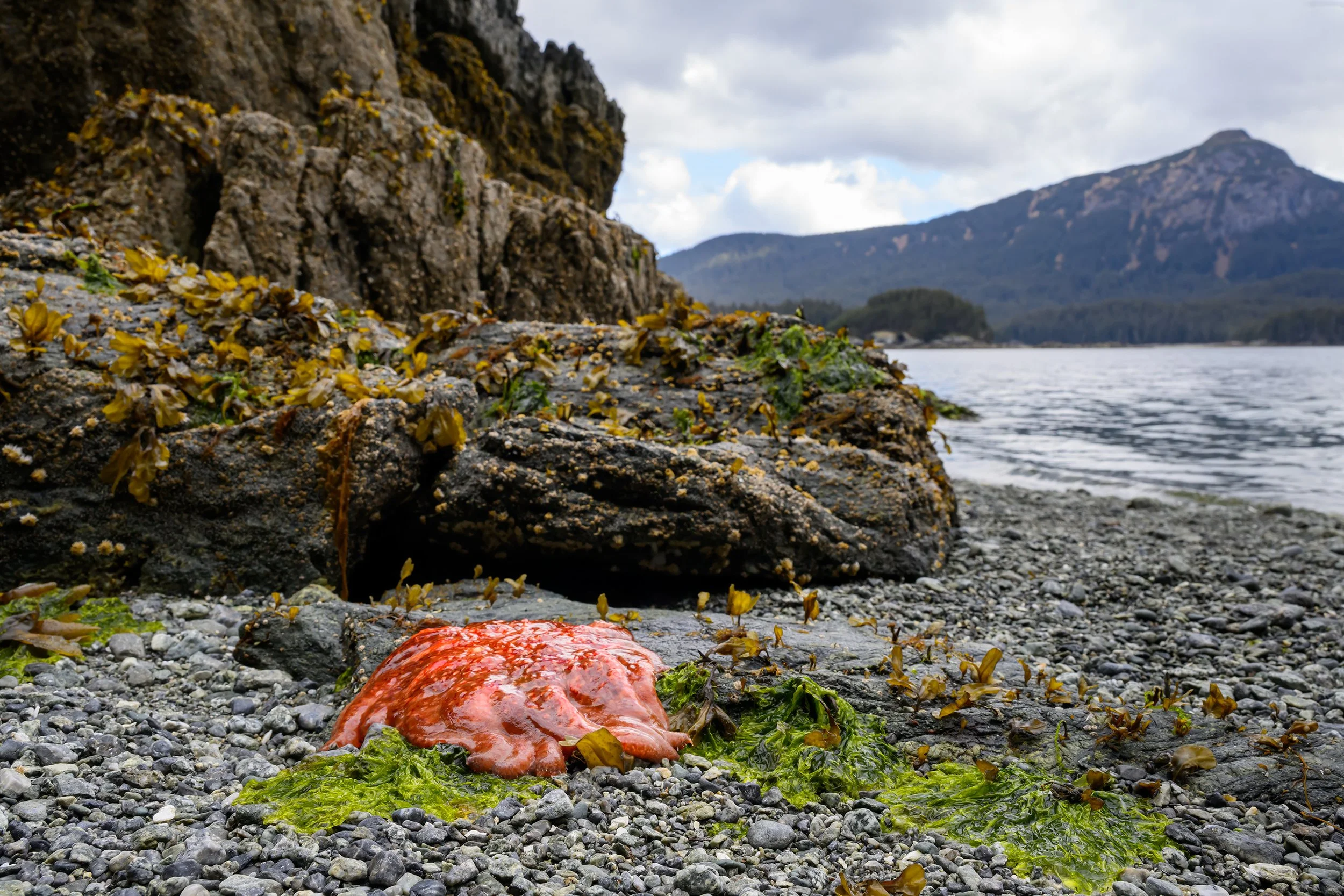
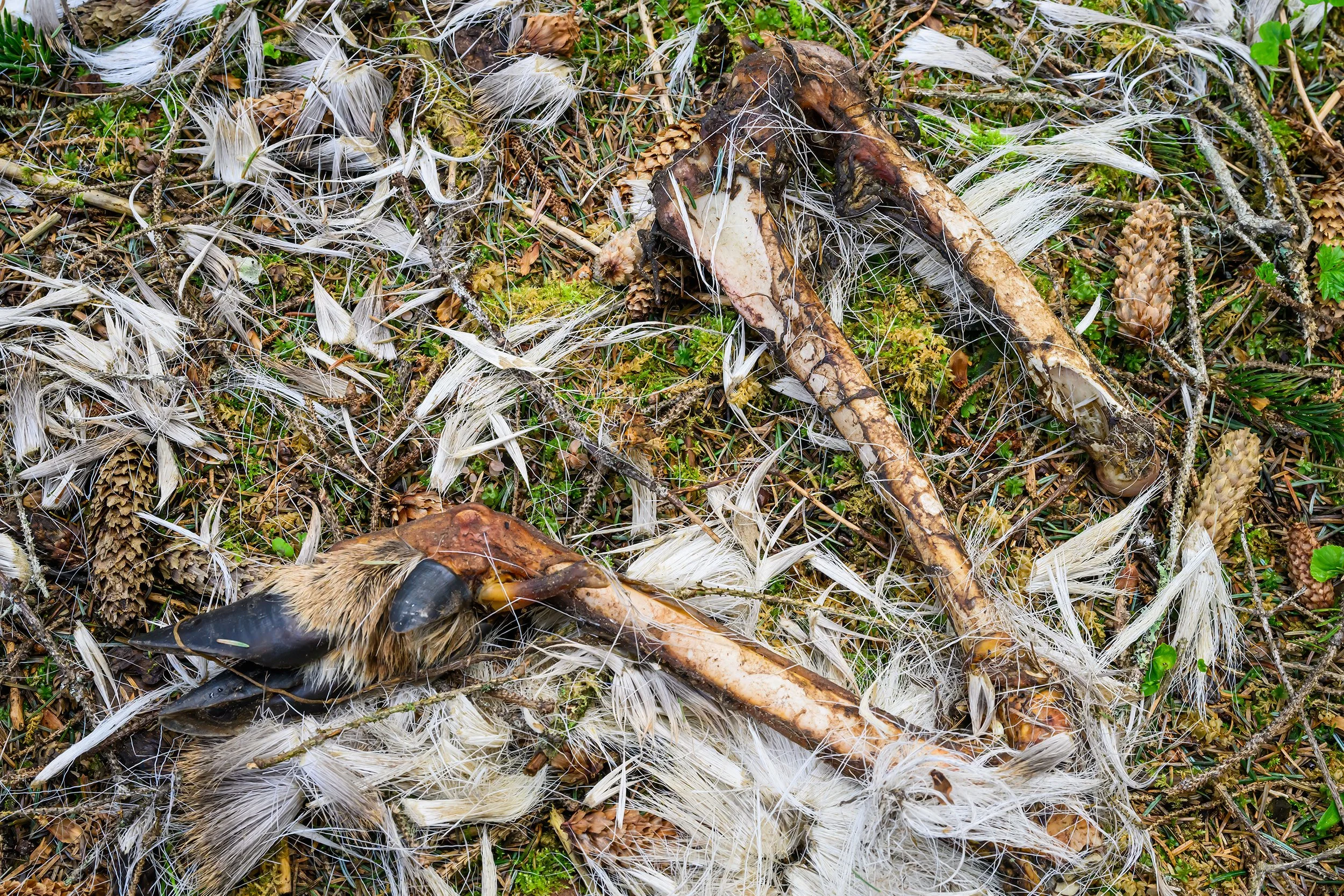
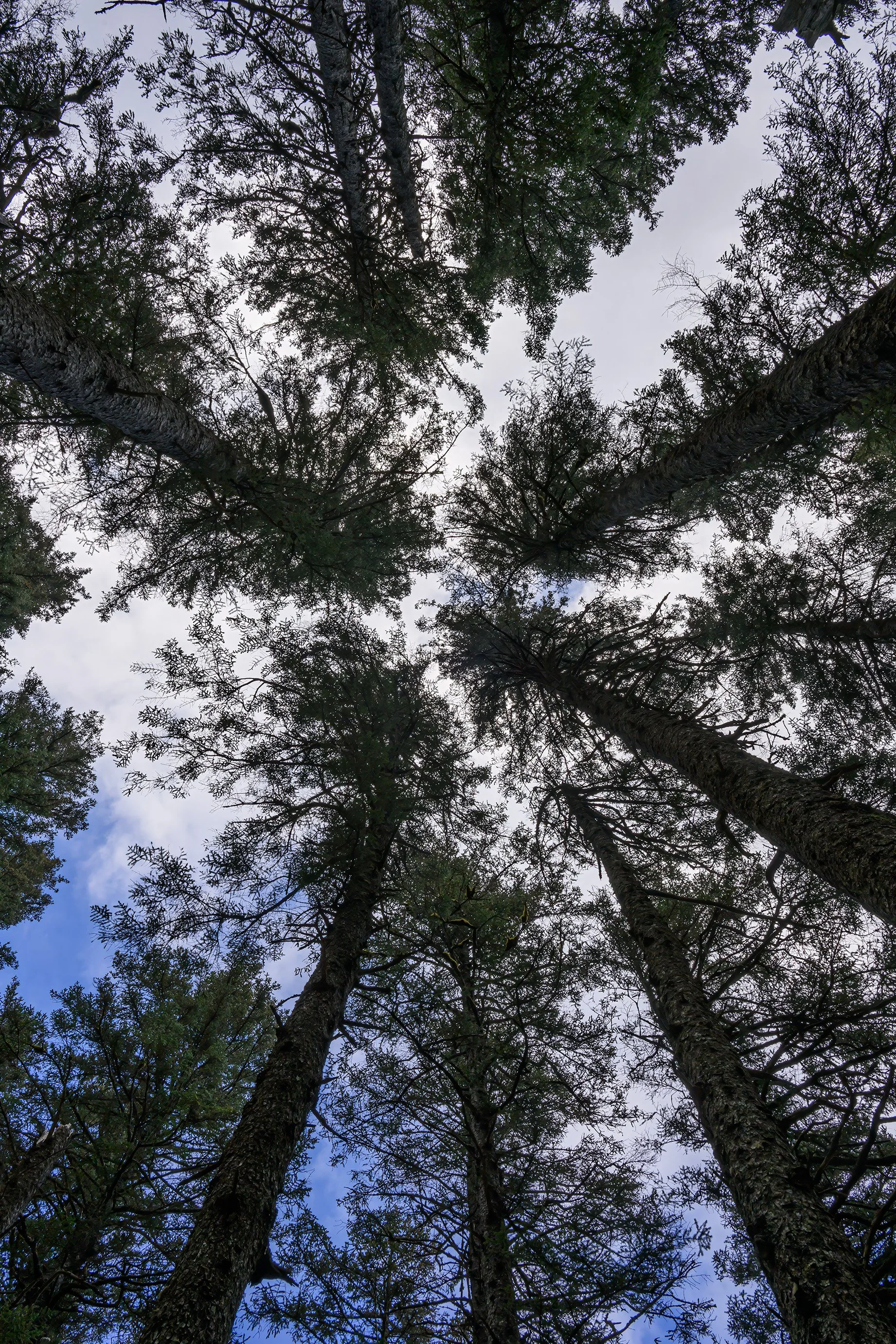
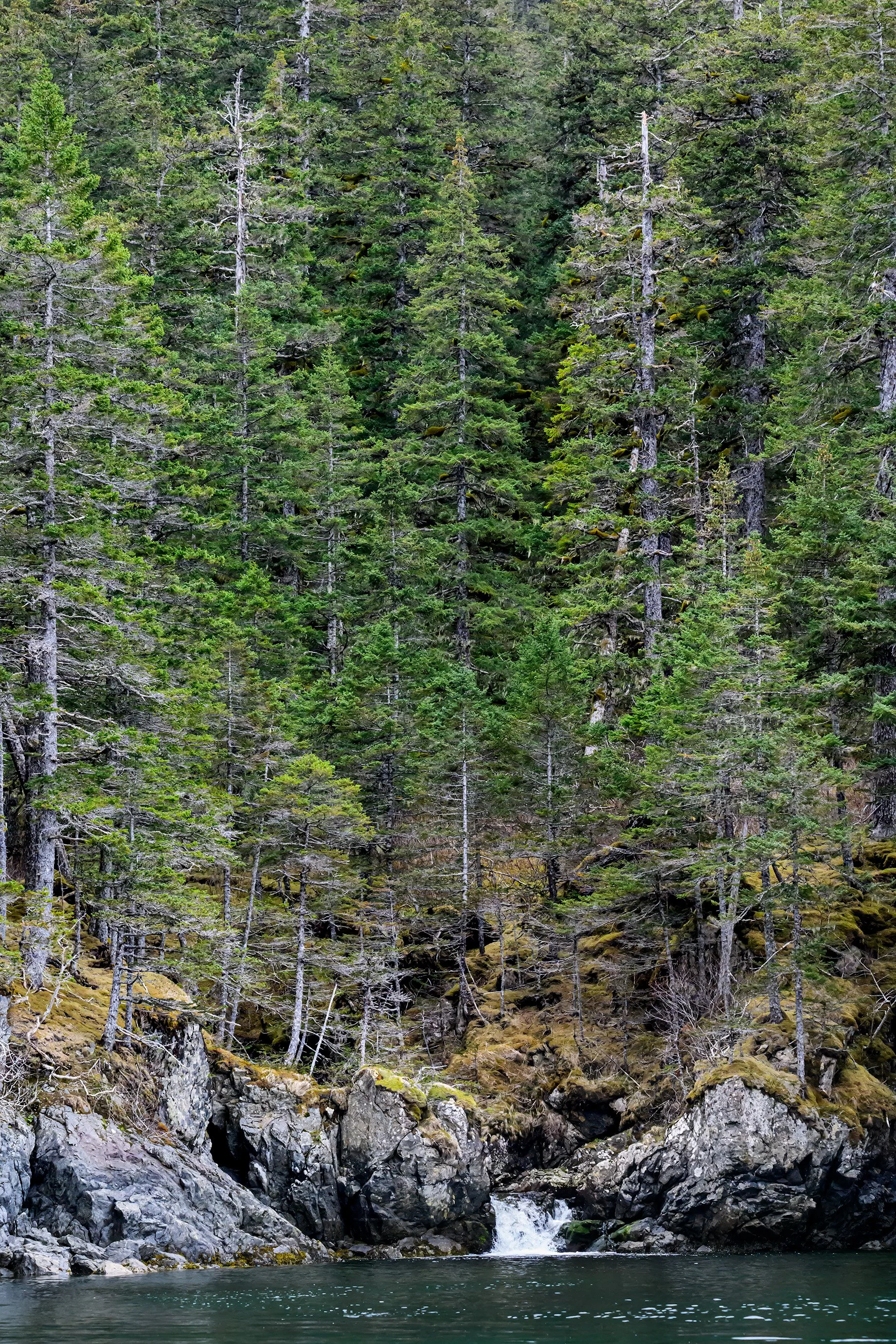
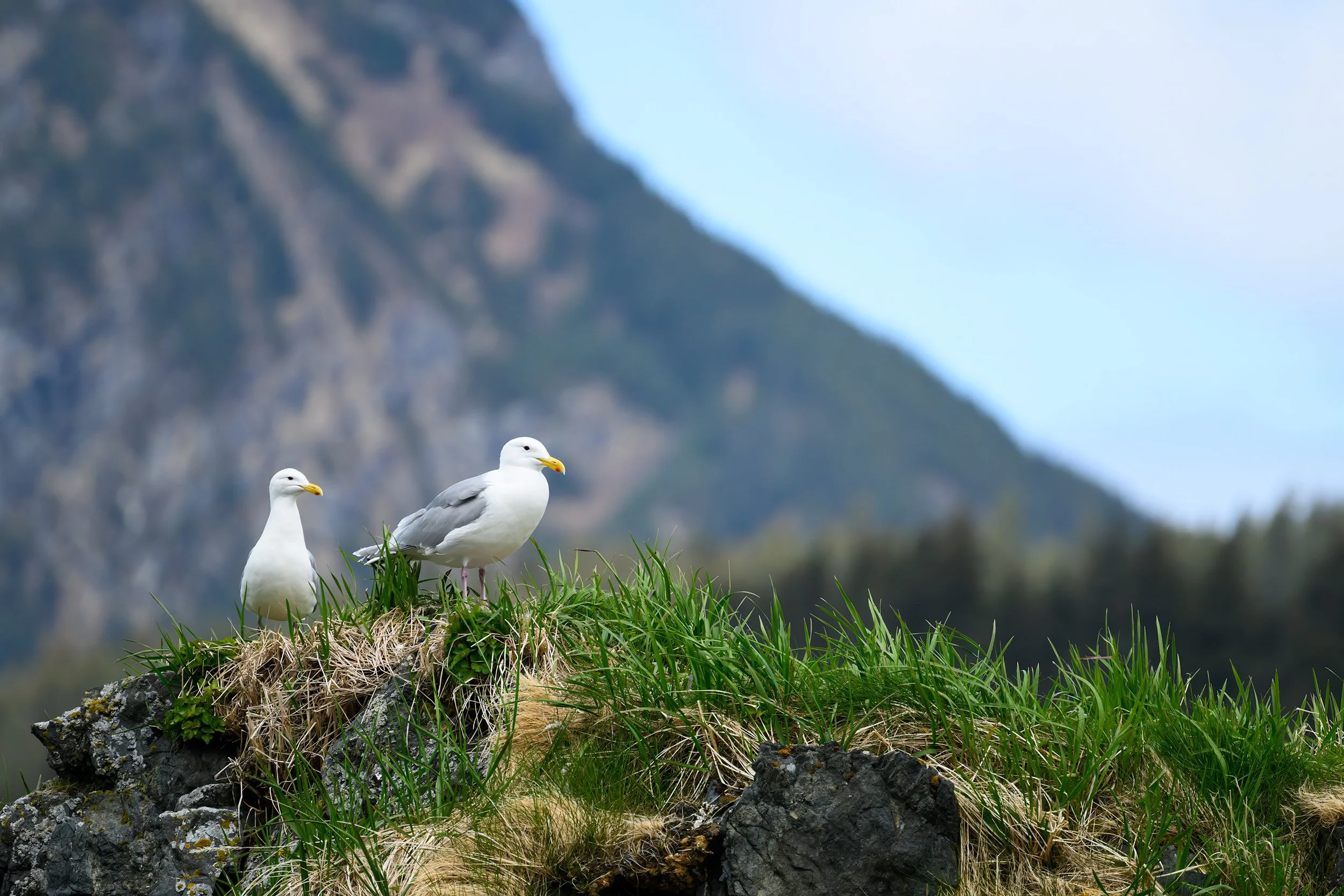
Our ship pulled into a quiet cove to avoid a massive storm raging from the northern coast of California into the Gulf of Alaska. Kodiak Island, is largest island in Alaska, home to the Alaska Maritime National Wildlife Refuge. The storm affected our planned itinerary, but not our adventure, as our guide immediately started pointing out bear tracks on shore. We explored on foot and on skiffs, bundled up in our rain gear. On shore walks and forest “pokes” we saw birds in the air, invertebrates in the intertidal zone, and signs of all kinds of animals along the shore and in the forest.
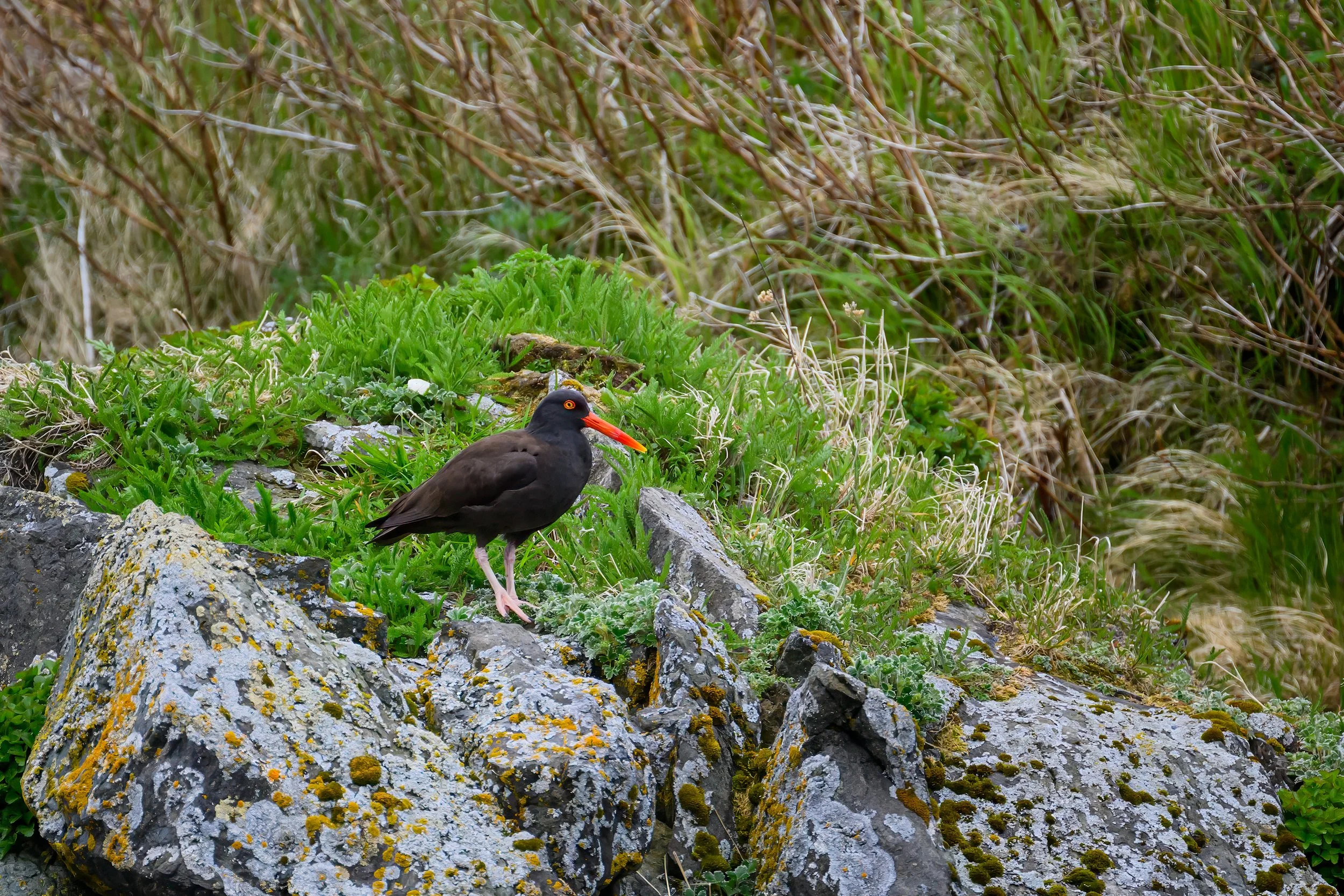
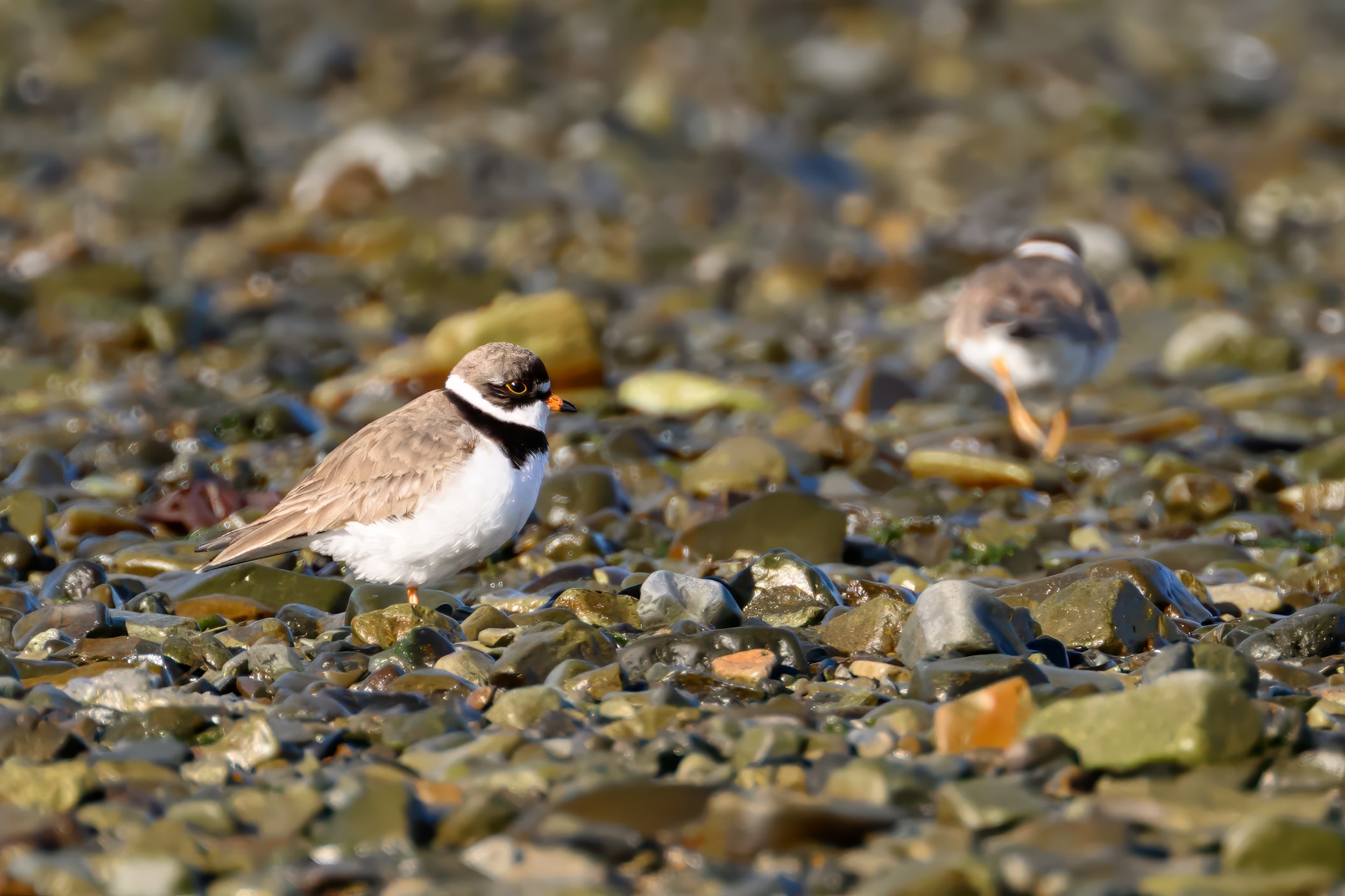
Oyster Catcher
Katmai National Park
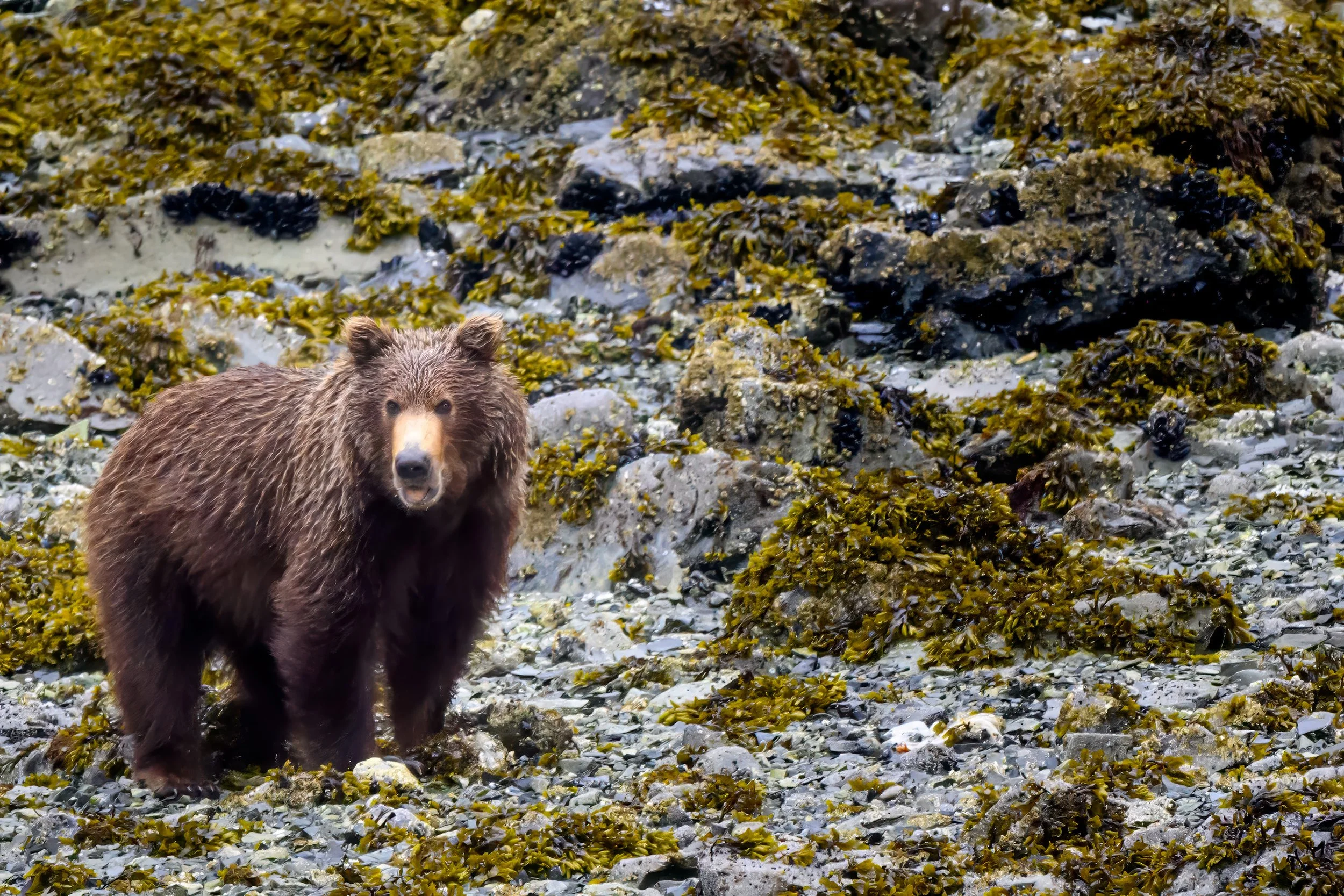
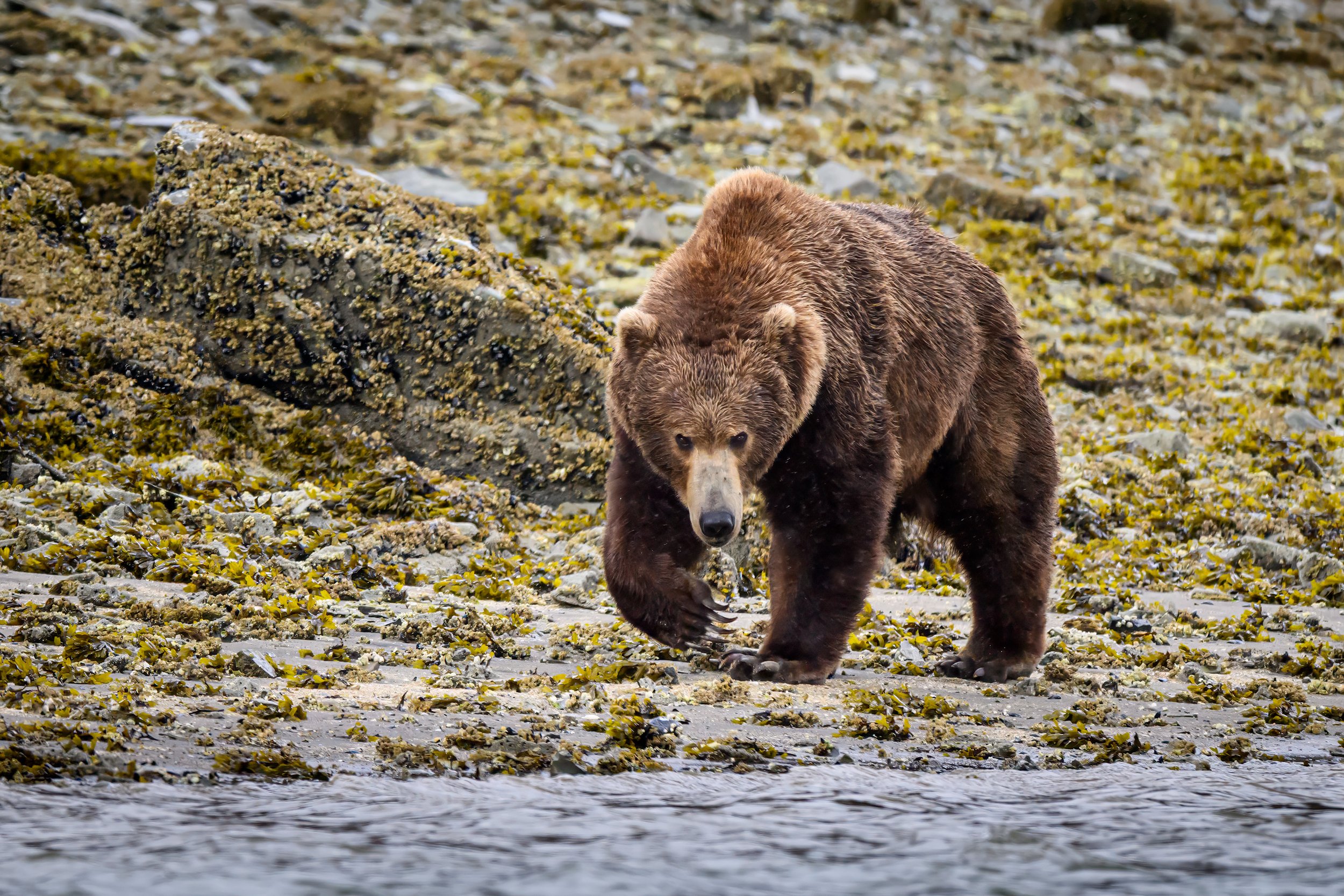
Bears hibernate all winter. Come springtime, they emerge and they are hungry! The problem is their environment is not quit ready to feed them! Salmon or weeks away from spawning and arriving in the rivers where bears can easily catch them, vegetation has not warmed to enough to turn green and tasty and berries are month away. Hungry, with little energy to chase and hunt small mammals, the bears go to the shore. In remote places where there are few humans, deep trails are worn into the landscape, each bear walks in the exact footsteps of the last one, and the embedded prints of generations of bears of over thousand of years can be seen easily. These trails lead to the seashore, where an easy meal waits for skinny bears in late May. Coastal bears will flip massive rocks and eat sea stars, mussels and other protein filled sea creatures left behind when the tide recedes in the intertidal zone.
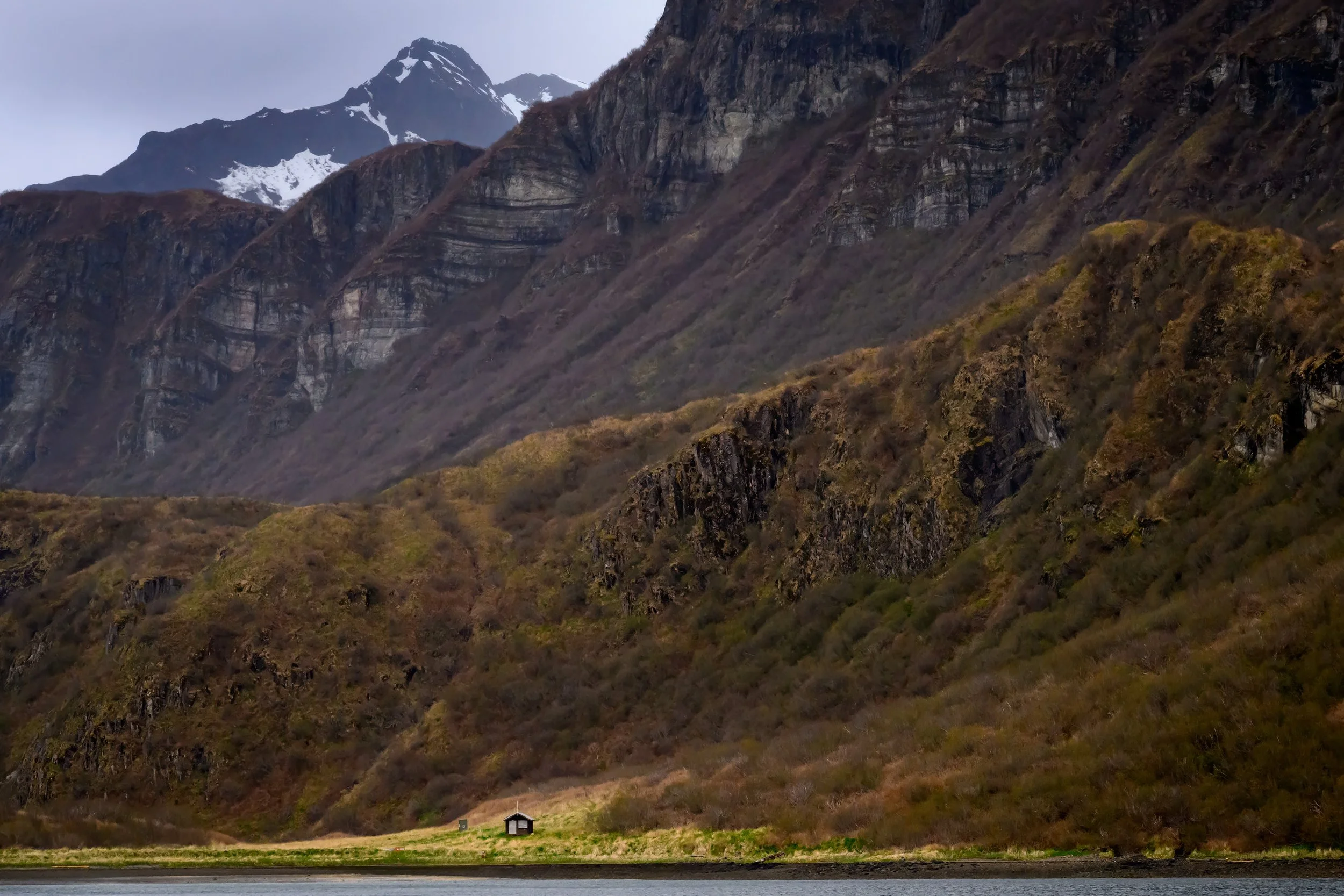
Aniachak National Monument and Gulf of AK
Unga Island
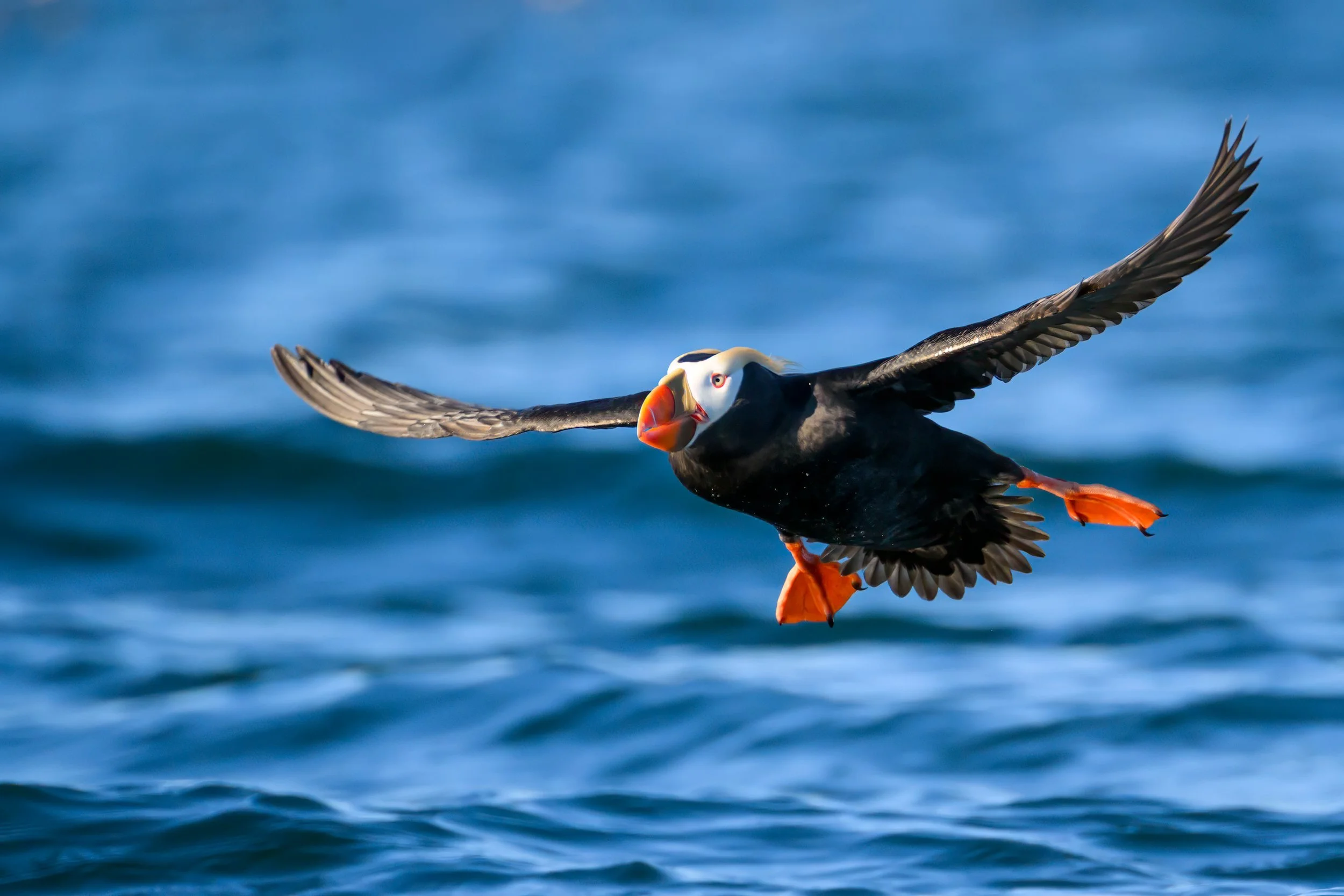
tufted puffin takes fight
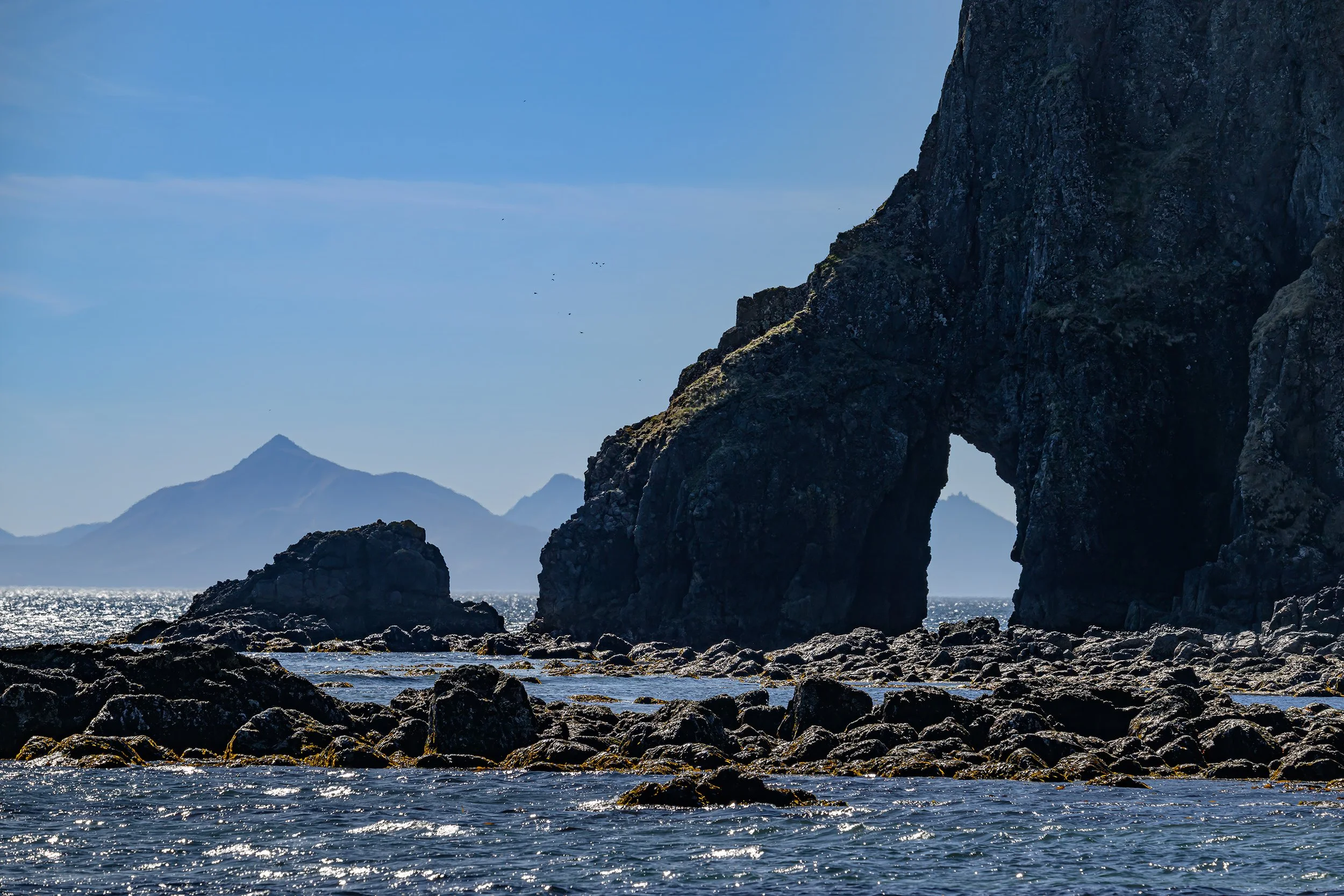
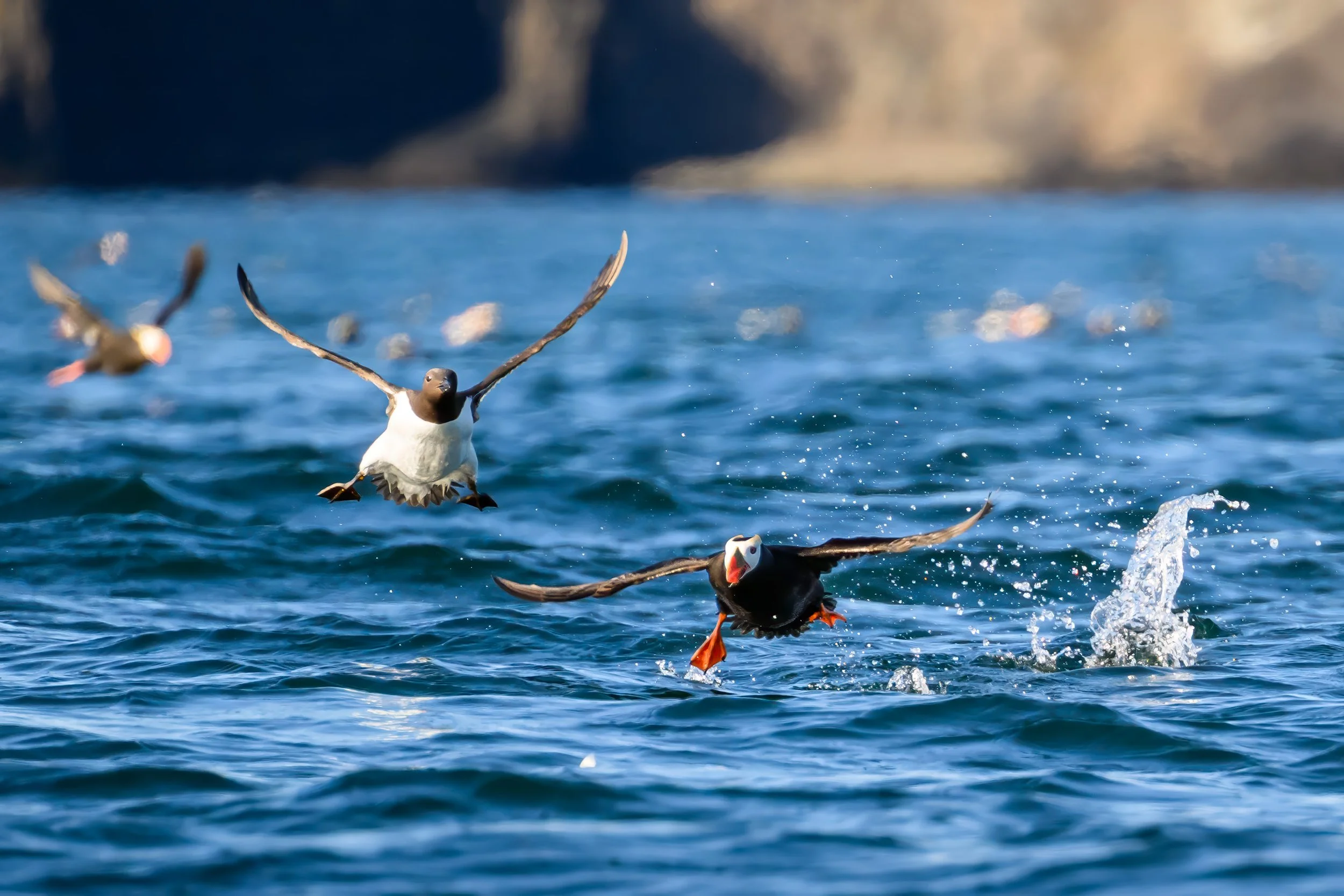
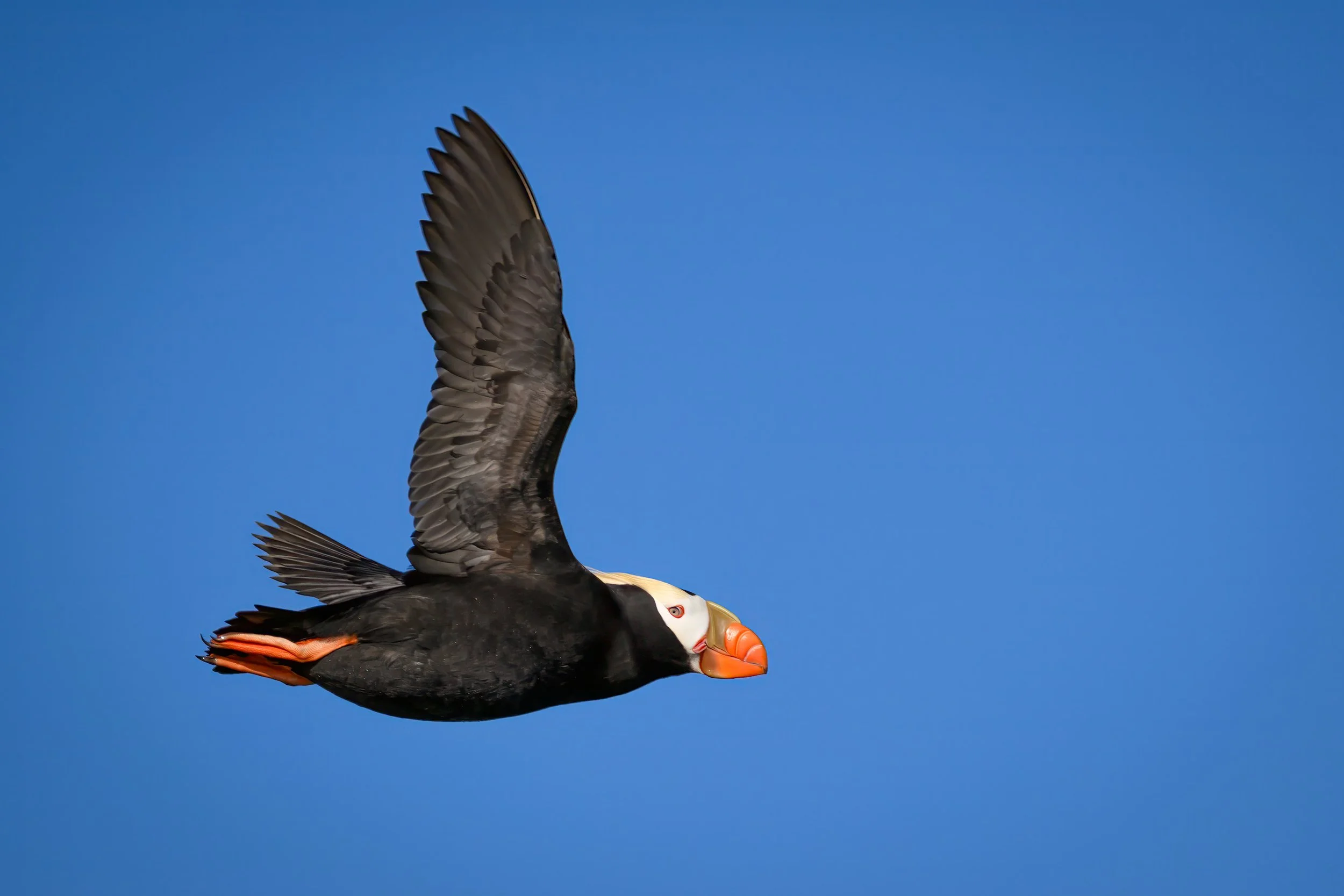
We are kayaking surrounded by hundreds of puffins and murres. We’ve occasionally seen a Atlantic puffin here and there, even a few flying and roosting at Egg Rock in Maine. Puffins are pelagic birds, meaning they live out on the sea, and only come to “land” to rear chicks. And by “land” I mean some desolate rock in the middle of an ocean that can’t support any land predators. Kayaking through a massive colony of tufted and horned puffins as well as several varieties of murres at Unga Island was a magical experience. I could not stop giggling at these birds that look like comic book characters and certainly don’t look like they should be able to fly! One step away from penguins, which are flightless, these birds use their feet to paddle as they flap madly to achieve lift. Once they leave the water, they use their feet to “trim” their flight and flap so fast, I had to take video in slow motion to see their wings.
Gulf of AK Whales
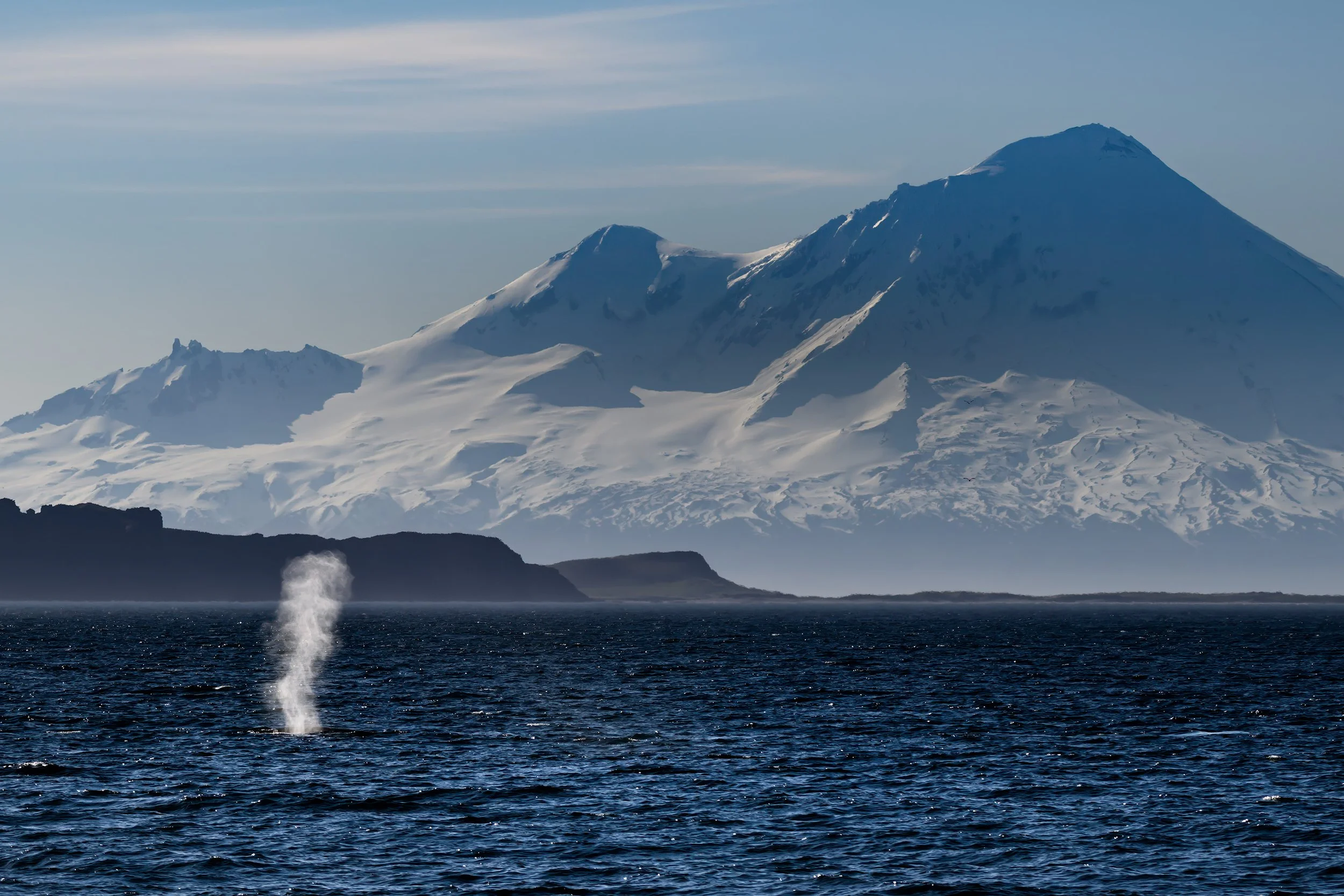
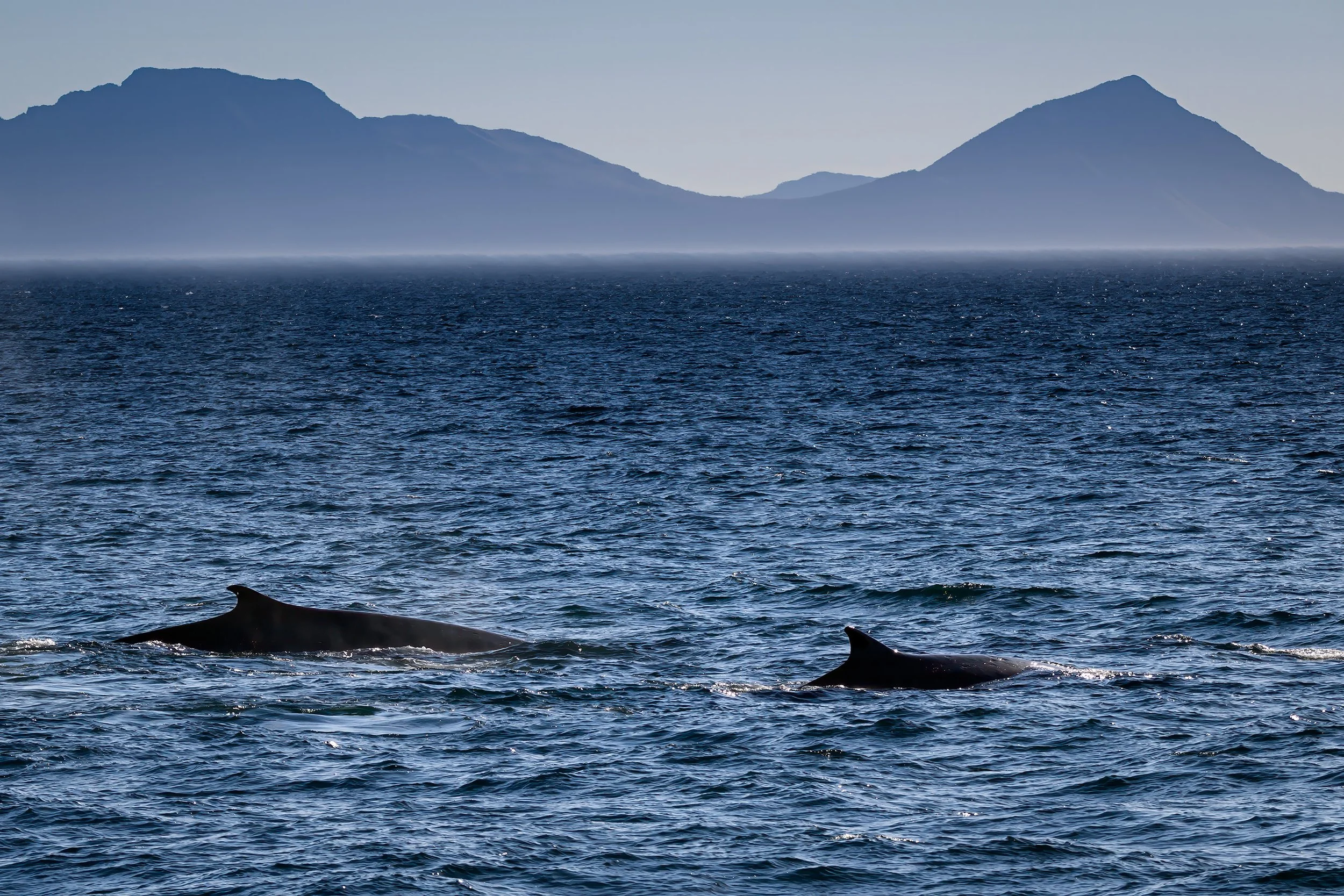
The distinctive “blow” of a fin whale signals that the after dinner show is about to begin!
It’s joy to hear the captain cut the engine; sometimes during dinner, because we all know what that means! There must be whales spotted. While cruising between places, often during meals, our captain, Captain Marissa, and her crew are always on the look out for “charismatic mega fuana” aka, marine mammals. Our Expedition Leader, Jeremy, comes on the PA to announce which side of the boat they were spotted and all of us bundle up and head out to the deck with binoculars and cameras. Then the whales put on the after dinner show!
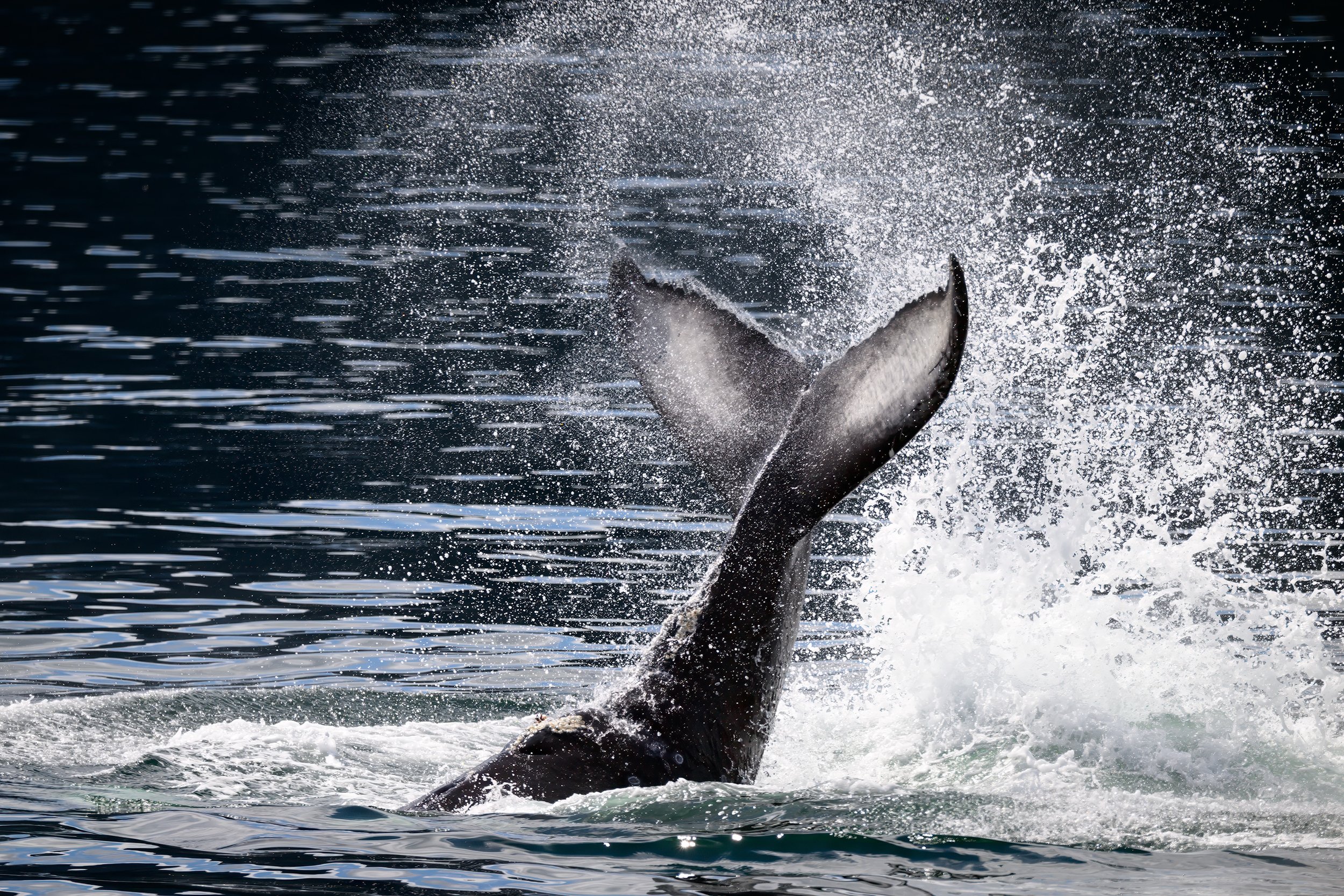
A young humpback whale spent several minutes slapping it’s tail and breaching.
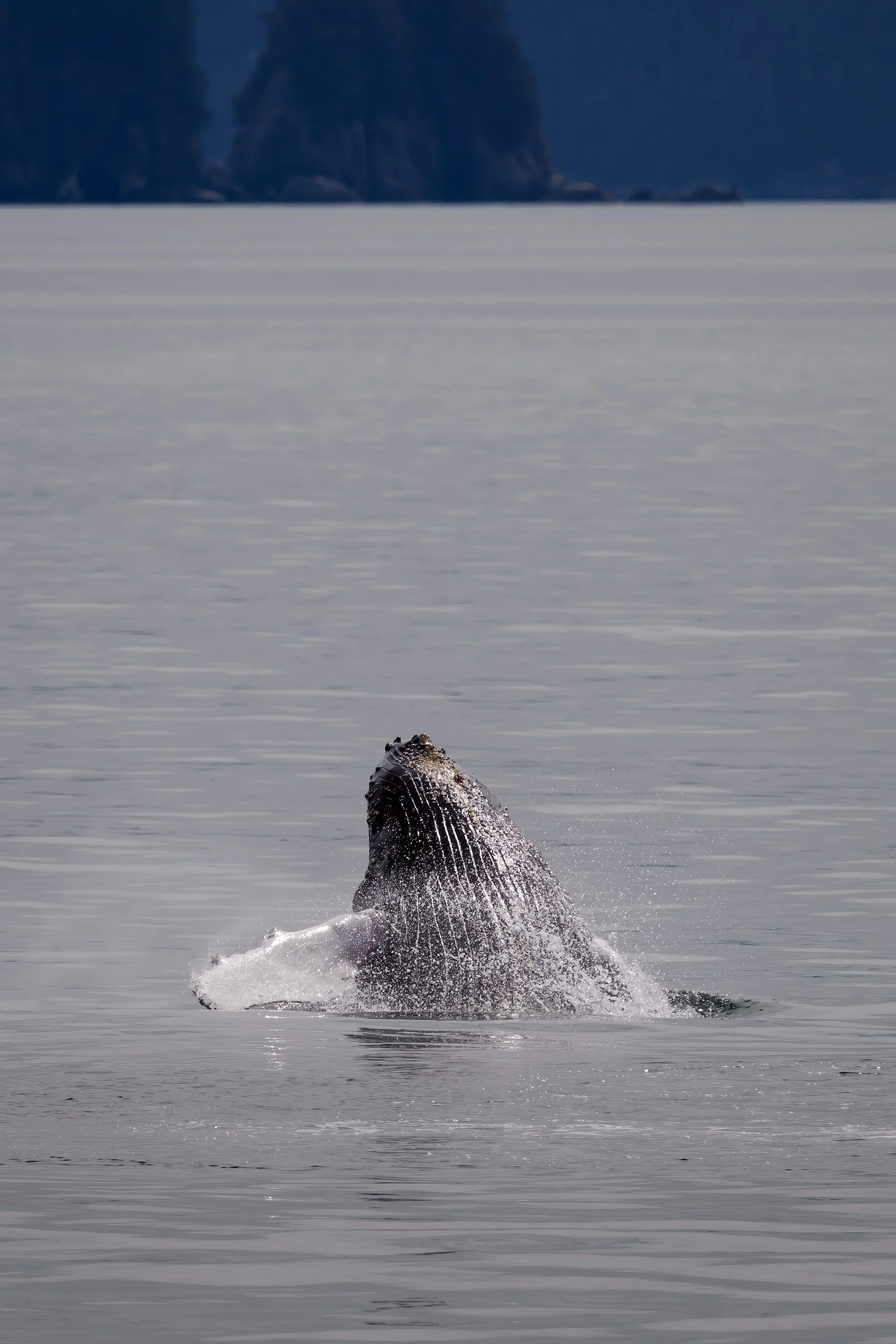
I’ve never giggled so much watching wild animals as on this cruise. puffins paddling madly, bears lumbering along the seashore, and young whales frolicking in the food rich waters of the Gulf of Alaska. Baby humpback whales slapping their tales and breaching, fin whales with there seemingly choreographed blows, eliciting cheers from the deck of our ship!
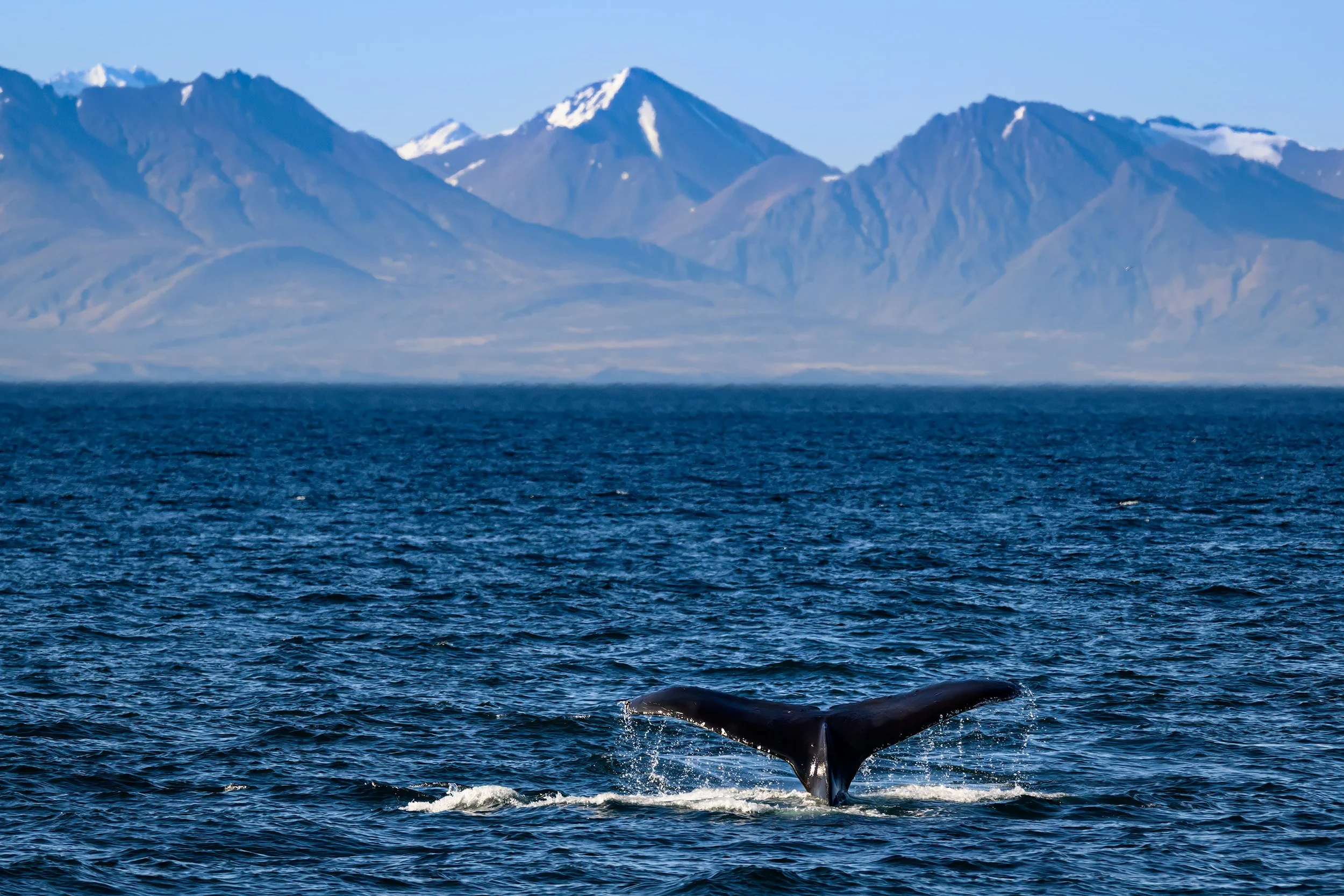
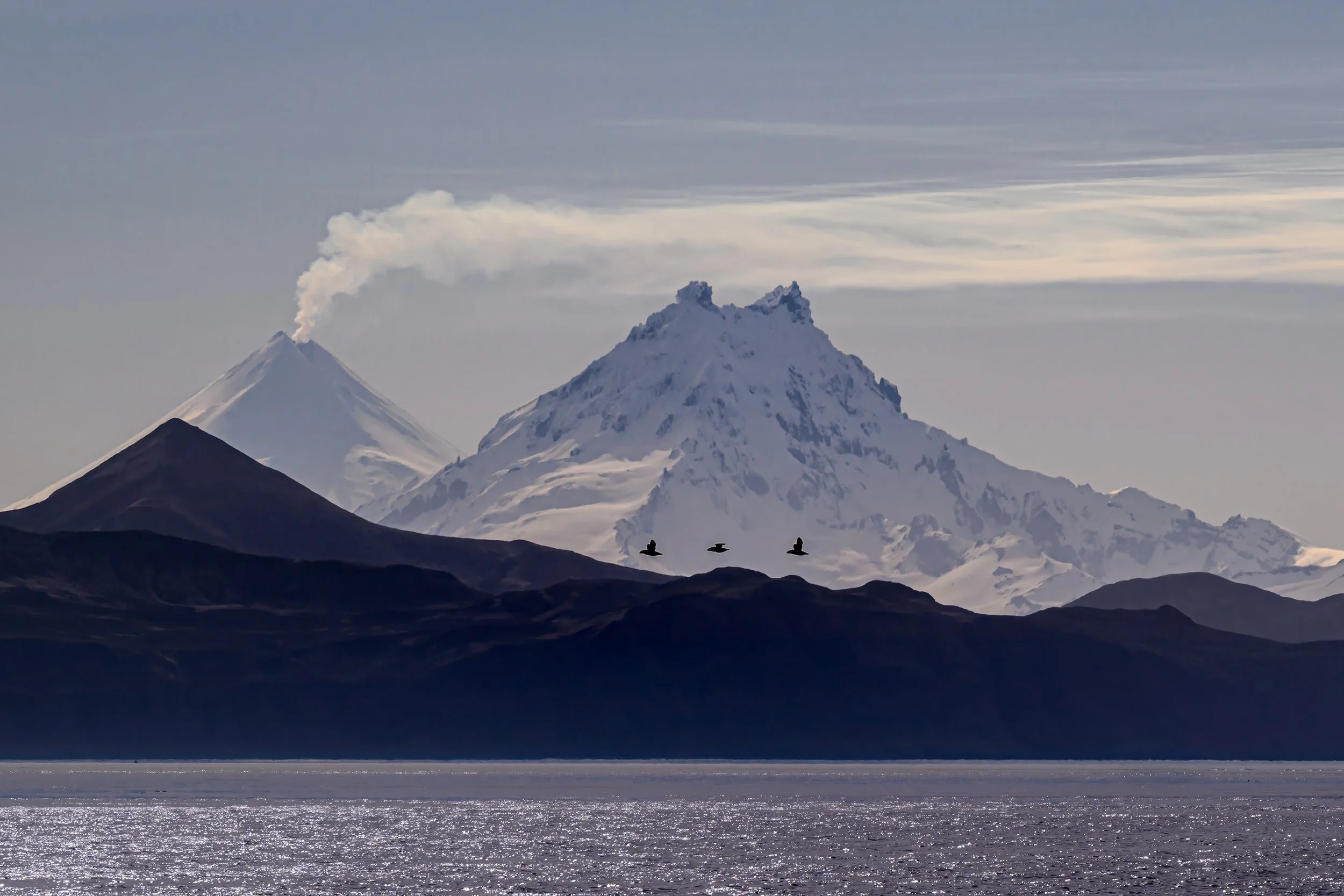
Captains Harbor and Mount Shishaldin
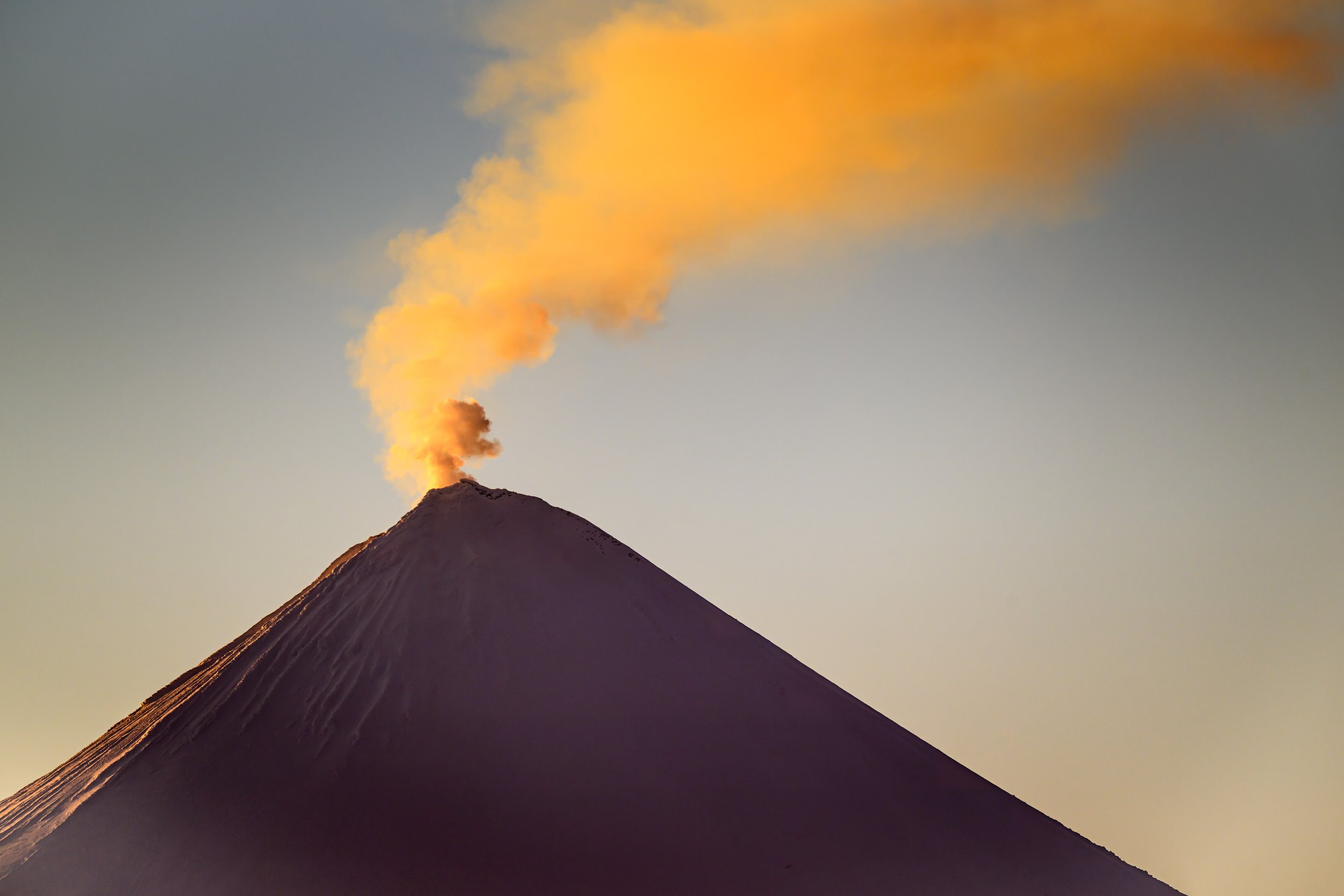
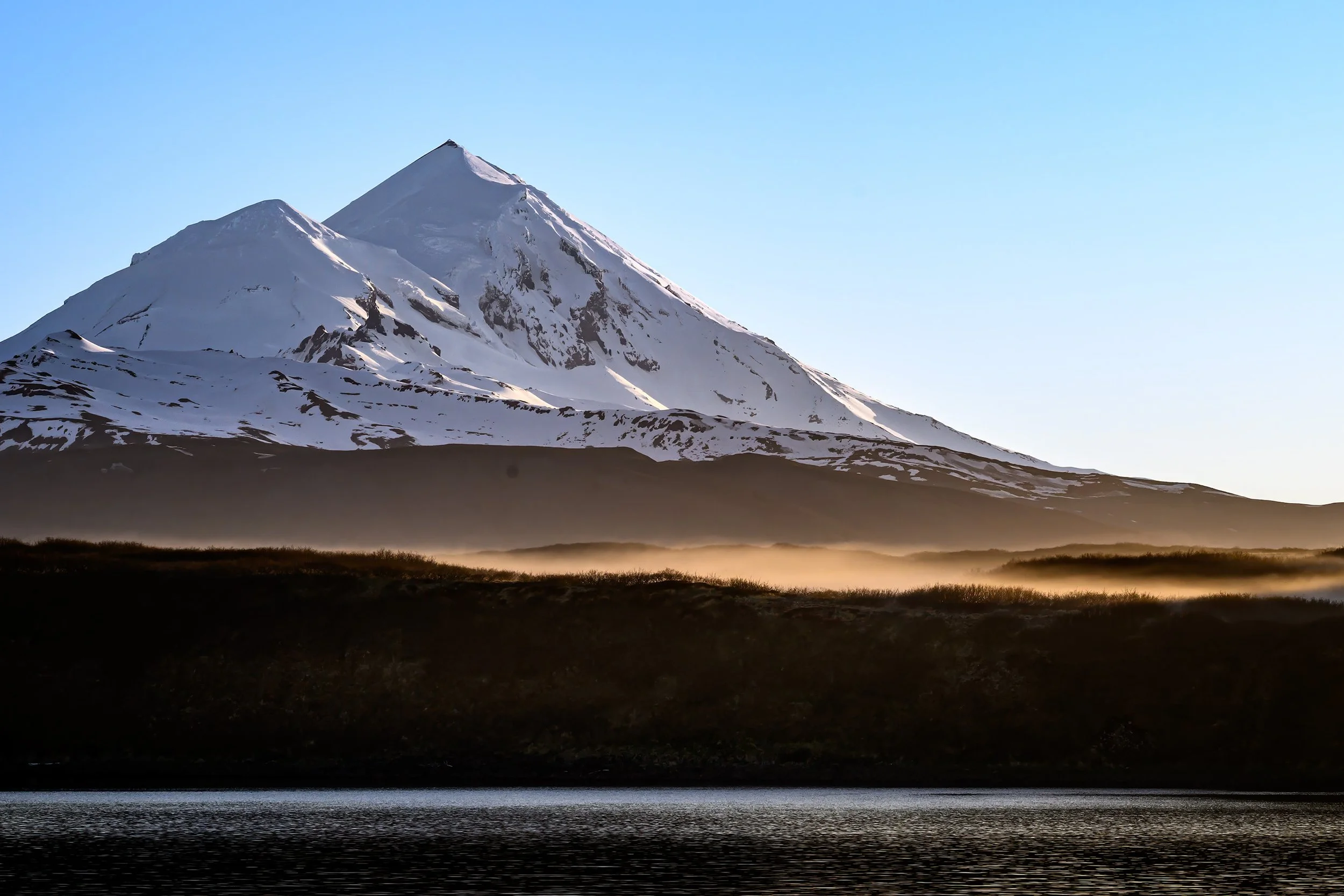
Mount Shishaldin an active volcano
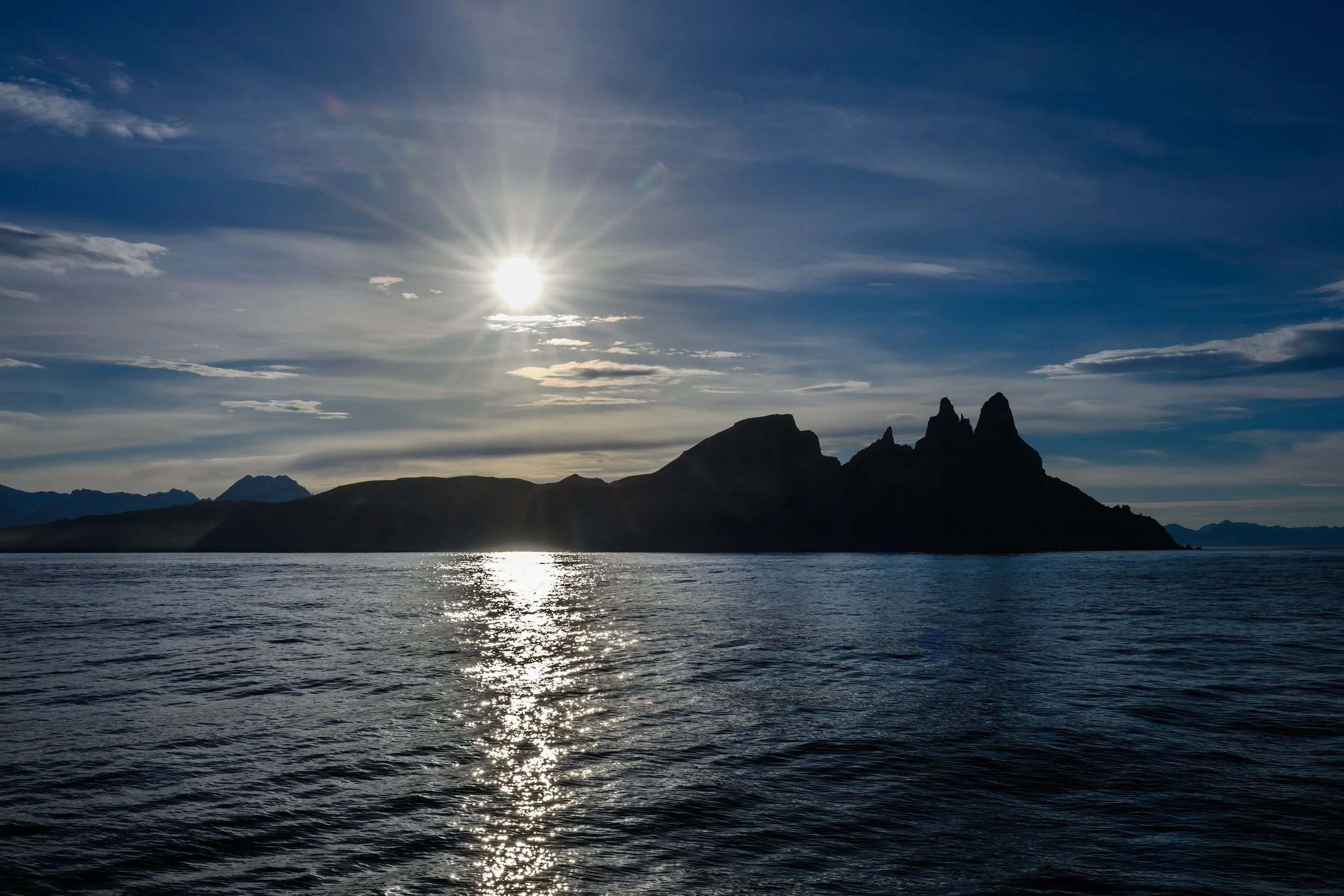
Hot and cold at the same time! Once we started cruising the Aleutian Islands, it became obvious we were in the Ring Of Fire. These islands were made by volcanos and volcanic activity continues today. We seemed to always be in the shadow of a snow covered volcano, which seems incongruous, but here we are…fire and ice! The volcanos are so dominant in the landscape that we could sail for hours and the same volcano would still be part of the landscape.
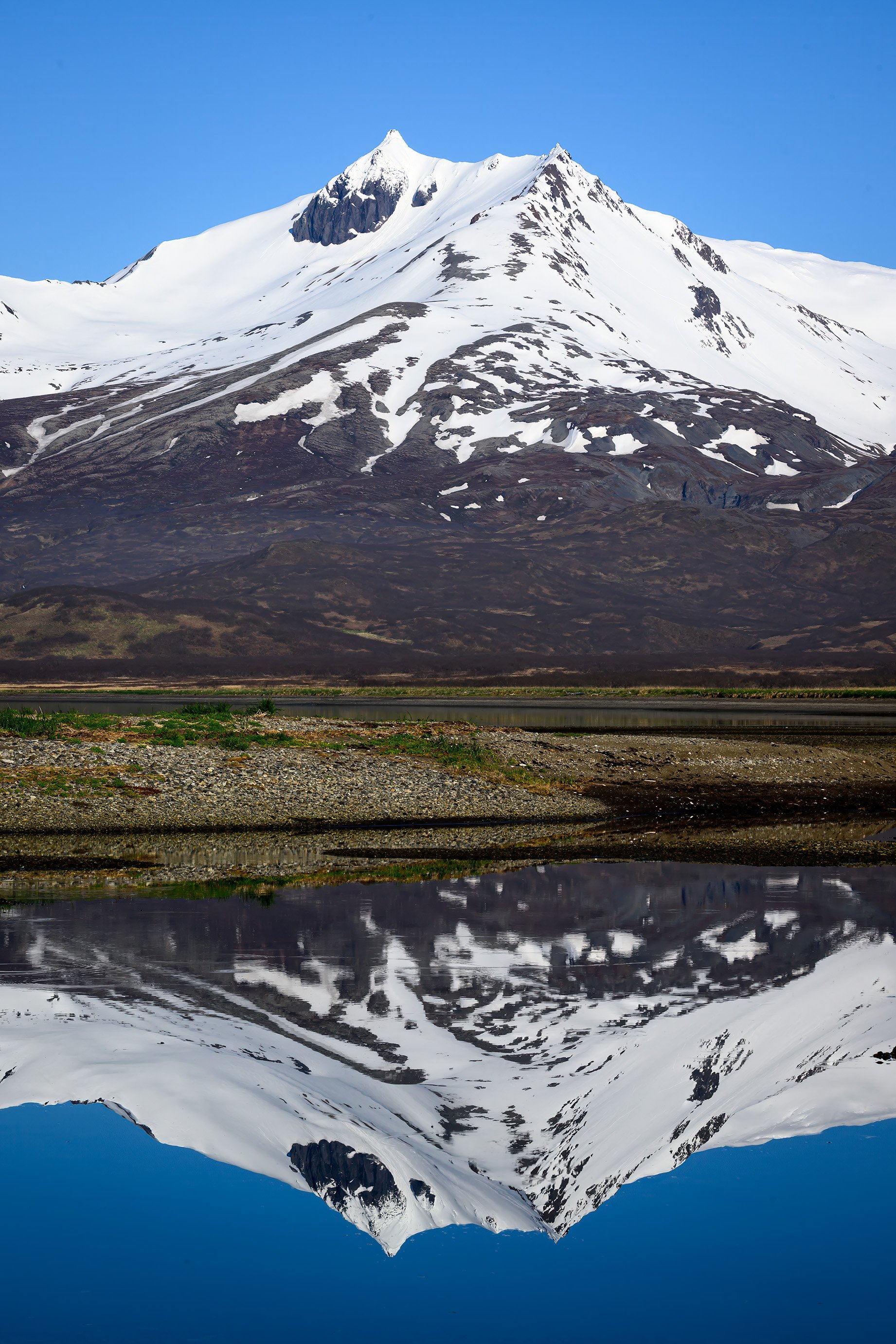
Mount Shishaldin at sunset at nearly midnight
Volcano Bay
Akutan Island
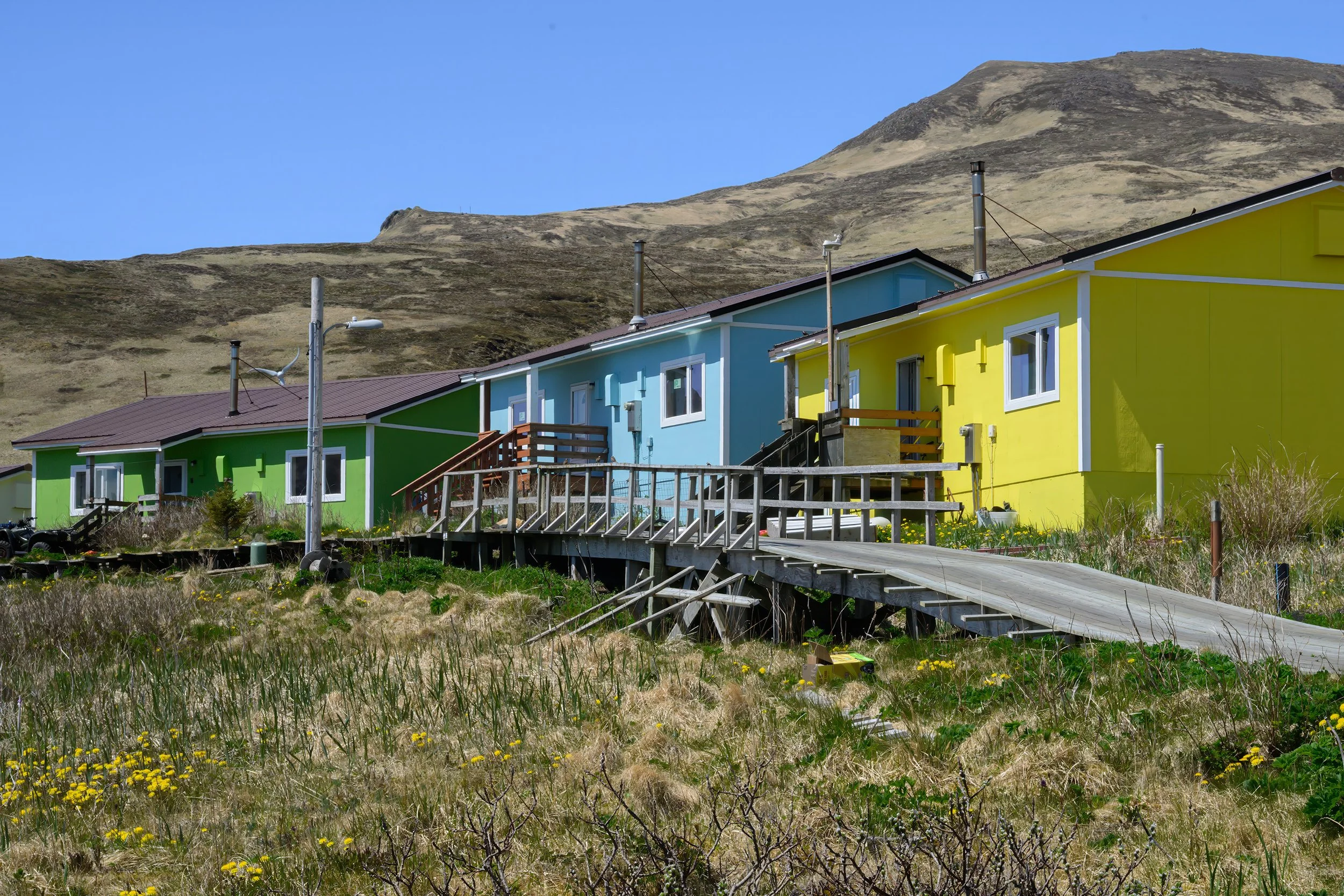
The most frightening wild animal encounter we had in two weeks in Alaska! After nearly 2 weeks hiking and kayaking in Alaska among grizzlies, orca, and the occasional overprotective bald eagle, I didn’t expect the most terrifying animal we would face would be a wild, abandoned domestic bull!
On the islands of Akutan and Unga, prior settlements were attempted and abandoned and they left behind domestic animals. Shockingly, generations of these animals have survived without any human contact at all. The tundra is marked with crisscrossing trails of wild cattle. With no bears in this area, they have no predators, but also there are no trees or other protections from the harsh, dark winters. I noticed in one abandoned village on Unga, there was a huge pile of dung in a corner made by two abandoned buildings where the cattle had obviously huddled to survive the harsh winter winds and cold! We hiked to a ridge line and saw dozens of cattle happily grazing below, and a new generation of calves.
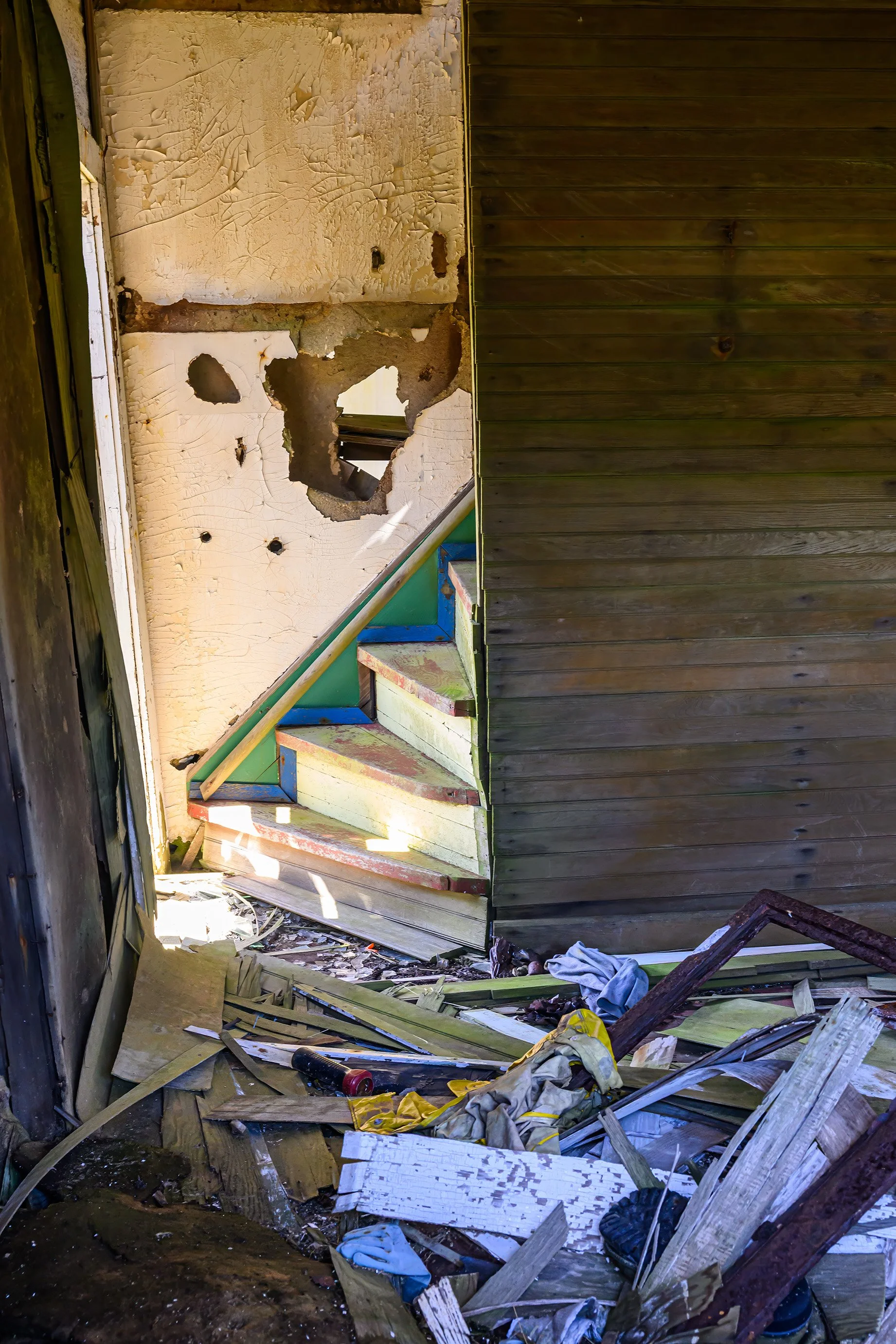
Abandoned cattle use abandoned buildings on Unga Island to shelter from the harsh Alaska winters
Unfortunately, we also encountered a large Highland Bull who took great exception to us using “his” trail. Unlike the bears which would would studiously ignore us if we stayed at a distance or hustle off in another direction if they saw a larger group, this bull decided to stand his ground, and even charged toward one of our fellow passengers walking on his own. Our guide had allowed us all to hike at our own pace since this was not bear country, but I’m sure he regretted that when he saw a passenger in the path of a stampeding bull! The bull didn’t back down when our guide hollered and waved his coat in an attempt to move it along, and it was the first time I saw our guide get the bear spray ready, just in case! While the bull didn’t get closer than 50 yards of us, we finally gave up the trail and walked a wide path around the bull who stood his ground on “his” trail!
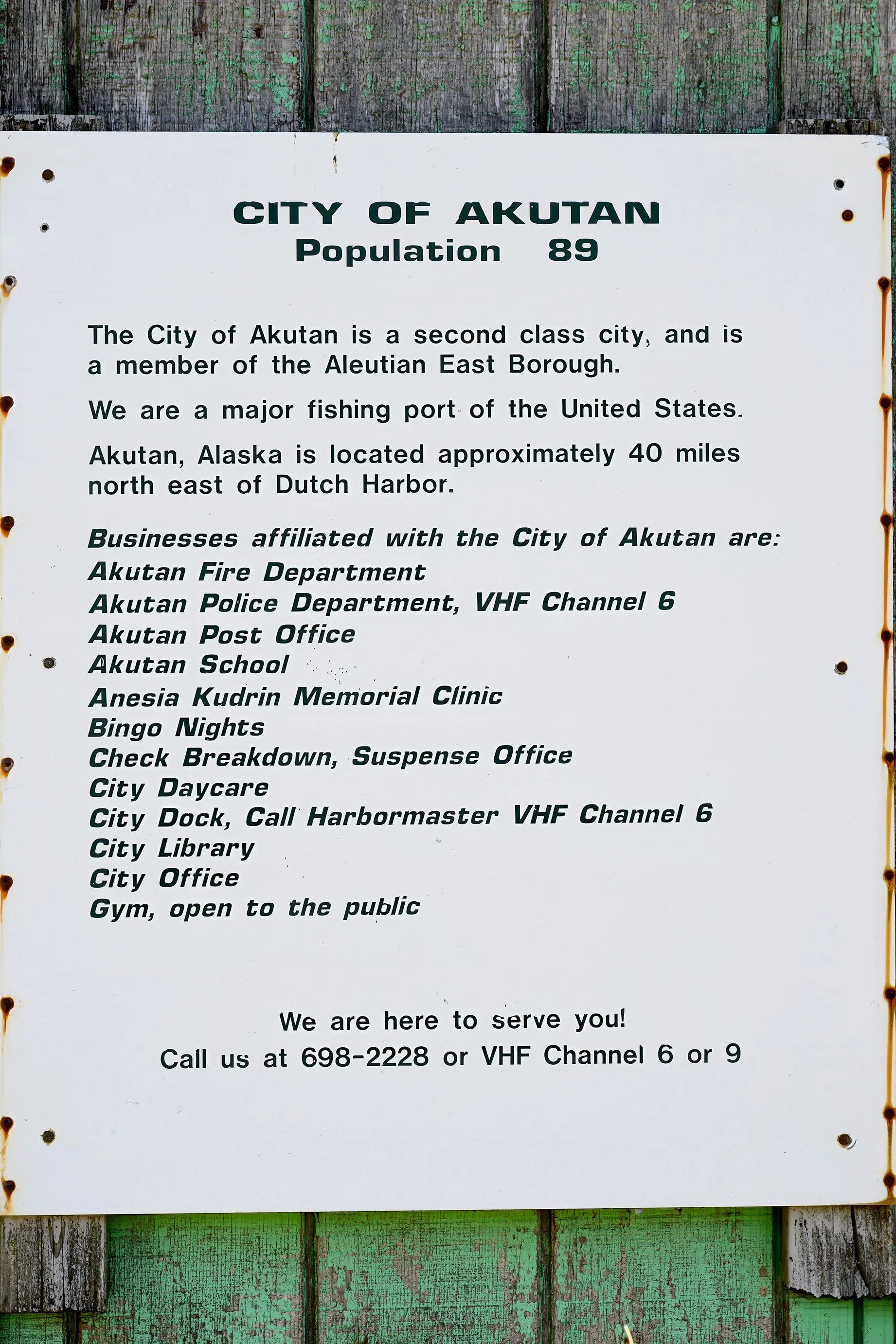
The rest of the residents of the city of Akutan were very welcoming…a small city located by the harbor connected by boardwalks, we were greeted by the local dogs who expressed their delight in seeing us and escorted us along the boardwalk to the edge of their own territory, only to “hand us off” to another friendly dog for the rest of the visit.
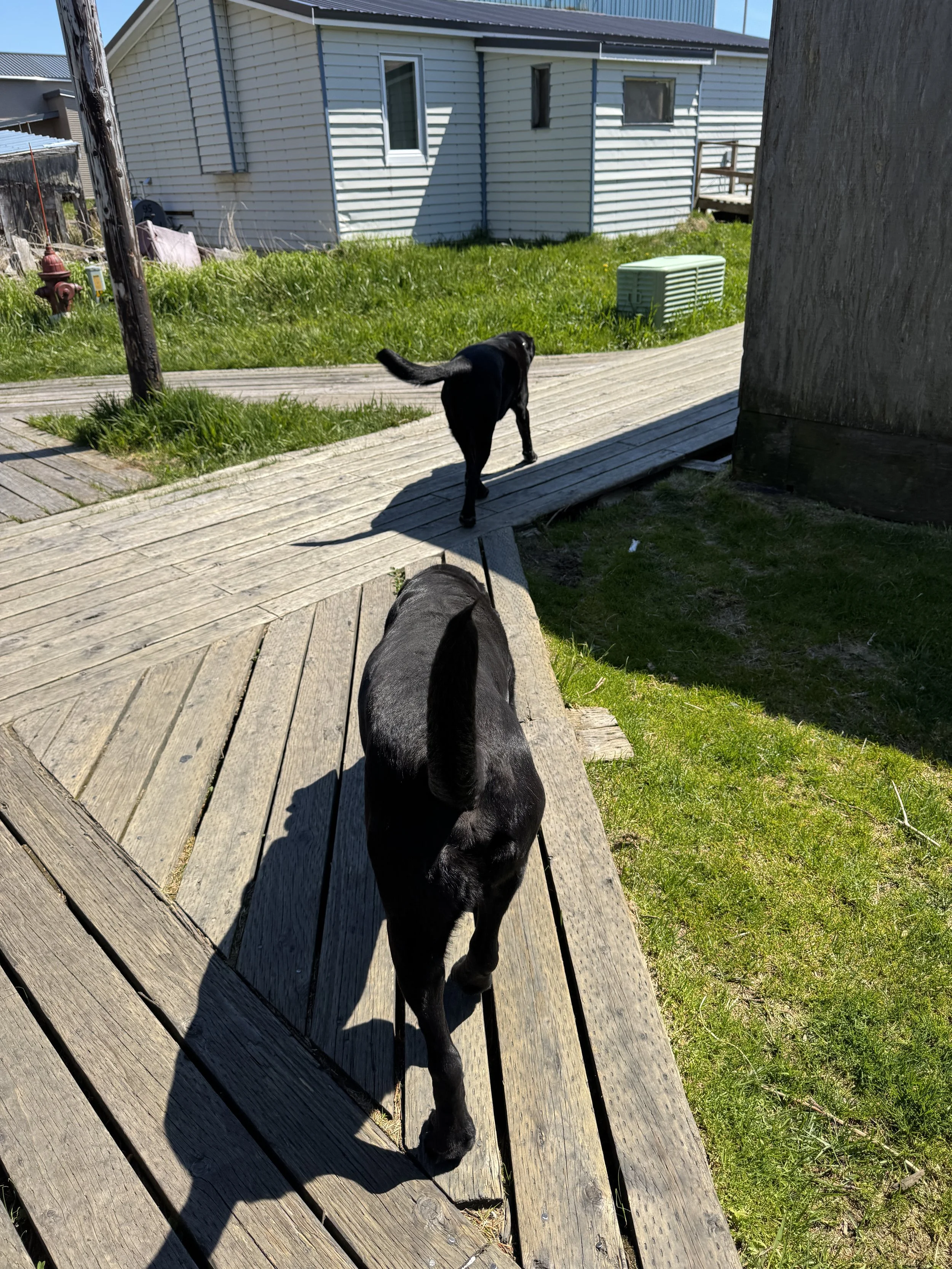
Tours by locals (dogs) we were happily escorted along the board walks of Akutan City by pups who seeemd thrilled to have guests!
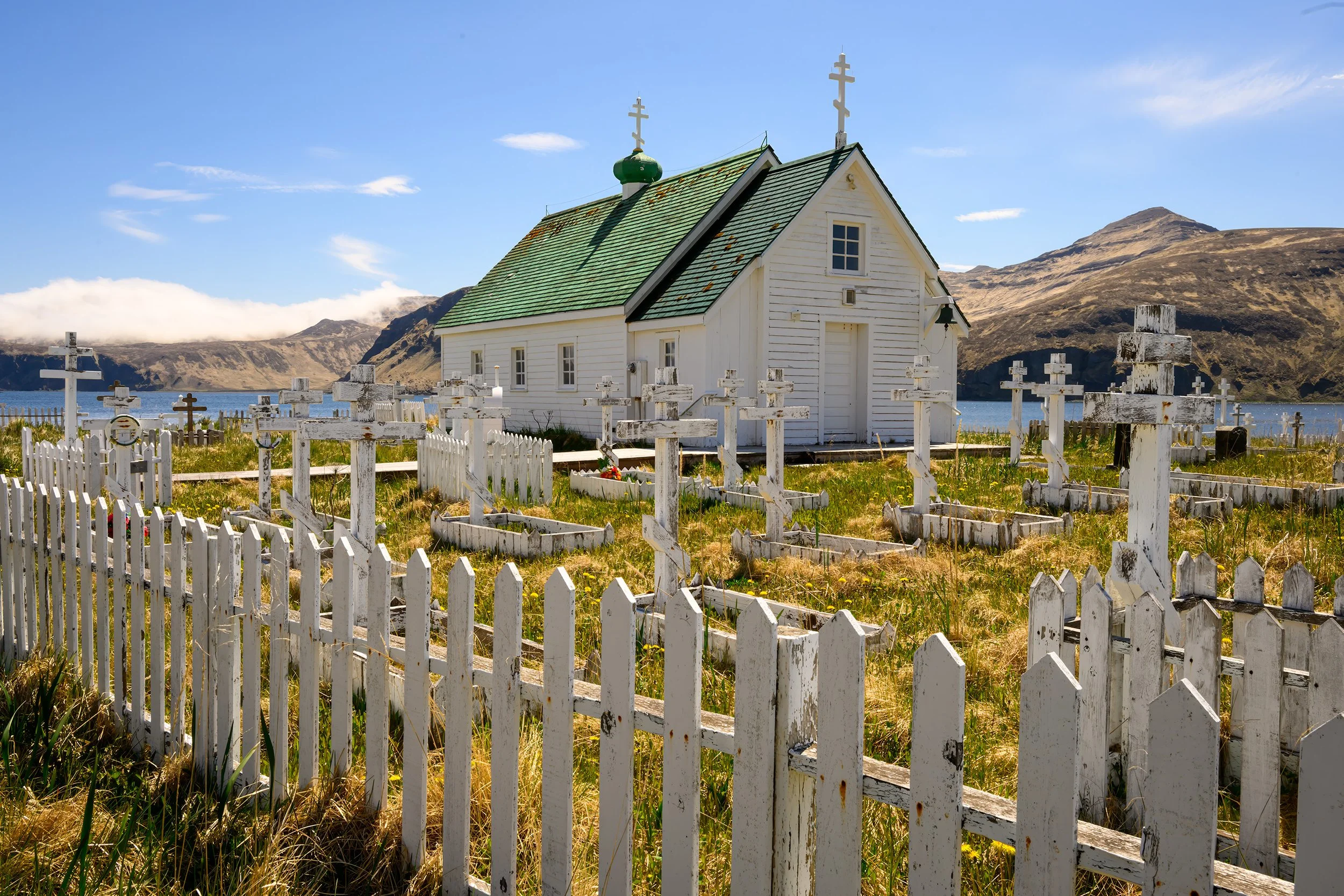
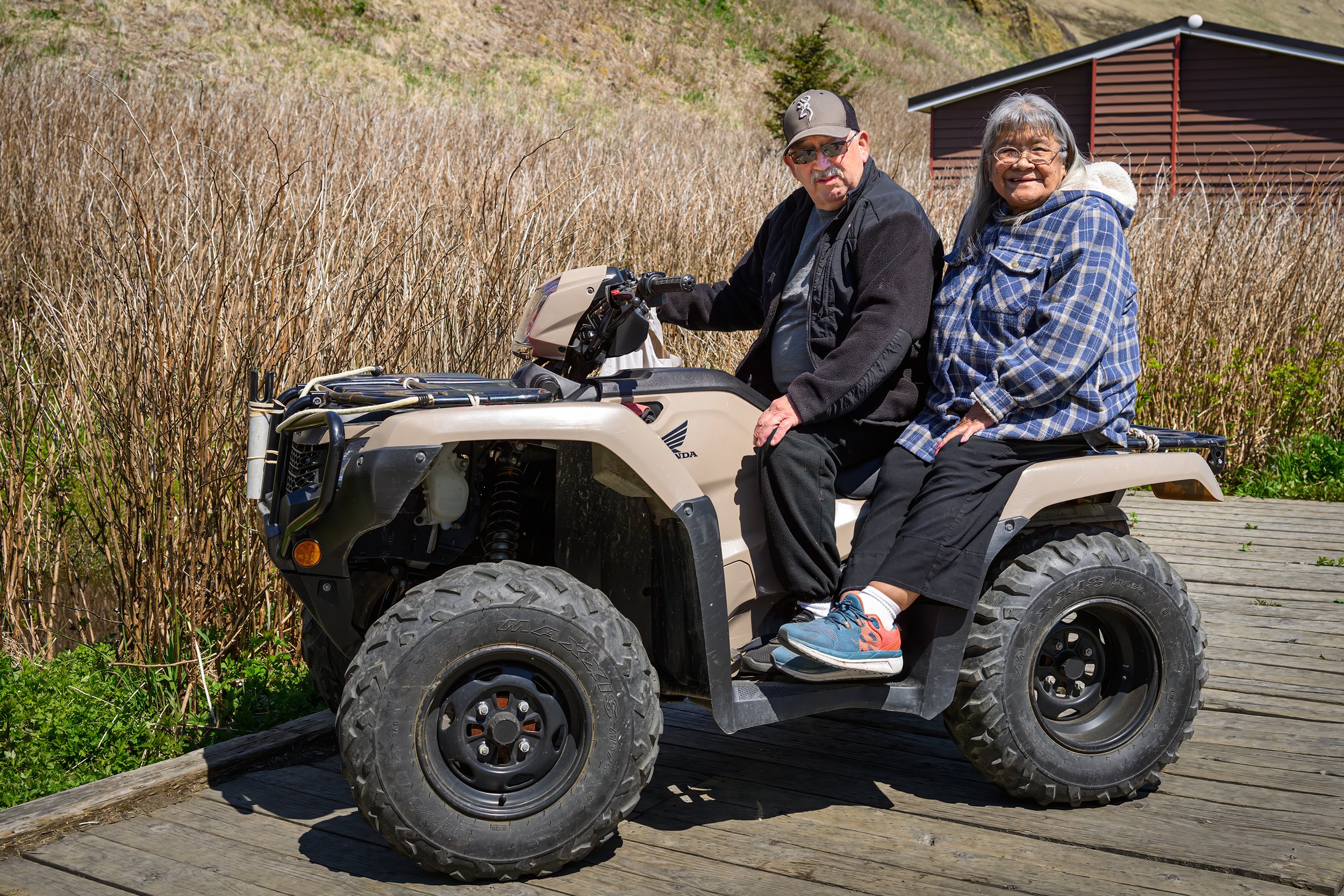
Sights around the city of Akutan
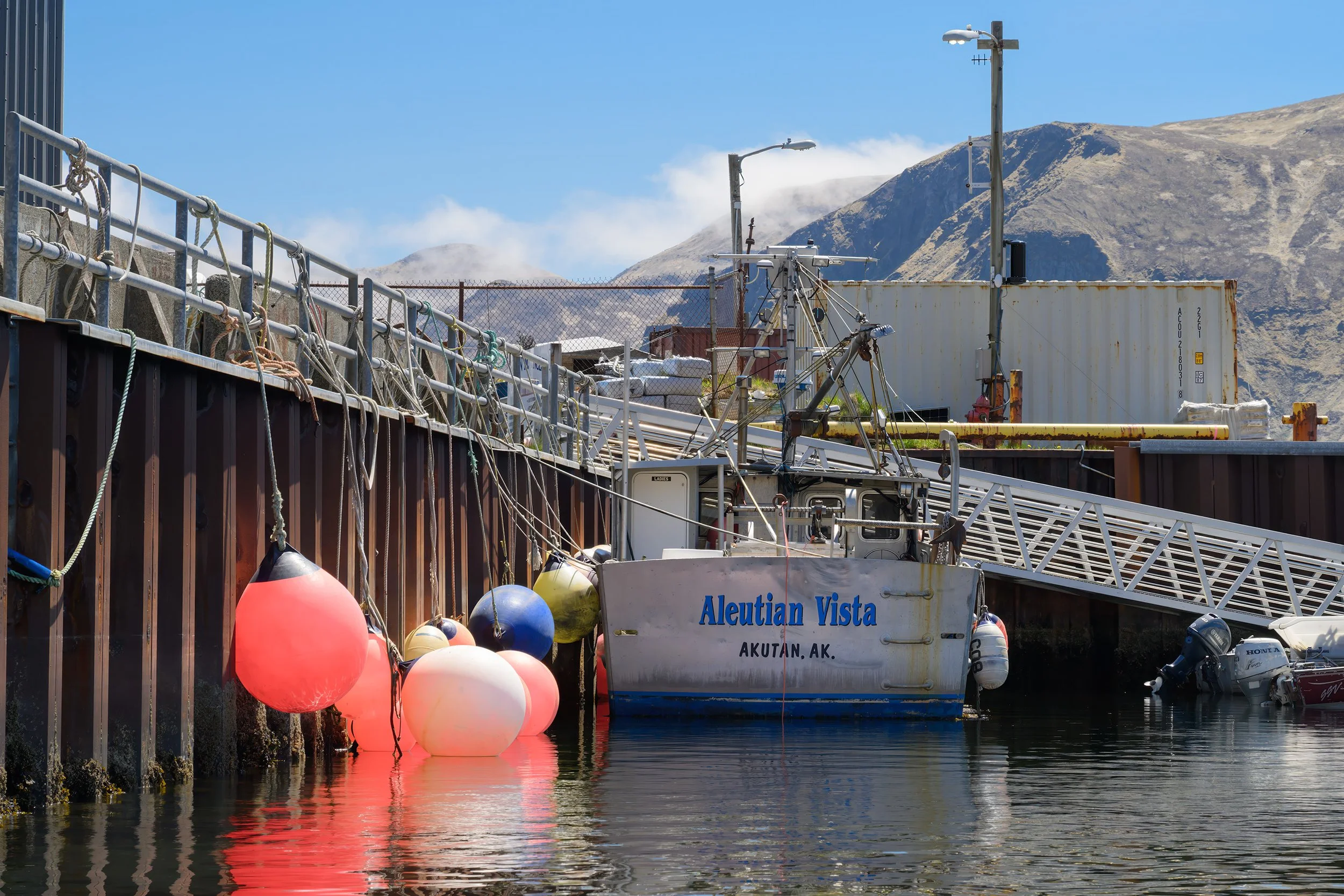
Dutch Harbor Unalaska
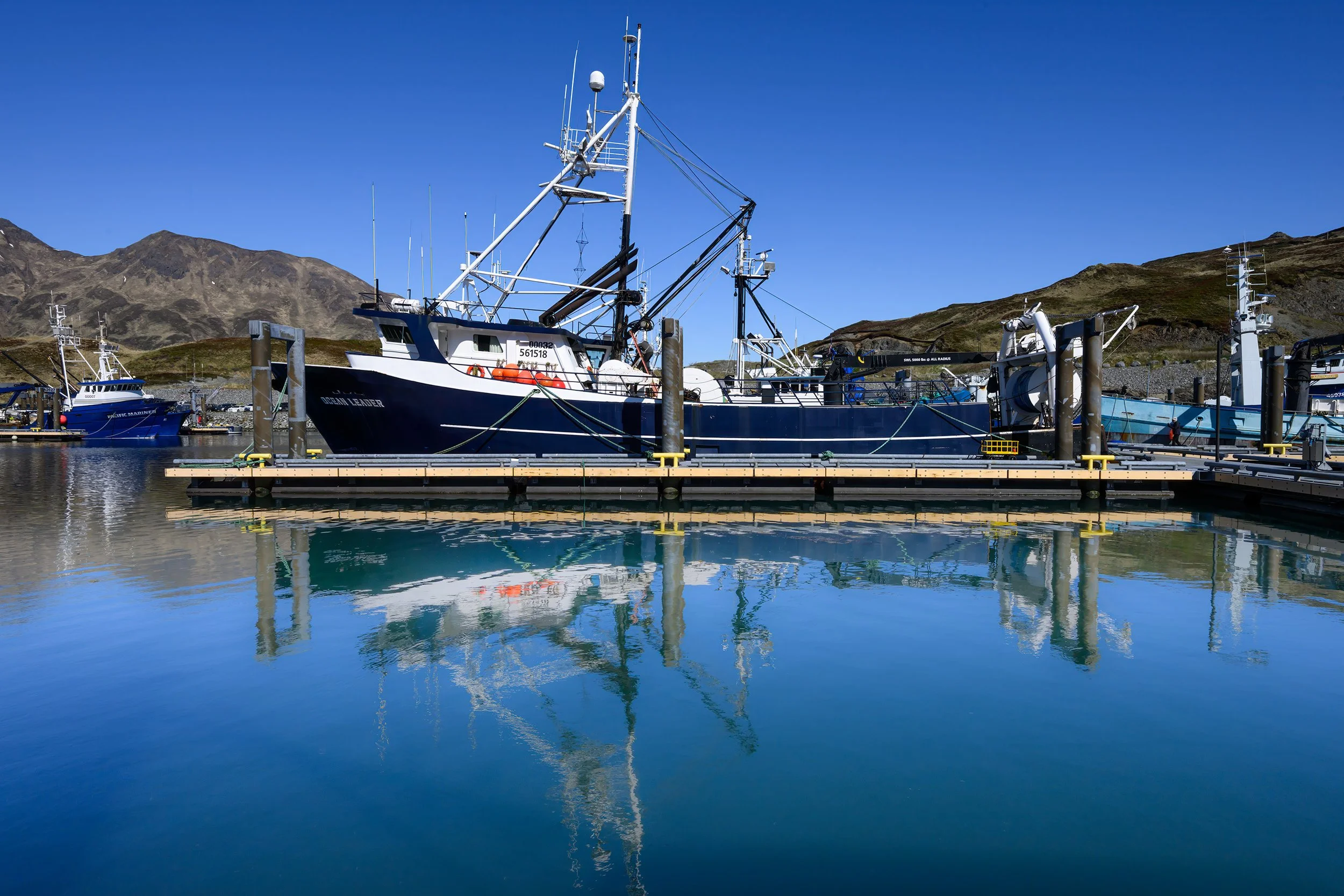
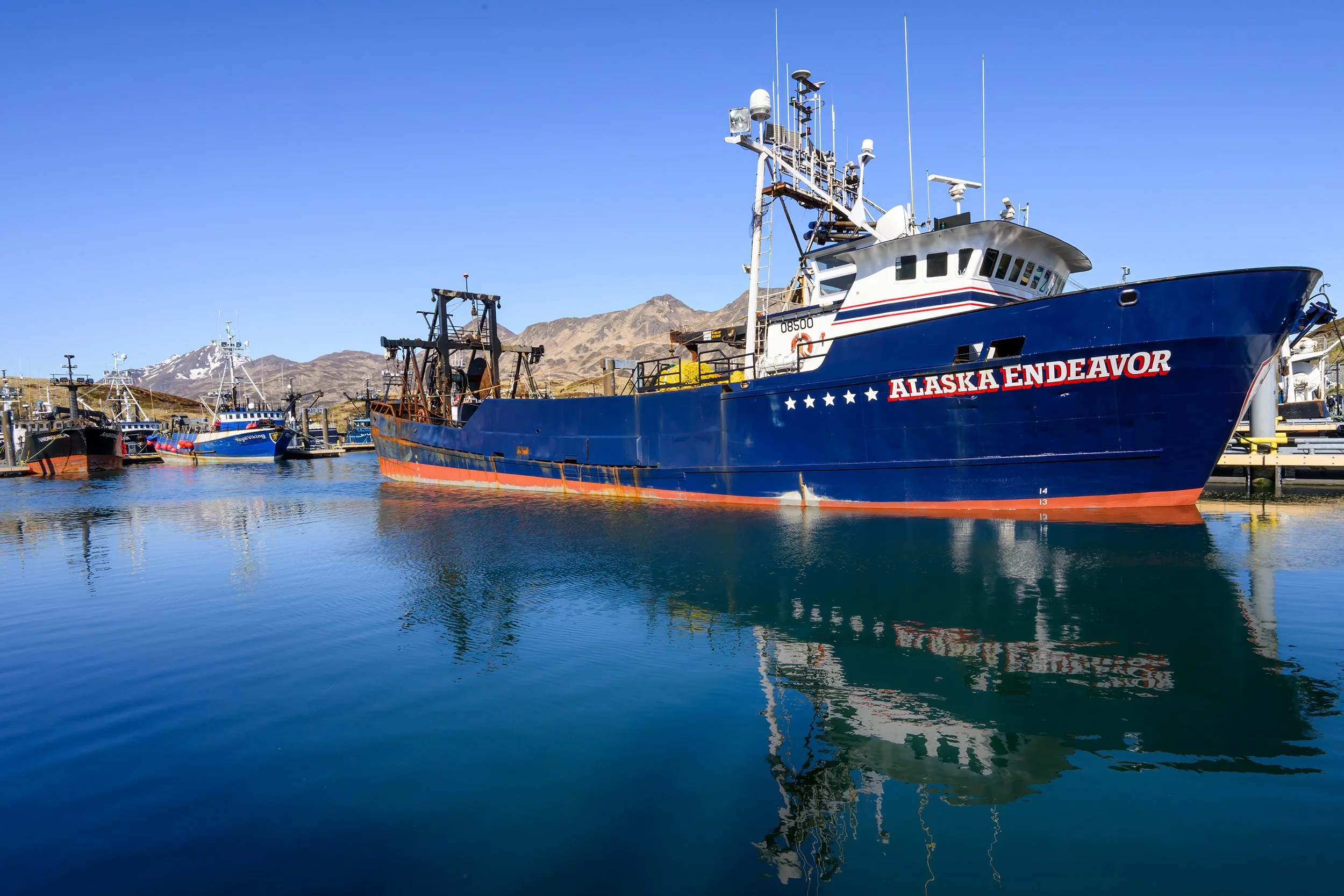
Suddenly we encounter human activity again! After traveling miles past remote peninsulas and islands, many uninhabited by anything but birds and bears, it was jarring to be in arguably the busiest commercial fishing port in the United States. Dutch Harbor in Unalaska is home to the fishing fleet that was the subject of TVs “Deadliest Catch”, which has created some interest in tourism to this place at the very edge of the continent. Visitors can also walk along the docks at Dutch Harbor and see the boats that “star” in the show if they aren’t out fishing. But there was lots to see that wasn’t about crab fishing!
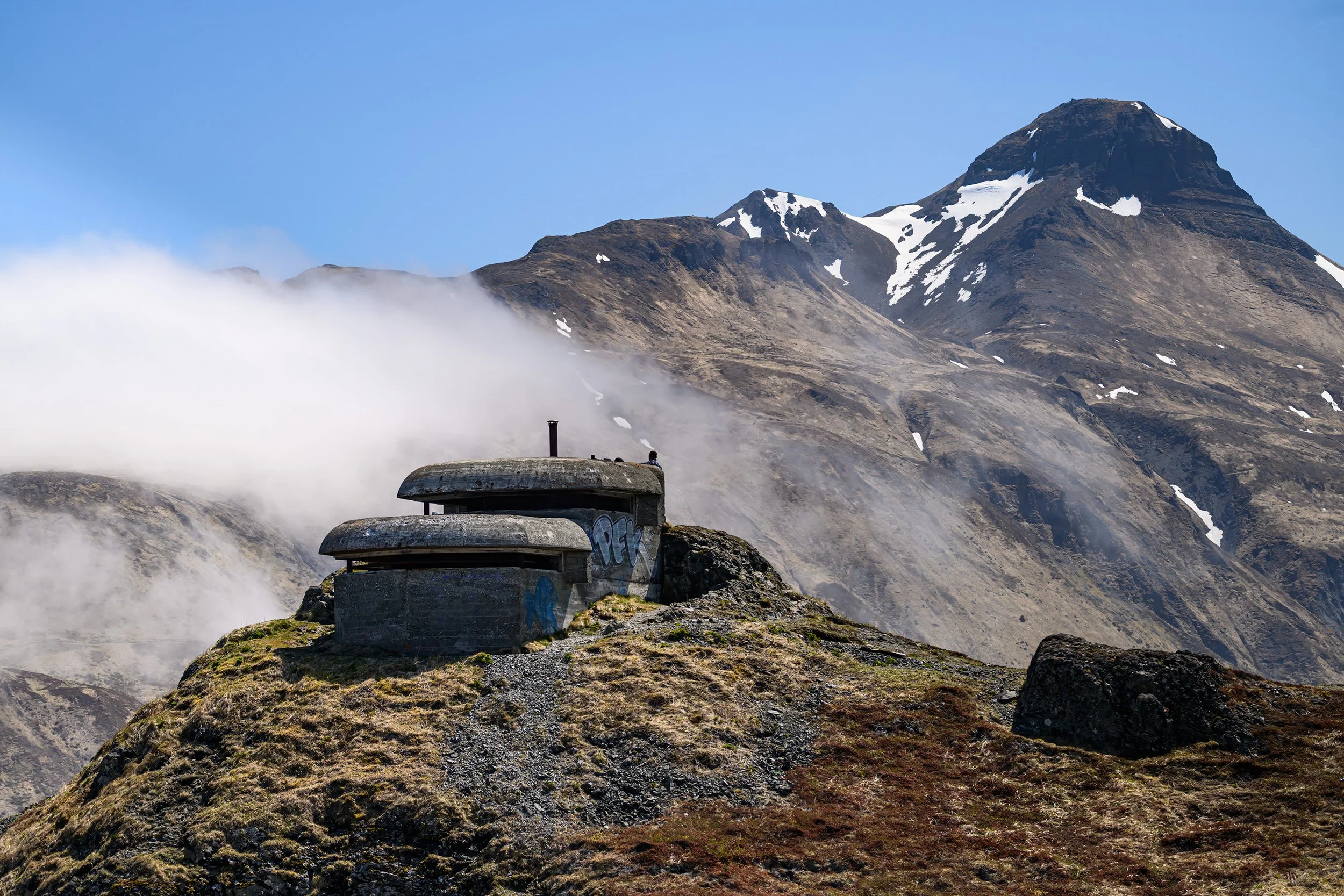
A WWII bunker atop Bunker Hill in Unalaska
Dutch Harbor was attacked by Japan during WWII and still features some of the bunkers and fortresses that were used during the war. I also enjoyed meeting the people involved in the fishing industry who travel from all over the world to either join the fishing fleet or work in processing plants in Unalaska. Without transportation, these workers live almost entirely on the campus of their plants, with apartments, ethnic restaurants, banks, and stores to serve them located on site at the fish processing plants.
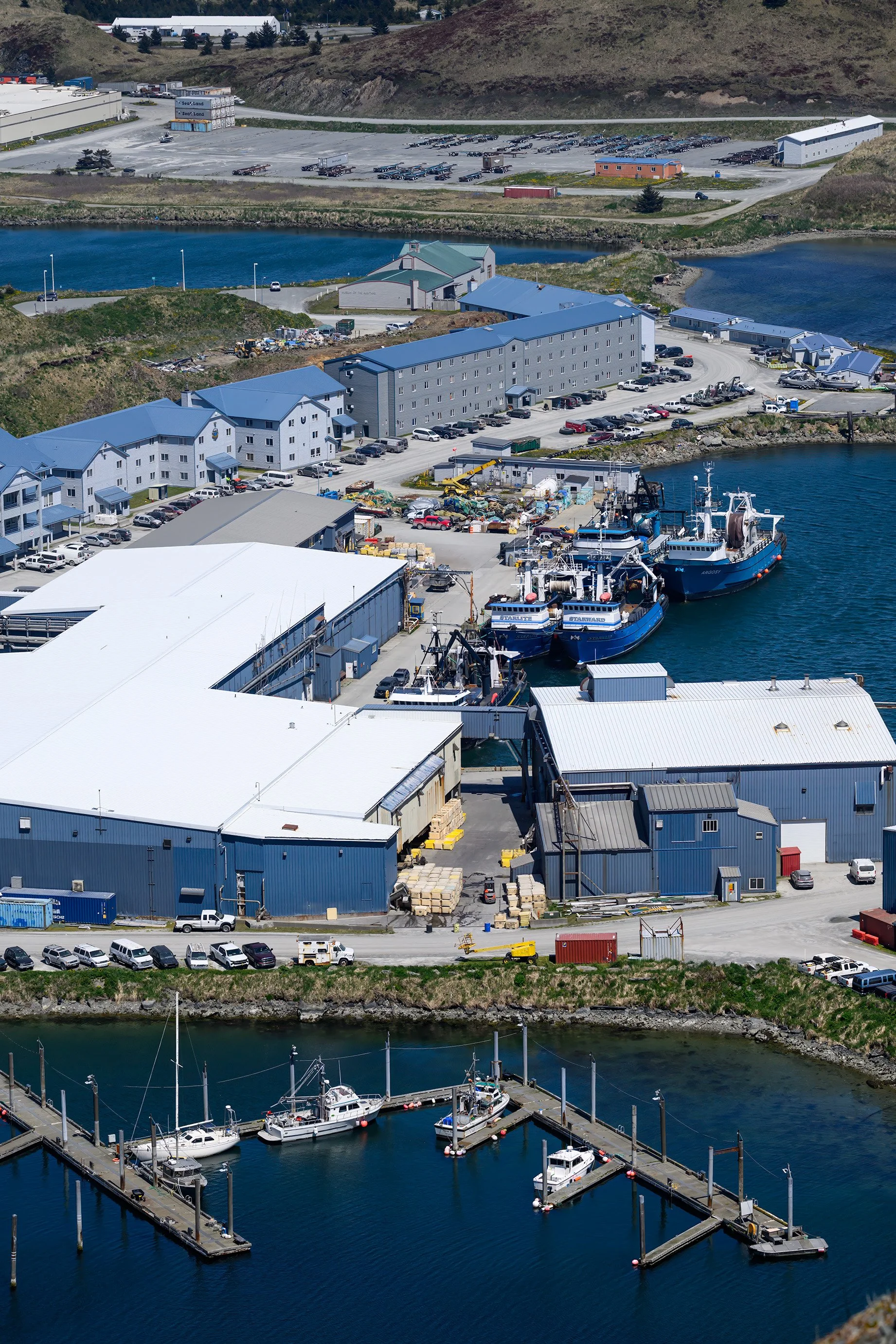
A fish processing business with plants, docks for the fishing boats, apartments, and a covered shopping mall with restaurants, stores and entertainment.
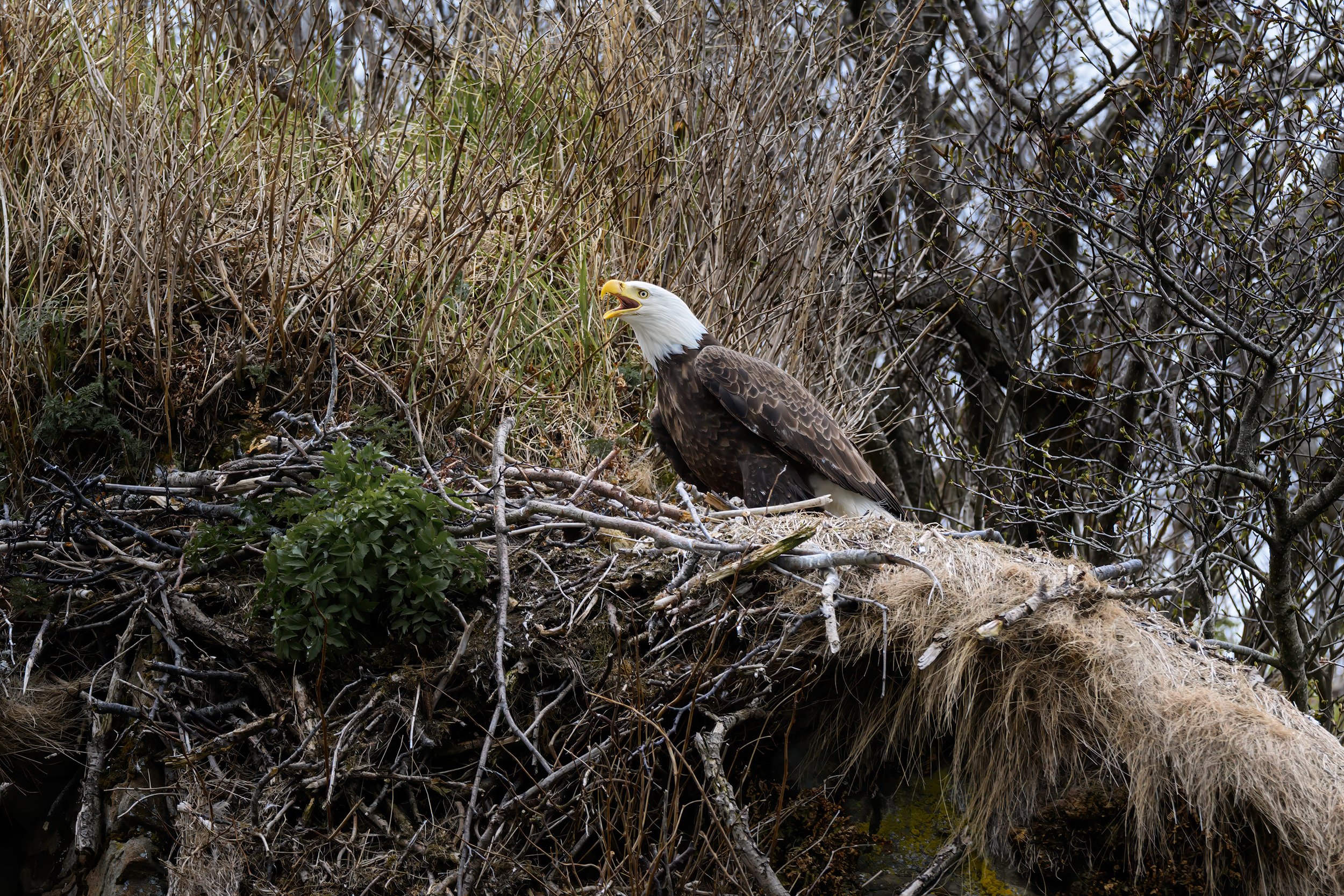
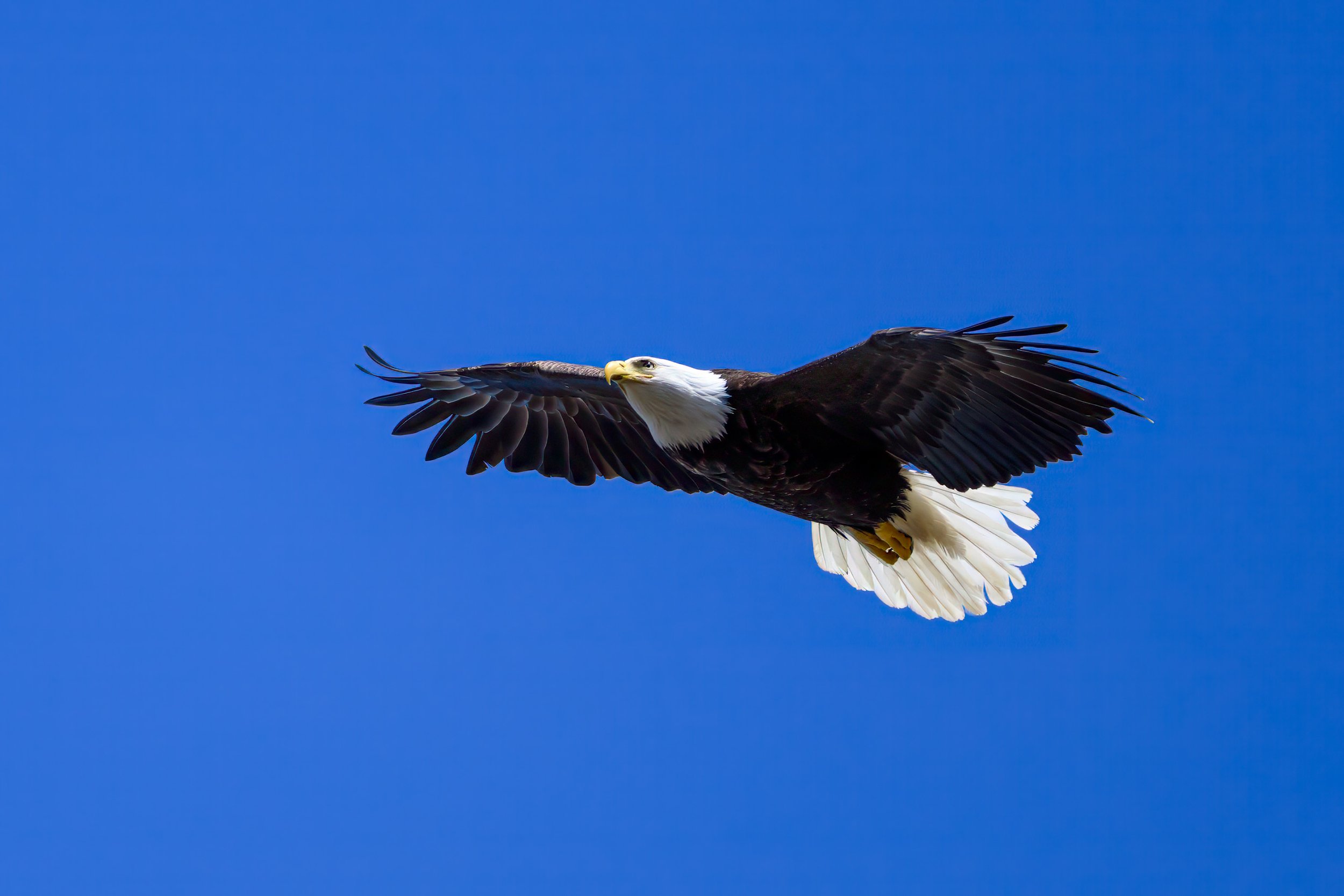
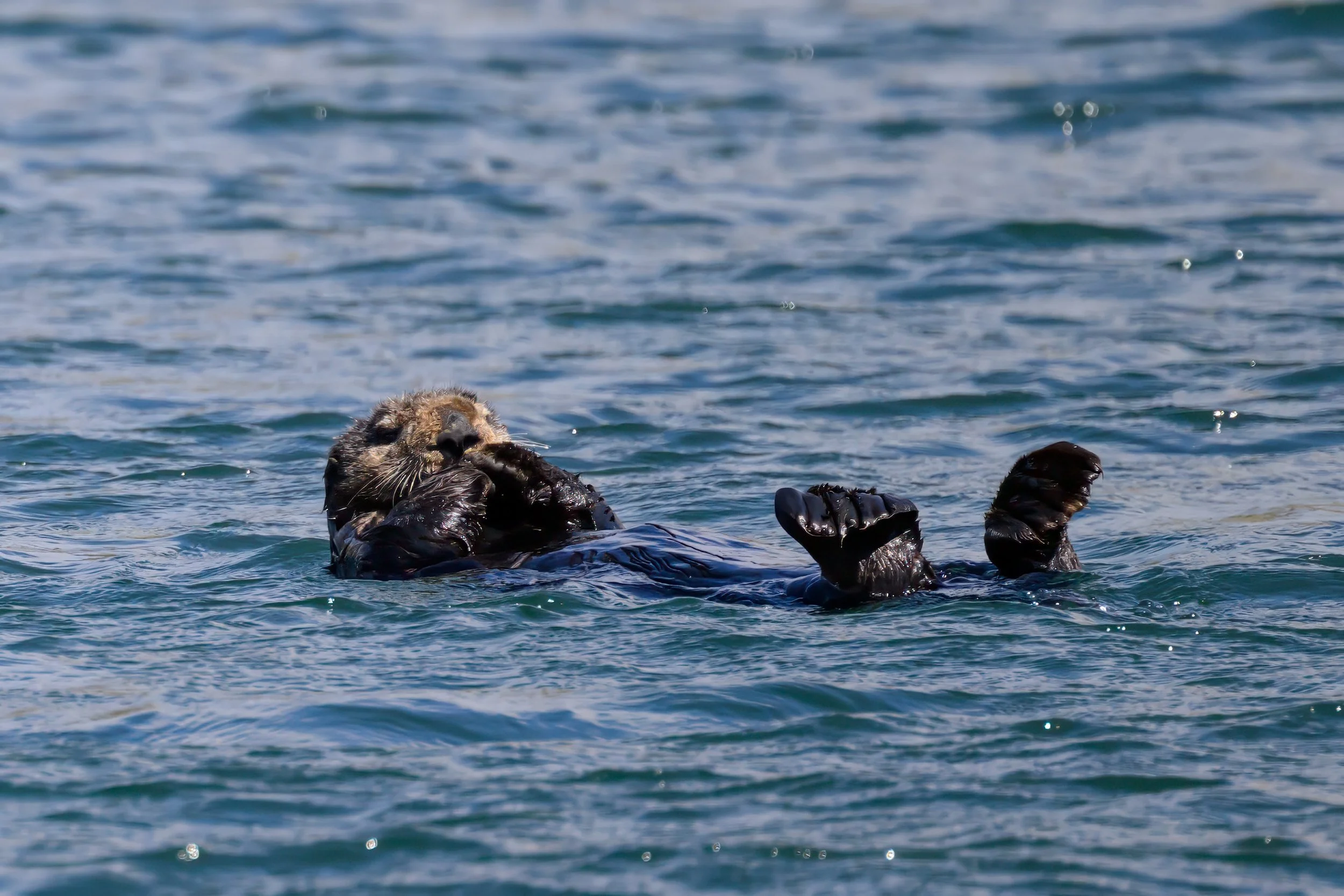
Visitors can also walk along the docks and spot the names of familiar vessels from “Deadliest Catch”. Watching the sea otters in the harbor is amusing too, but our guides explained during one of their after dinner talks that sea otters can also be quite vicious despite their cute faces! Bald eagles nest in rocky outcrops, because there are no native trees, and are often in close enough proximity to people that signs are needed to warn folks to give them plenty of space.
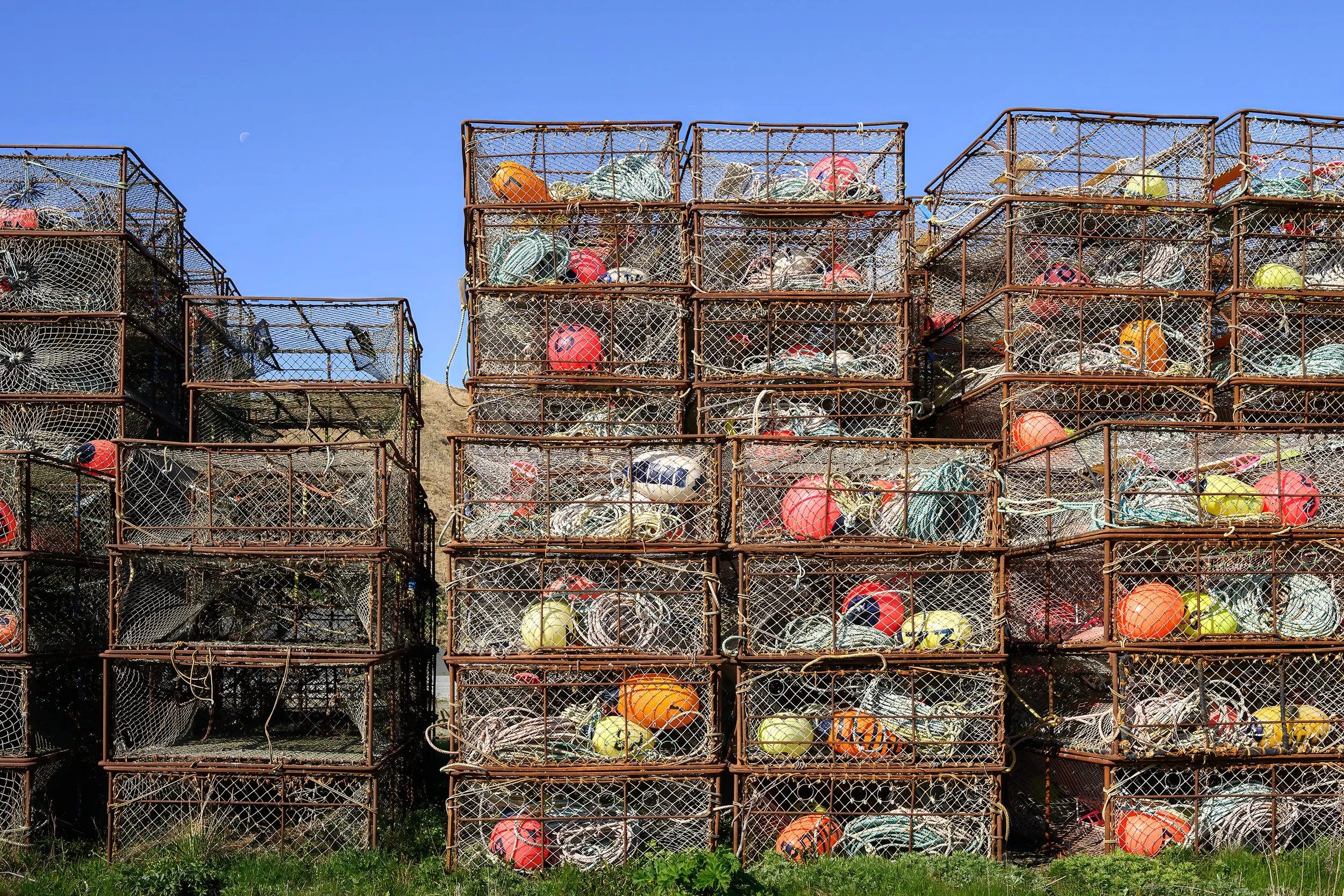
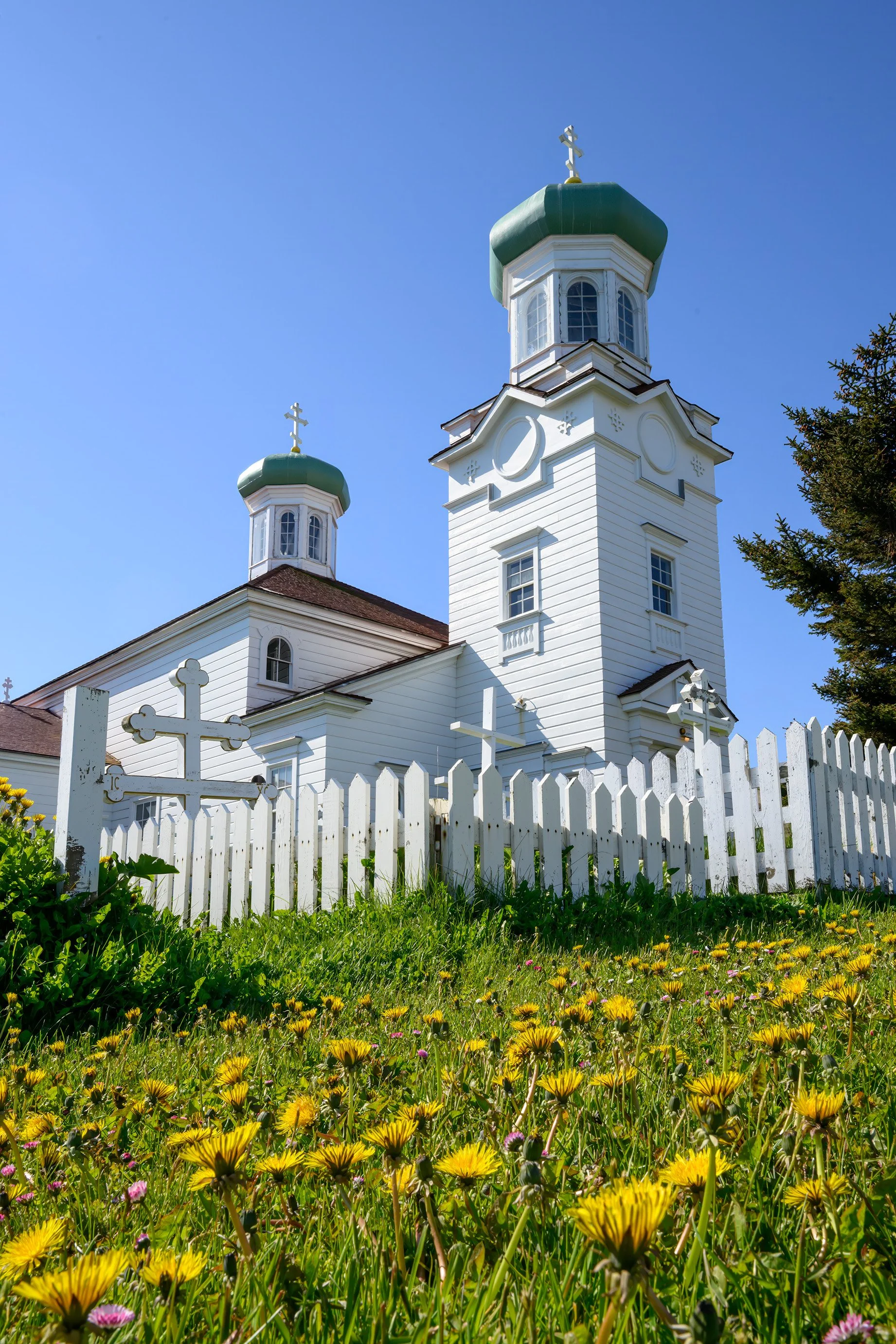
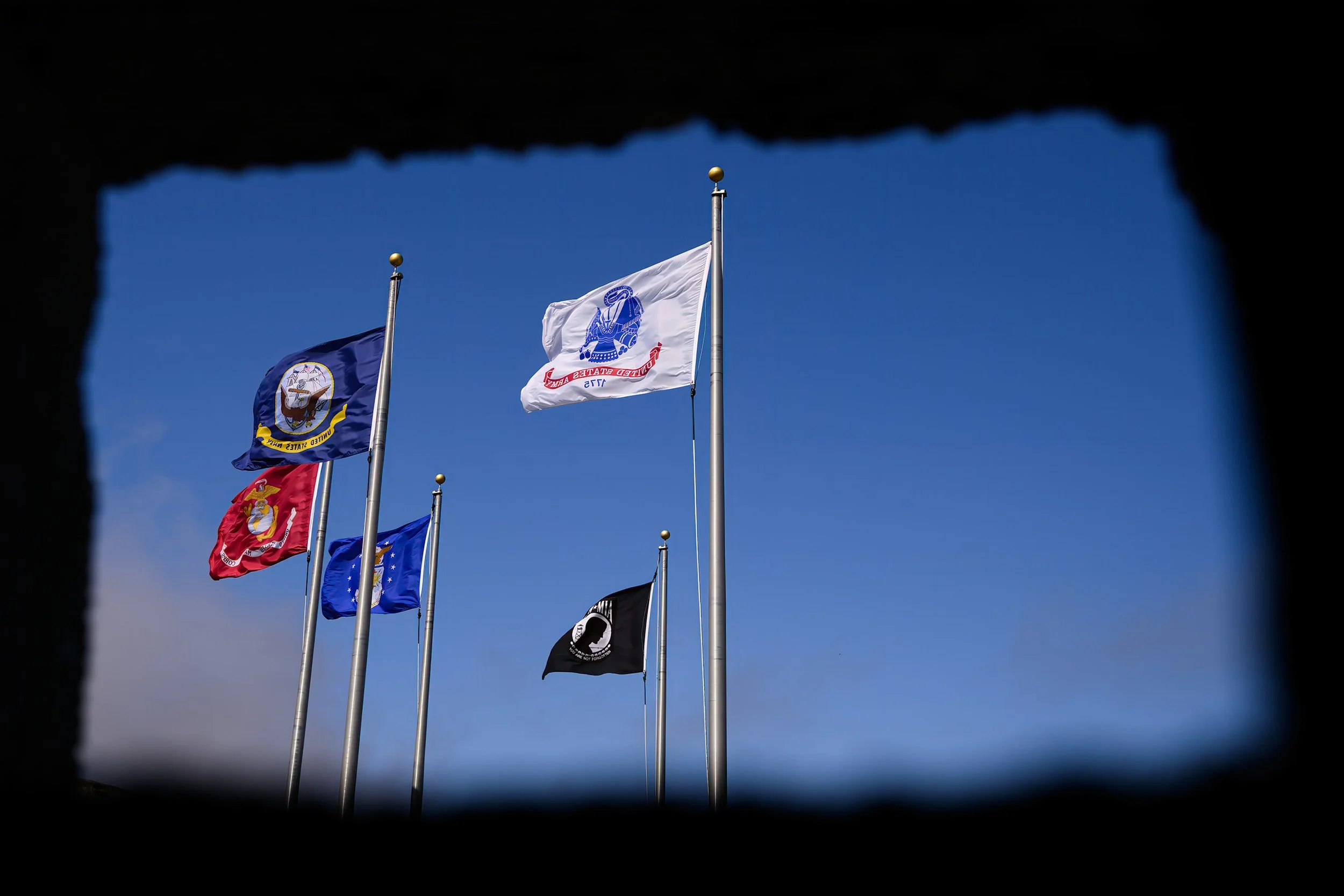
We enjoy traveling all over the world to some of the remotest places on earth to see wildlife and landscapes that often stand alone in time. We found the wild landscapes and independent fishing communities of the Aleutian islands very similar to the community where we live in Maine on the opposite side of our country.
The experience reminded me that even thousands of miles away, in our 250th year that we are often more similar than different in so many ways. And that’s one of the gifts of travel, the recognition that we are really one community, no matter how different things look!
Publisher K Klofft
Photography J Klofft